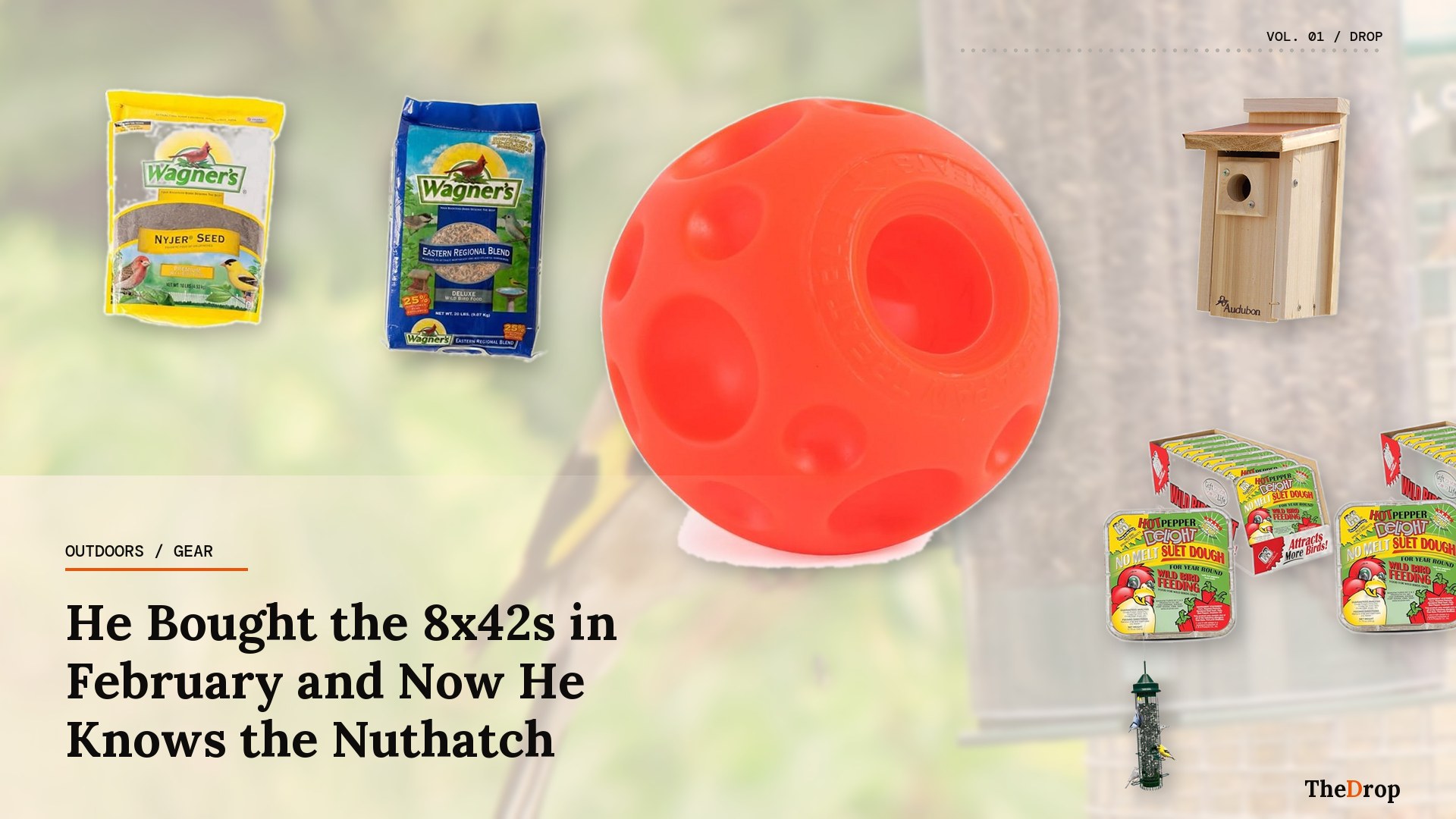
8x42s, a Feeder, and the Tufted Titmouse
He bought a pair of 8x42 Monarchs in February, hung a finch feeder off the dogwood, and learned to tell a white-breasted nuthatch from a tufted titmouse. Now Merlin is open on the porch and the journal is filling. The gifts that turn a hobby into a habit.
Droll Yankees Onyx Mixed Seed Tube Bird Feeder (15 Inch)
The tube feeder Cornell runs on its campus cams. Six perches, six ports, lifetime warranty against squirrel damage — the feeder serious backyard birders pick up first.
“The one reliable rule of gift-giving: anything that makes them look more serious at what they love will be received with disproportionate gratitude.”
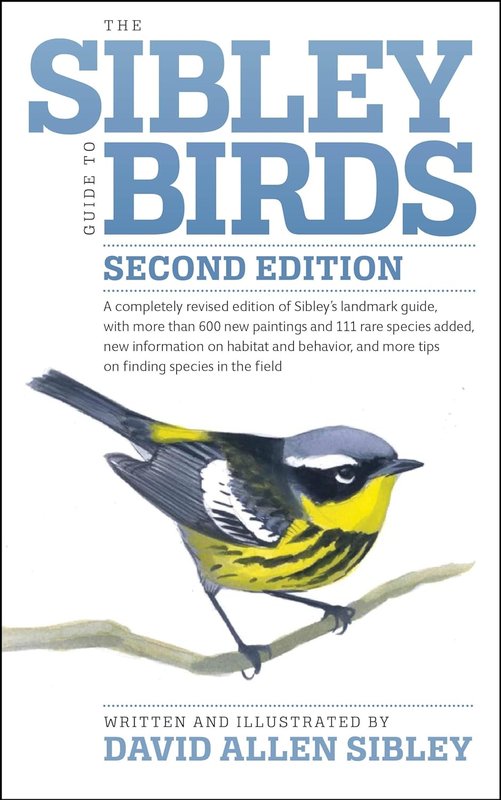
Sibley Guide to Birds of Eastern North America (Second Edition, David Allen Sibley)
Sibley is the guide every birder reaches for. Painted plates, range maps, the comparative pages that teach a beginner the difference between two warblers — the book by the window.
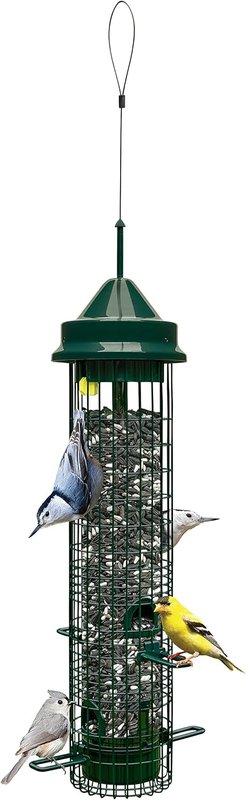
Squirrel Buster Plus Squirrel-Proof Bird Feeder (Brome 1024)
The squirrels won round one. Brome's weight-activated cage closes the seed ports under fifteen ounces of grey squirrel — the squirrel-proof feeder Cornell ranked at the top.
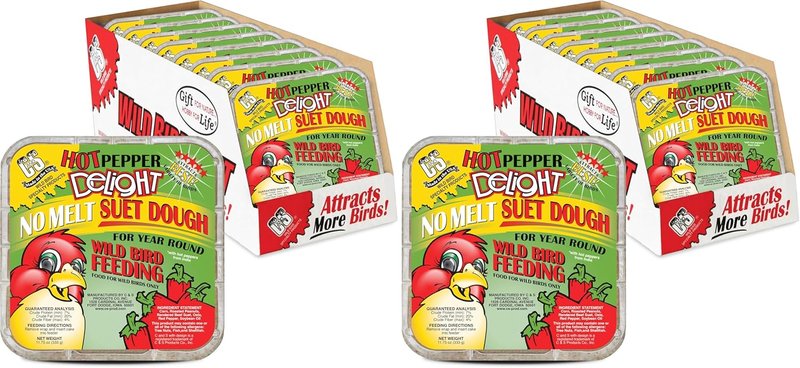
Wild Birds Unlimited Premium Hot Pepper Suet Cake Cylinder (No-Melt, 2-Pack)
Suet brings woodpeckers, the woodpeckers bring his neighbour over. Hot pepper deters squirrels — birds cannot taste capsaicin, mammals can. The feeder that delivers a downy in a week.
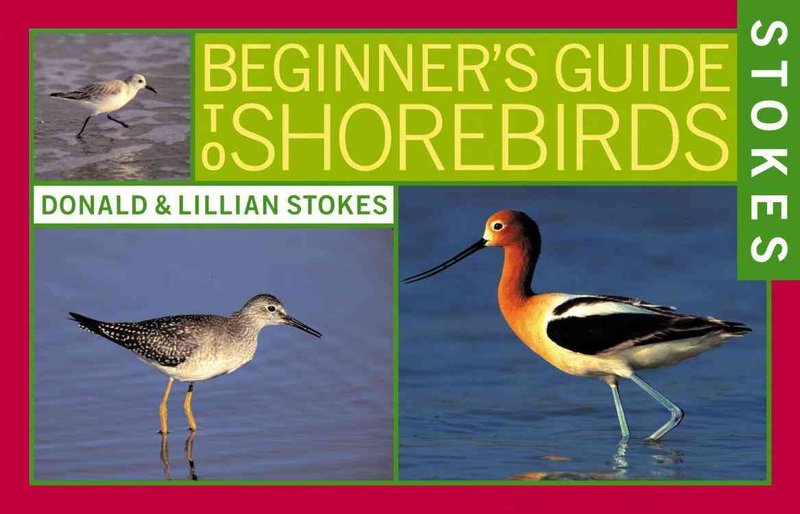
Audubon Society Stokes Beginner's Guide to Bird Feeding (Donald Stokes)
The book that explains why the Carolina wren wants peanuts and the goldfinches want nyjer. Stokes is the practical field manual — what to put out, when, where.
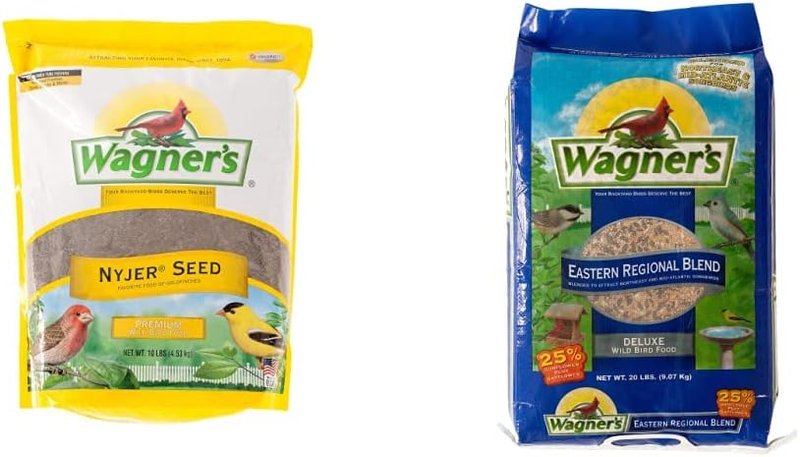
Wagner's Nyjer Seed for Wild Birds (10 Pound Bag)
Goldfinches eat nyjer and only nyjer. A finch sock or a tube with small ports — the seed that brings the lemon-yellow bird to a February kitchen window.
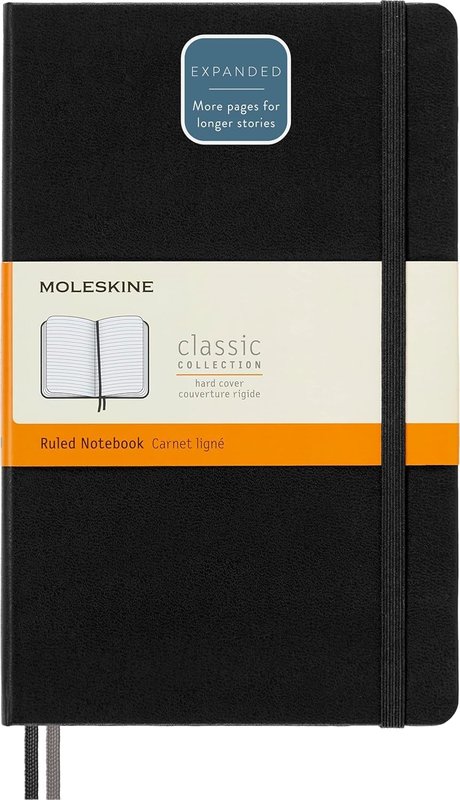
Moleskine Classic Notebook (Large, Hardcover, Plain Pages, Black)
A field journal is a date, a species, a sketch. The Moleskine plain page is the birder's compromise — eBird logs the data, the notebook holds the morning.
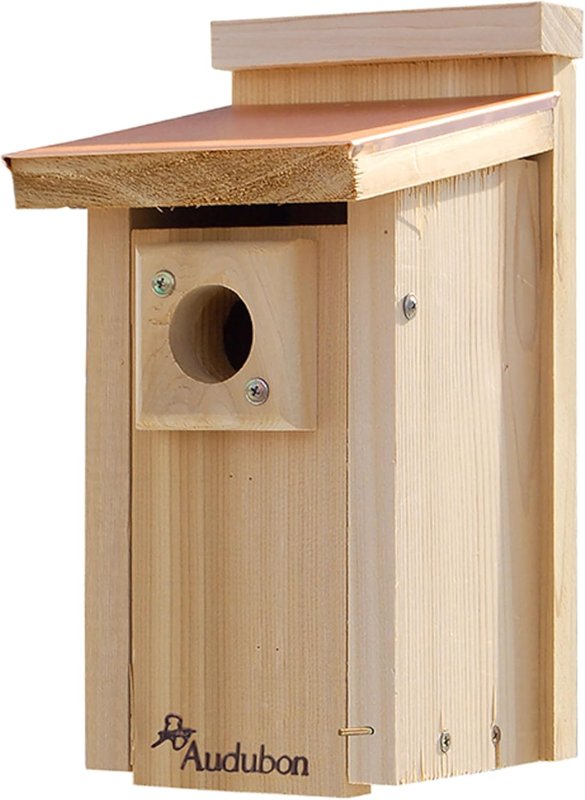
Audubon NestWatch Small Songbird House (Cedar, Open-Front Design)
The feeder draws the bird in. The nest box keeps it. Cedar, open-front design for chickadees and wrens, mounted at six feet — Audubon's NestWatch programme starts here.
Fork it. Make it yours. Share before their birthday.
Friends claim items. No duplicates. No awkward conversations.