Gifts for Amateur Entomologists and Bug Collectors
Amateur entomology sits at a productive intersection of field naturalism and meticulous lab work — the same person who sweeps a meadow with a net at dawn will spend the evening pinning and labeling specimens with the precision of a watchmaker. These gifts serve both modes: the collecting field kit and the display desk.
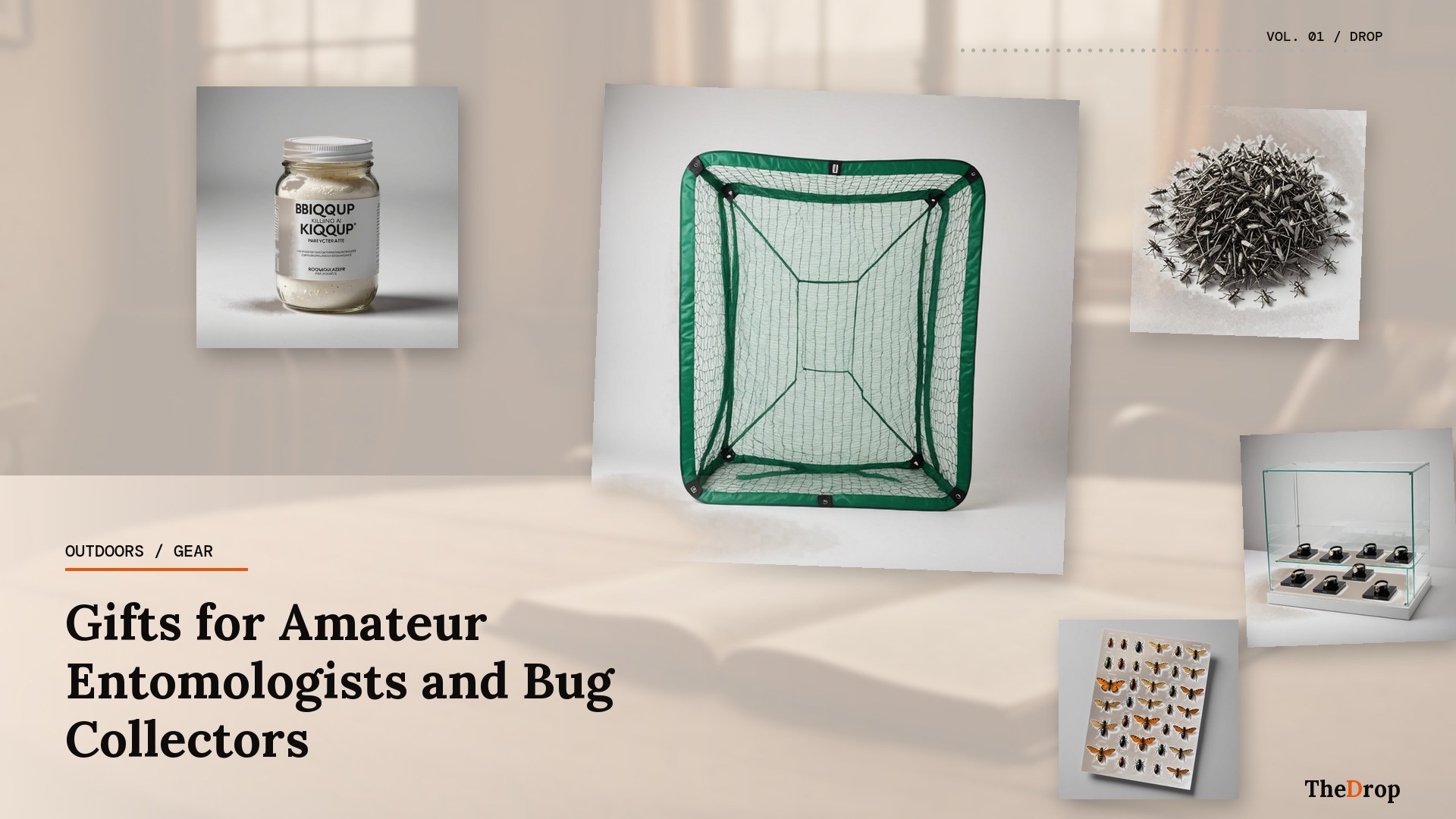
BioQuip Products Standard Aerial Insect Net, 15-inch
The core field tool — a fine-mesh net on a 15-inch hoop sweeps meadows and catches flying insects without crushing them on contact. BioQuip's mesh is tight enough for small Diptera and durable enough for years of field use.
“The one reliable rule of gift-giving: anything that makes them look more serious at what they love will be received with disproportionate gratitude.”
BioQuip Killing Jar, 4 oz with Ethyl Acetate Plaster
The standard field preservation method — specimens placed in the jar relax and remain mountable rather than desiccating in a dry container. Plaster base absorbs ethyl acetate slowly and safely, keeping the jar effective for multiple field outings.
Insect Spreading Board, Adjustable Width, Cork Base (Set of 3)
Wing-spreading allows Lepidoptera and larger beetles to dry with wings fully extended for display and identification. A set of three widths handles everything from small moths to large beetles — the drying period takes a week, so having multiple boards in rotation keeps collection work moving.
Stainless Steel Insect Pins, Size 2 and 3, 100-Pack
Proper entomological pins are rustless and the correct gauge to pass through an insect thorax without splitting it. The set of 100 in two sizes handles most common collector specimens — grasshoppers and beetles on 3, smaller Hymenoptera on 2.
Kaufman Field Guide to Insects of North America
The most usable field guide for North American insect ID — photographic rather than illustrated, organized by order with clear diagnostic features highlighted. Compact enough to carry, comprehensive enough to confirm most common field identifications.
Riker Mount Display Cases, 8x6 inch (3-Pack)
Riker mounts allow dry specimens to be displayed and transported without a glass-topped shadowbox — cotton batting holds pinned insects in place, and the hinged glass lid opens for additions. Three 8x6 cases display a dozen specimens per case attractively on a wall or shelf.
AmScope SE306-AZ Binocular Stereo Microscope, 10x-20x
Identification work on smaller Coleoptera, Diptera, or Hymenoptera requires magnification beyond a loupe. A stereo microscope at 10x and 20x reveals the antennal segmentation, tarsal claws, and wing venation that keys require — the difference between a name and 'probably some kind of bee.'
Insect Collection Data Label Sheets for Pinned Specimens
Every scientifically collected specimen needs a locality and date label below it on the pin. Pre-printed acid-free data label sheets allow collectors to fill in collection data without producing labels that deteriorate over years — the detail that separates a collection from a box of dead bugs.
Fork it. Make it yours. Share before their birthday.
Friends claim items. No duplicates. No awkward conversations.