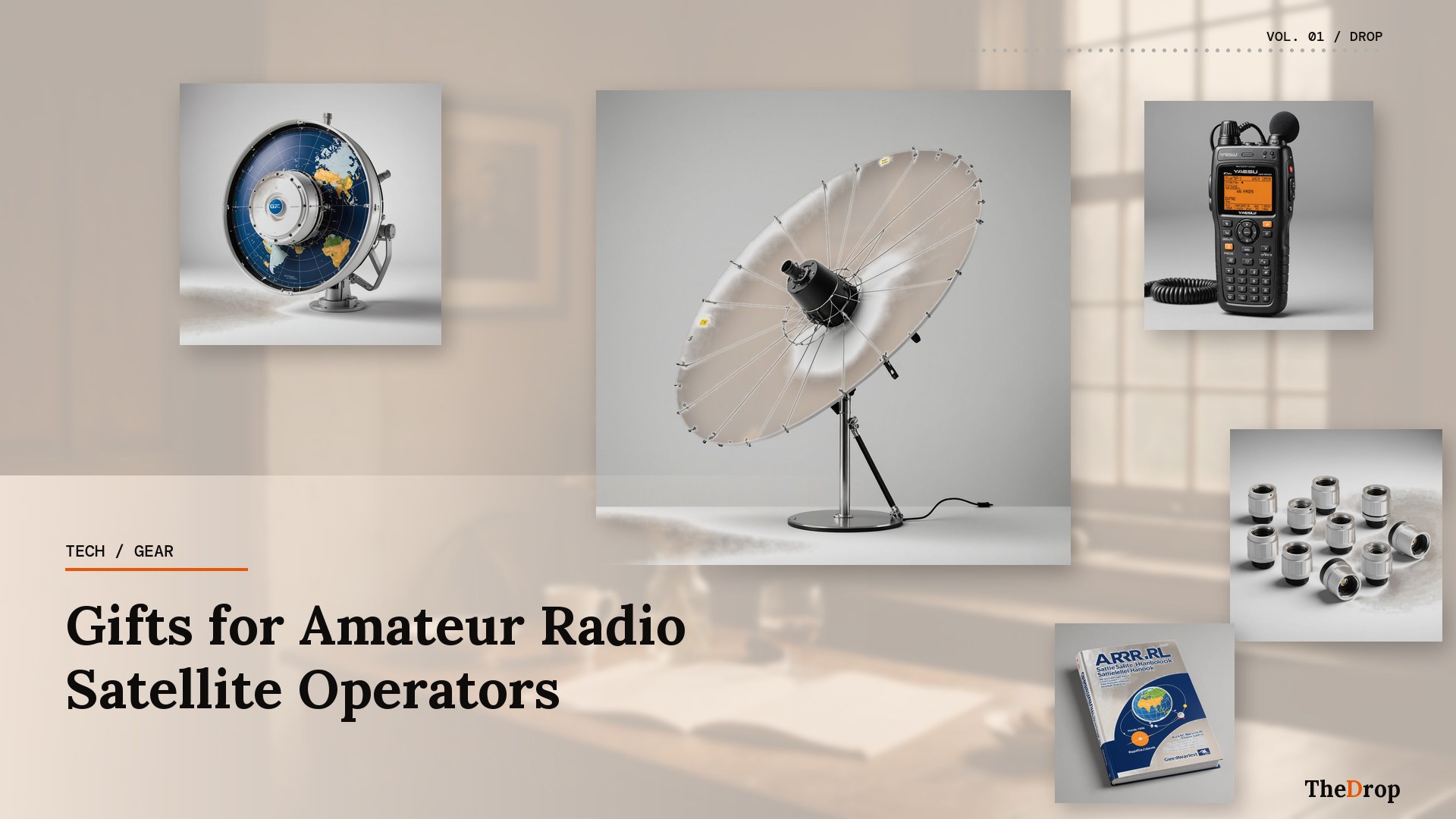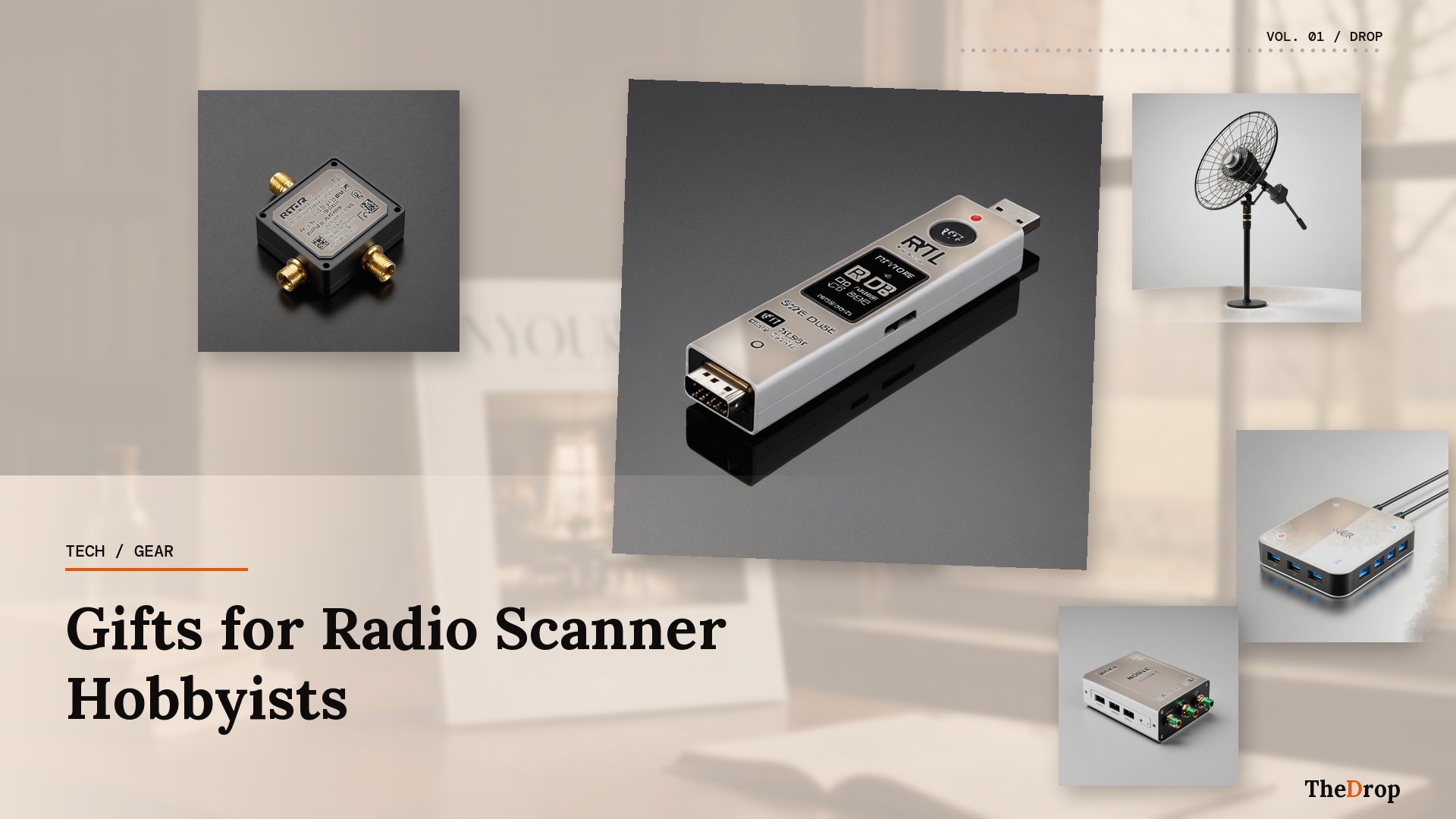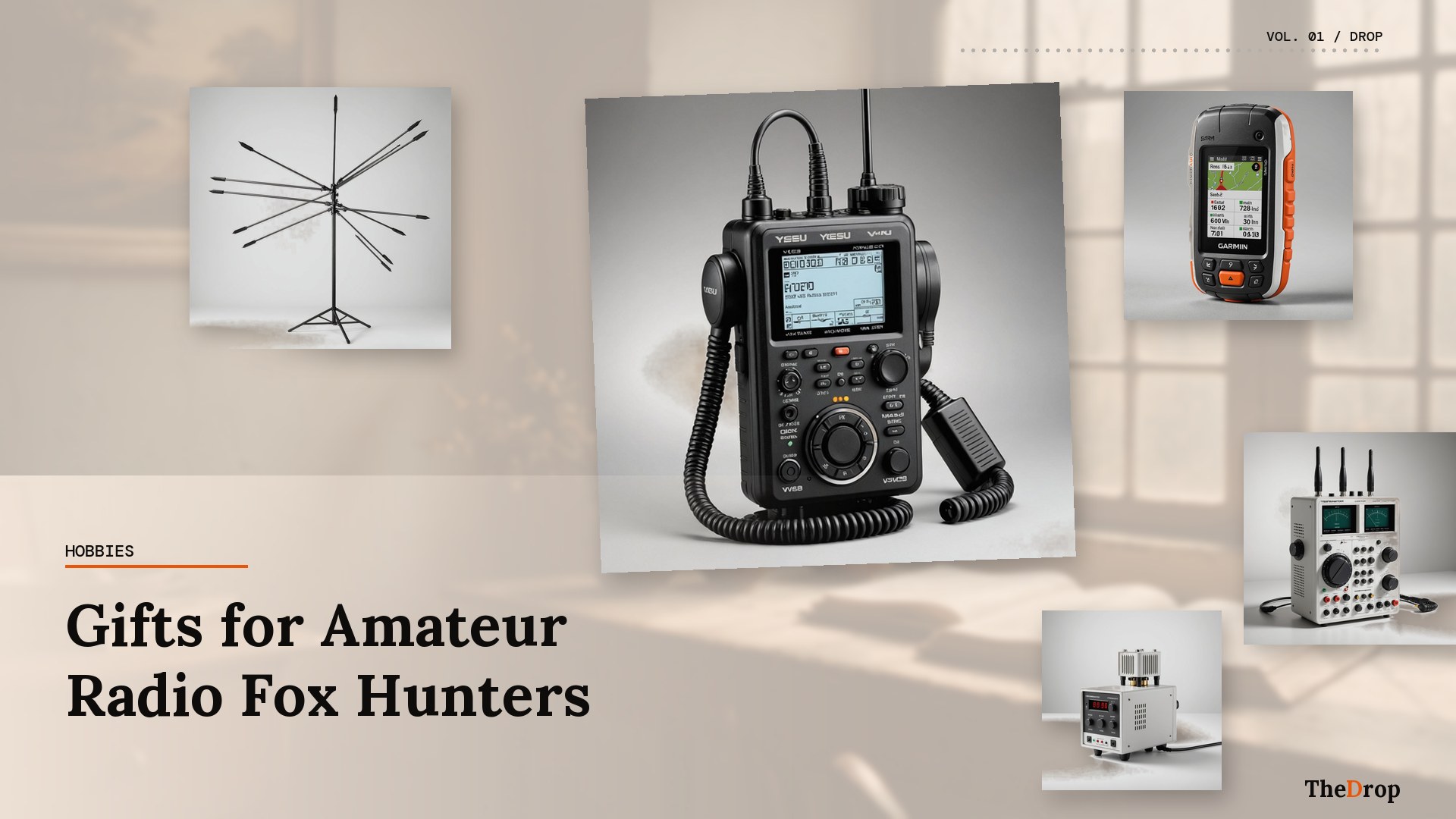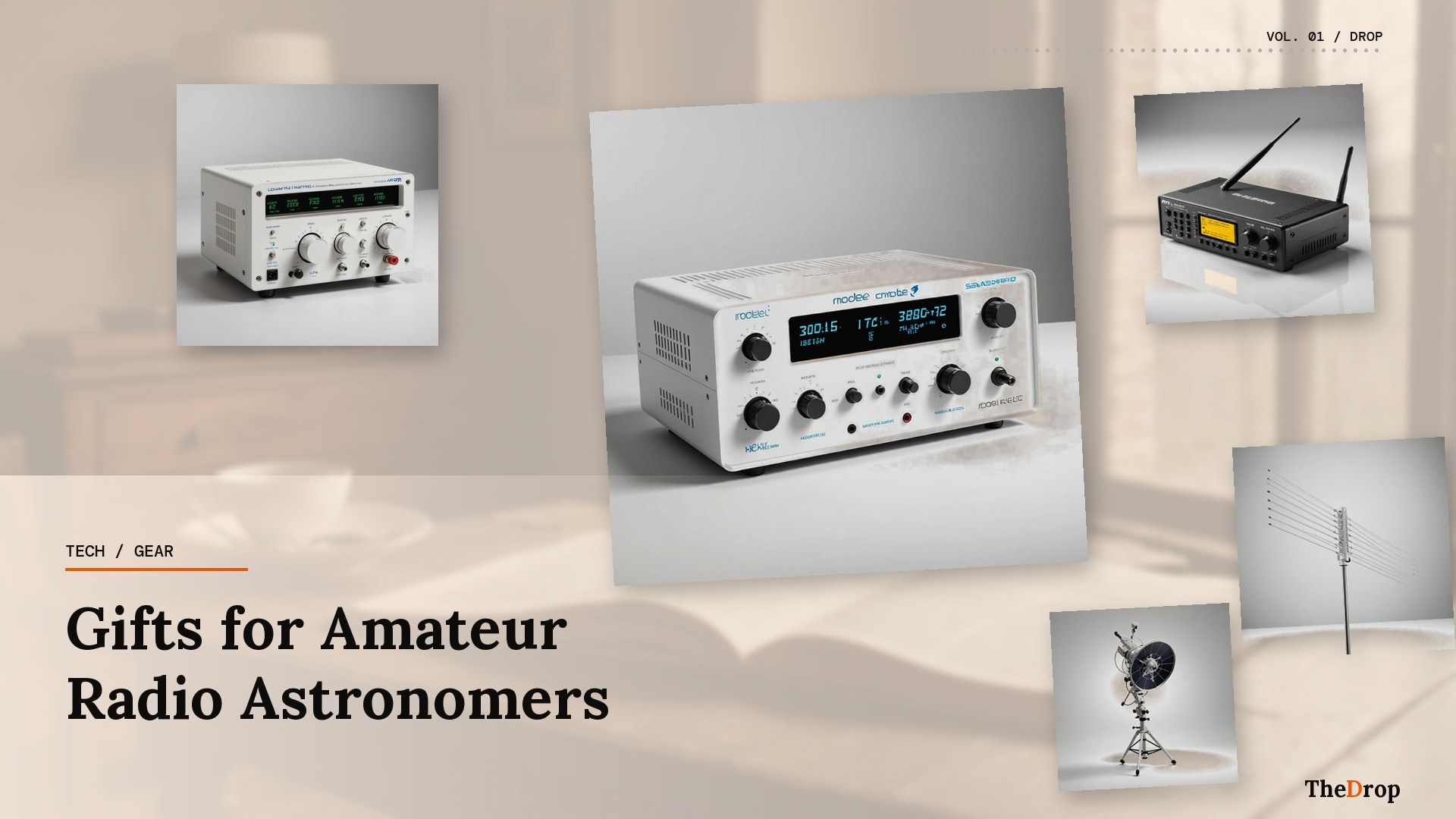
Gifts for Amateur Radio Astronomers
Radio astronomy at the amateur level has become genuinely accessible — an RTL-SDR dongle and a Yagi antenna can detect Jupiter's decametric bursts or map the hydrogen-line at 1420 MHz from a backyard. These gifts serve the hobbyist who has moved past optical astronomy into the part of the electromagnetic spectrum that most people forget exists.
RTL-SDR Blog V3 R820T2 RTL2832U Software Defined Radio
The entry point to amateur radio astronomy — this USB dongle receives from 500 kHz to 1.7 GHz, covering Jupiter storm frequencies, satellite beacons, and meteor scatter. Pairs with free SDR# software and a suitable antenna to turn a laptop into a radio receiver.
“The one reliable rule of gift-giving: anything that makes them look more serious at what they love will be received with disproportionate gratitude.”
NooElec SAWbird+ H1 Premium Dual Ultra-Low Noise Amplifier for Hydrogen Line
The hydrogen line at 1420 MHz is the primary target for backyard radio astronomers — it maps neutral hydrogen in the galaxy. This inline LNA and SAW filter combination dramatically improves signal-to-noise when connected between an antenna and SDR receiver.
TV Yagi Antenna, 26-Element Fringe VHF/UHF
A directional Yagi provides the gain needed to pull weak radio signals from astronomical sources. Pointed at the Milky Way's galactic center, even a modest Yagi shows structure when connected to the right receiver — the first demonstration that backyard radio astronomy works.
Introduction to Radio Astronomy by Stanley Hey
The accessible foundation text — Hey explains how radio telescopes work, what signals exist to observe, and how amateur equipment maps to professional methods. Gives the physics before the hobbyist starts pointing antennas at confusing signal sources.
USB 3.0 Hub with Individual Power Switches, 7-Port
Running multiple SDR dongles simultaneously — for interferometry or multiple-band monitoring — requires powered USB hubs that don't drop connections during long observation sessions. Individual power switches allow resetting a single dongle without interrupting others.
Comet SBB5 Dual-Band Mobile Antenna, NMO Mount
For Jupiter burst monitoring in the HF range, a versatile mobile antenna that can be repositioned for optimal sky coverage is more practical than a fixed installation. The NMO base makes it portable between observation sites.
LNA4HF Low Noise Amplifier for HF Frequencies
HF-range radio astronomy — detecting solar bursts, Jupiter decametric storms — requires amplification before the SDR receiver. A dedicated HF LNA placed at the antenna feedpoint recovers weak signals that would otherwise be buried in cable and receiver noise.
The Invisible Universe: The Story of Radio Astronomy by Gerritt Verschuur
Verschuur makes the history and science of radio astronomy genuinely compelling without requiring an engineering background. Understanding what professionals discovered — pulsars, the CMB, quasars — gives the hobbyist context for what their own receiver is capable of detecting.
Fork it. Make it yours. Share before their birthday.
Friends claim items. No duplicates. No awkward conversations.