Gifts for Chainsaw Carvers
Chainsaw carving sits at the edge of fine art and heavy equipment operation — the same person who makes bears for tourist shops might be entering national competitions with museum-quality work. Safety gear is non-negotiable here, and the detailing tools (angle grinders, small Dremels, finishing oils) are what separate rough-blocked work from finished sculpture.
Husqvarna Technical Chaps - Class 1
Chainsaw chaps are the most important piece of PPE a carver owns. Class 1 covers most cutting scenarios; Husqvarna's technical cut stops a running chain and meets ANSI standards.
“The one reliable rule of gift-giving: anything that makes them look more serious at what they love will be received with disproportionate gratitude.”
STIHL Forestry Helmet with Visor and Ear Protection
Face shield, ear muffs, and hard hat in one system. Running a saw at head height for detail work means all three are in use simultaneously — this combo doesn't require stacking separate pieces.
Arbortech Industrial Ball Gouge - Angle Grinder Attachment
The angle grinder ball gouge is the carver's best detail tool — fast material removal with enough control for eyes, feathers, and texture work that a chainsaw can't reach. An industry standard.
Cabot Australian Timber Oil - Quart
Outdoor carvings need UV and moisture protection or they check and crack within a season. Australian Timber Oil penetrates deep and doesn't sit on the surface as a film.
Pfeil Gouges V-Tool 60° - 10mm
Hand gouges for final surface detailing — fur texture, feather barbs, scale patterns. The v-tool at this width is the most versatile starting point for a carver building out their hand tools.
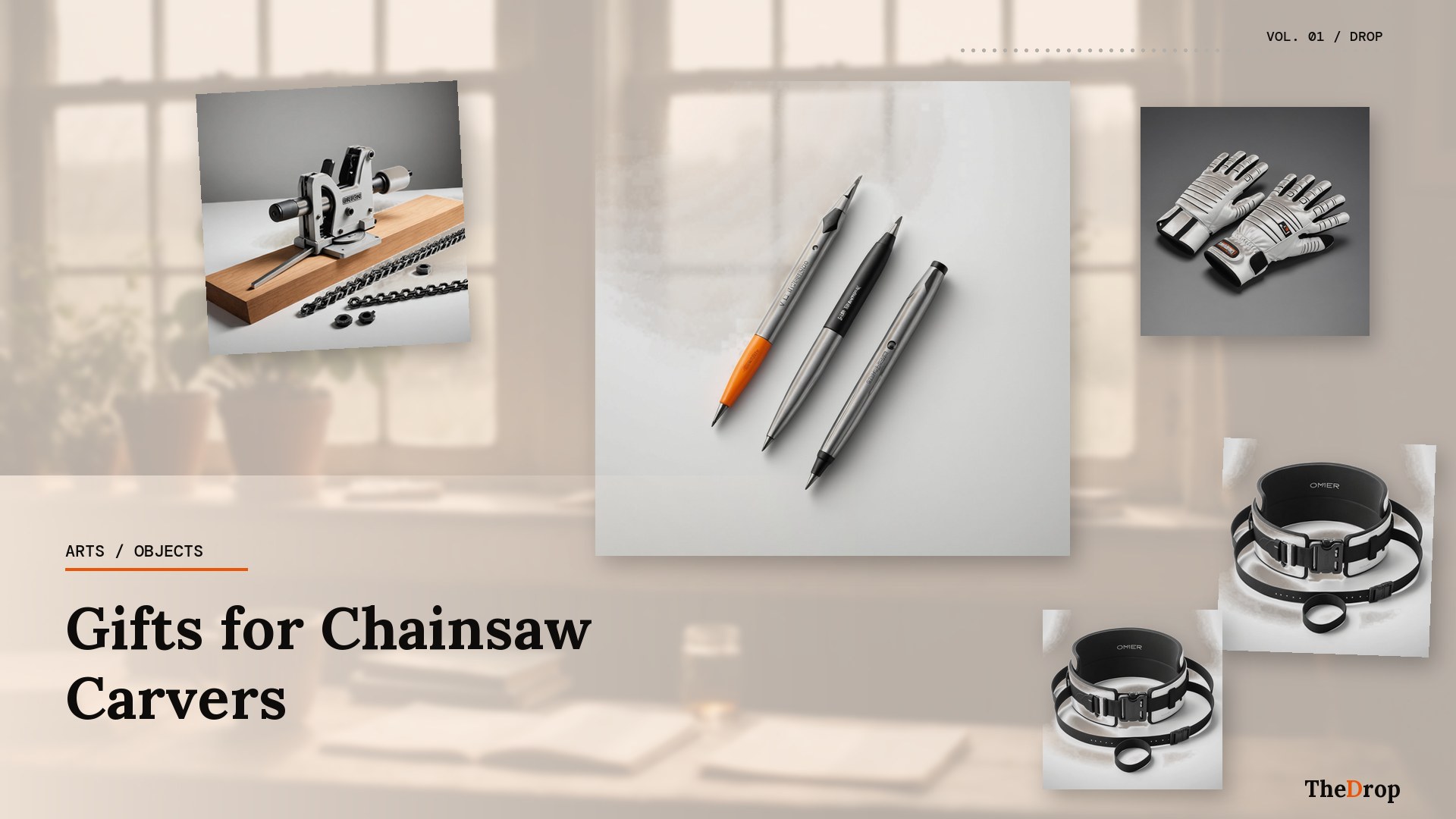
Oregon Saw Chain Sharpening File Guide Kit
A sharp chain is how carvers maintain control and reduce arm fatigue. Oregon's filing guide keeps the correct 30° angle on every tooth — consistent edge, every time.
Chainsaw Carving: The Art and the Craft - Hal MacIntosh
One of the few technical books that covers both beginner blocking techniques and competition-level finishing. The project progressions are genuinely instructive rather than decorative.
Ergodyne ProFlex 7500 Anti-Vibration Gloves
Hand-arm vibration syndrome is a real occupational risk for carvers. Anti-vibration gloves don't eliminate exposure but meaningfully reduce accumulated dose across long sessions.
Fork it. Make it yours. Share before their birthday.
Friends claim items. No duplicates. No awkward conversations.