Smart Home, Smarter Person: Gifts for the Home Automation Tinkerer
For the person whose home assistant responds to specific voice conditions, whose lights follow a circadian schedule, and who spent two weekends getting the automations right so they'd never have to think about it again.
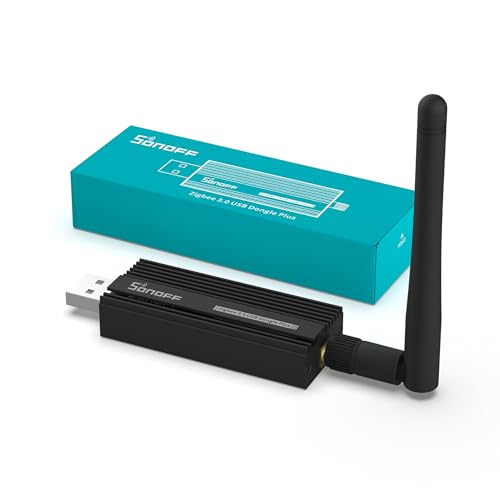
SONOFF Zigbee 3.0 USB Dongle Plus Gateway
The Zigbee coordinator that the Home Assistant community recommends as the upgrade from hub-based Zigbee — a USB dongle that connects directly to a Home Assistant server and runs ZHA or Zigbee2MQTT locally without cloud dependency. An automation enthusiast who's been running a Hue bridge or SmartThings hub will eliminate a cloud dependency and reduce automation latency by processing everything locally on their own server.
“The one reliable rule of gift-giving: anything that makes them look more serious at what they love will be received with disproportionate gratitude.”

SONOFF S31 Wi-Fi Smart Plug with Energy Monitoring
A smart plug with real-time energy monitoring is the automation enthusiast's device-activity sensor — the watt draw signature that tells Home Assistant when the washer has finished a cycle, when the 3D printer is complete, or when a particular appliance has been left on past its expected run time. SONOFF's S31 reports energy data locally via Tasmota firmware, the modification that the community applies to eliminate cloud dependency.

Aeotec Door/Window Sensor 7 Z-Wave Plus
A door/window sensor is the foundation of presence-aware automation — lights that turn on when the back door opens, HVAC modes that change when a window is left open, security notifications for specific entry points. Aeotec's Z-Wave Plus version has 5-year battery life and the range that makes it appropriate for garage doors and exterior gates far from the hub. Z-Wave Plus's mesh routing makes it more reliable over distance than comparable Zigbee sensors.

Lutron Caseta Wireless Smart Lighting Dimmer Switch Starter Kit
Lutron Caseta is the smart switch the home automation community recommends for reliability above all alternatives — the switches have never required a cloud connection to operate locally, support scenes and schedules that execute without internet, and have the electrical certification that makes them appropriate for inclusion in home inspection without issues. The starter kit includes the Pico remote that functions as a wireless switch anywhere in the home without wiring.

NTAG215 NFC Tags Round Sticker (50-Pack)
NFC tags programmed with specific Home Assistant shortcuts create tap-to-automate trigger points throughout the home — tap the nightstand tag to run the sleep routine, tap the kitchen tag to start the morning scene, tap the front door tag to trigger departure mode. NTAG215 chips are the standard that the automation community uses because the storage capacity is sufficient for complex URL-based triggers and phone compatibility is universal across Android and iOS.

Raspberry Pi 4 Model B 4GB
The hardware platform that most self-hosted Home Assistant installations run on — enough processing for a full Home Assistant OS installation with multiple integrations, Zigbee coordinator, and local media server without the latency issues that under-powered platforms introduce. An automation enthusiast who's been running Home Assistant on a Raspberry Pi 3 will notice the response speed improvement, and one who's been running in a VM will appreciate dedicated hardware stability.
Fork it. Make it yours. Share before their birthday.
Friends claim items. No duplicates. No awkward conversations.


