Gifts for Jazz Musicians
Jazz musicians are a particular breed — they're simultaneously studying a 100-year-old tradition and arguing that the best version of any standard is the one nobody's recorded yet. The gifts that land are the ones that serve the practice: ear training, theory that respects the language, and the small stage tools that make every gig easier to pull off.
The Real Book: Sixth Edition, Bb Instruments
The canonical fake book — over 400 standards in the edition that most working musicians now use on the bandstand. Whether they play piano, saxophone, trumpet, or guitar, a current Real Book on the music stand is never redundant.
“The one reliable rule of gift-giving: anything that makes them look more serious at what they love will be received with disproportionate gratitude.”
iReal Pro Music Book and Play-Along App (iTunes Gift Card compatible)
The app that replaced the metronome-plus-rhythm-section for home practice. Thousands of chord charts with a customizable backing band that responds to tempo and key changes — essential for woodshedding new tunes without needing a trio available.
Jazz Theory Book by Mark Levine
The definitive jazz theory text — Levine writes from a pianist's perspective but the analysis applies across instruments. It covers everything from basic chord-scale theory to Coltrane changes with the authority of someone who plays the music, not just analyzes it.
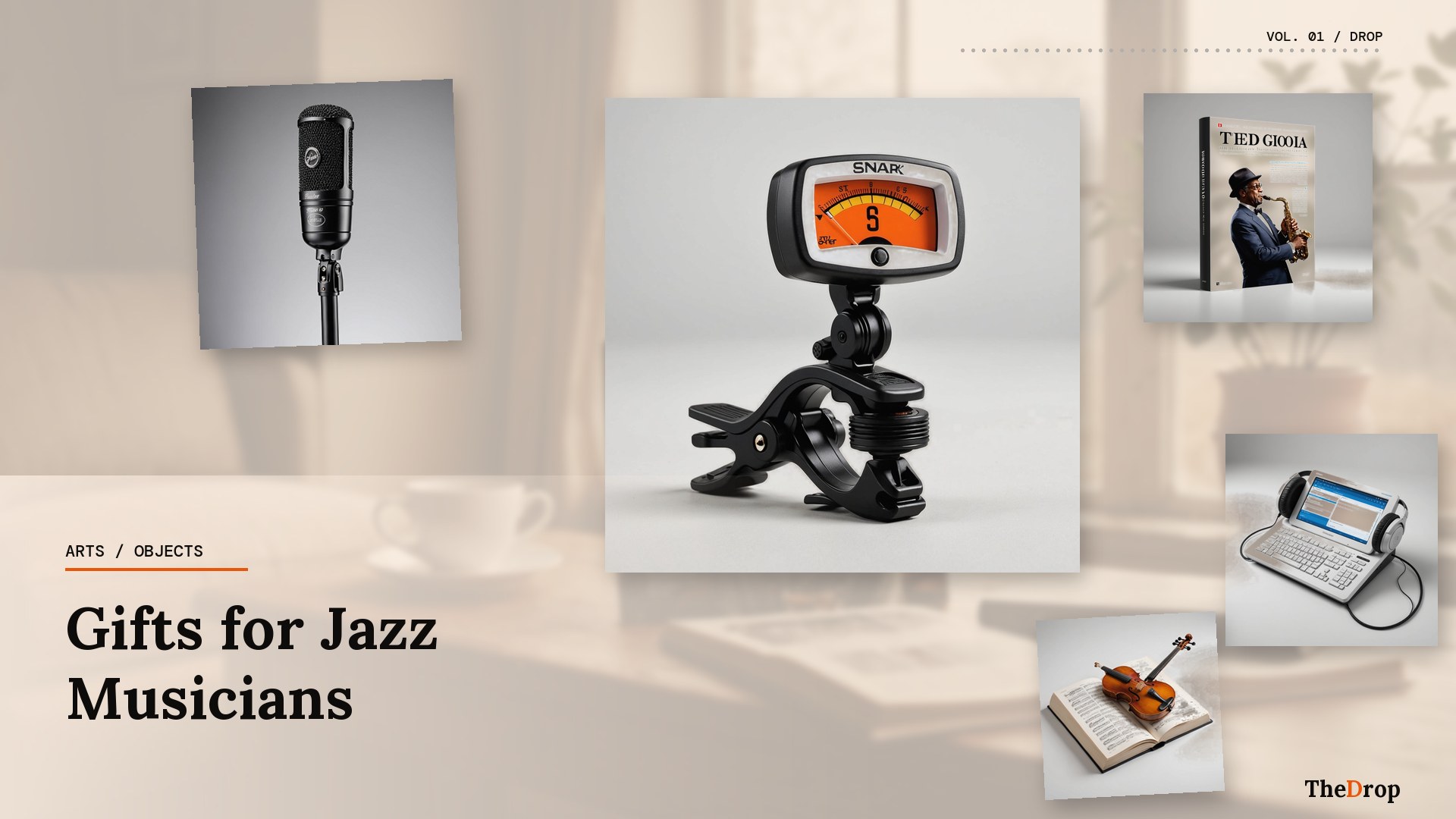
Snark ST-8 Super Tight All Instrument Clip-On Tuner
On a loud gig, a clip-on chromatic tuner reads through vibration rather than ambient sound. Compact enough to leave on the bell of a horn or the headstock of a guitar between tunes without looking like gear management.
Musicians Ear Training: Relative Pitch Book by Bruce Arnold
Ear training is the perpetual homework of every serious jazz player. Arnold's method is methodical and instrumentally neutral — building the ability to hear and sing intervals before transcribing them is foundational work that accelerates everything else.
Fender Professional Series Stage and Studio Microphone Stand
Every vocalist, horn player, and guitarist who does small gigs eventually needs their own stand. The Fender straight stand is built to the weight requirements of a real mic and heavy clip — not the light-duty stands that wobble when anyone walks past.
Ted Gioia The History of Jazz, Third Edition
Gioia's historical survey is the book that jazz musicians recommend to other jazz musicians — it understands the music as a continuous cultural argument rather than a sequence of famous names. Equal parts reference and good reading.
Transcribe! Software License for Audio Analysis
Slowing down recordings without pitch-shifting them is the core transcription workflow. Transcribe! is the industry standard for this — loop a phrase at 60% speed until the notes are clear, then notate. Every jazz musician who transcribes seriously should own a copy.
Fork it. Make it yours. Share before their birthday.
Friends claim items. No duplicates. No awkward conversations.