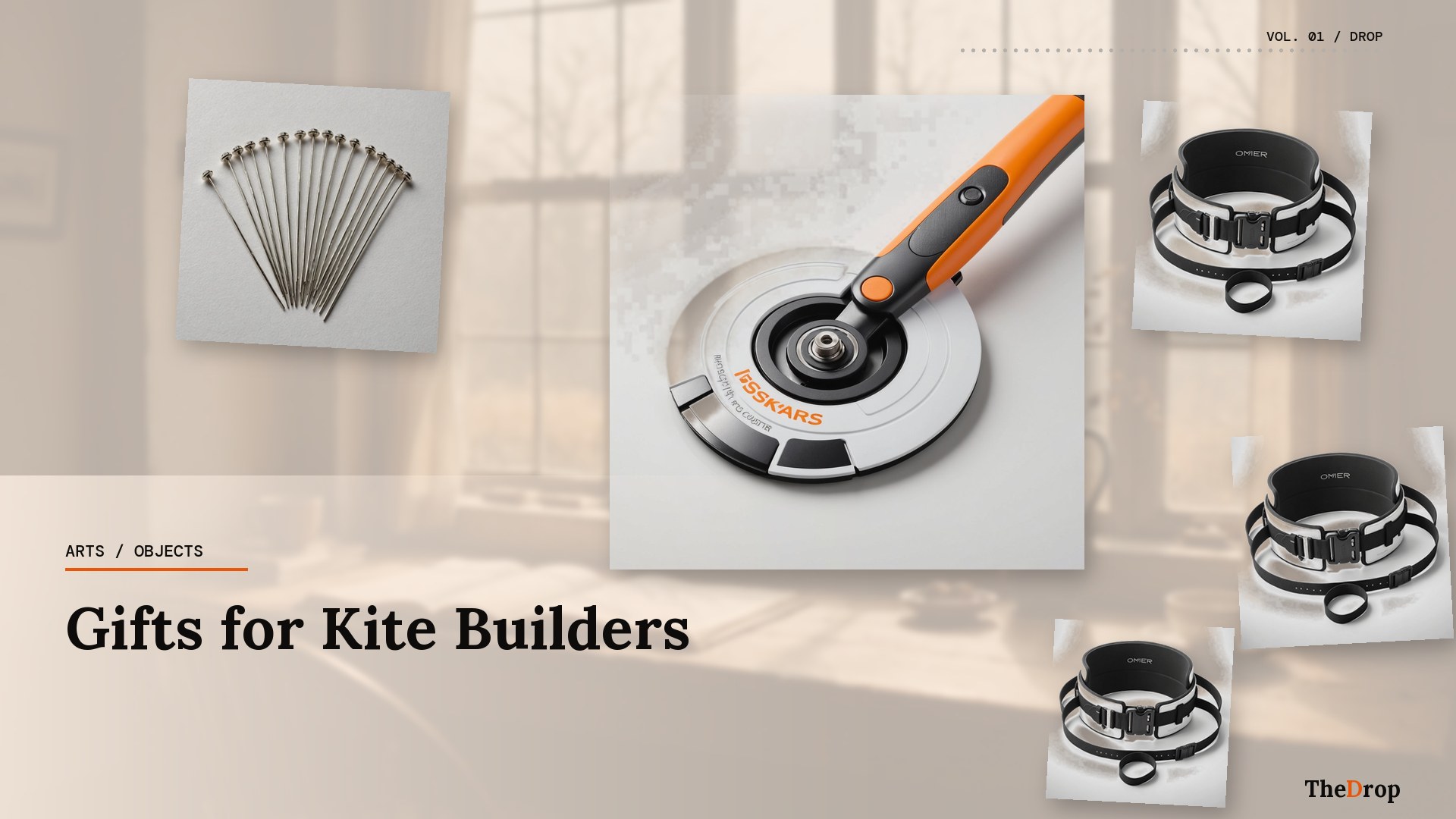
Gifts for Kite Builders
Kite builders are in a small, serious category — part aeronautical engineer, part textile artist, part wind-obsessive. They're particular about materials (ripstop over plain nylon, carbon over fiberglass where weight matters), and they follow the build more closely than the flight. The gifts that work here are spec-specific and useful in the workshop first.
Ripstop By The Roll - 1.9 oz Ripstop Nylon - 5 Yard Pack
1.9 oz ripstop is the go-to sail weight for most single-line kites. Five yards is enough for a delta or a good-sized diamond with plenty of room for mistakes on the first cut.
“The one reliable rule of gift-giving: anything that makes them look more serious at what they love will be received with disproportionate gratitude.”
Skyshark P200 Carbon Fiber Spar - 48 Inch
P200 is the workhorse spar for delta and diamond builds — stiff enough to hold shape in 20 mph winds, light enough to not fight the kite. Builders keep several in stock.
Kite Sail Tape - Spinnaker Repair Tape 2 Inch x 15 Yards
Every builder uses this — for sail repairs, reinforcing attachment points, and finishing leading edges. Sticks to ripstop and spinnaker without peeling in UV.
Prym Tailor's Chalk Pencil Set
Marking cut lines on ripstop without a proper fabric marker leads to crooked sails. Tailor's chalk washes off after cutting and actually shows up on dark fabric.
Fiskars Rotary Cutter 45mm with Non-Slip Grip
Cutting ripstop freehand with scissors is how you end up with uneven panels. A rotary cutter against a straight edge gives clean, parallel lines on any sail shape.
The Complete Book of Kites and Kite Flying
A reference volume covering designs from simple diamond to complex cellular — with enough aerodynamic theory to explain why something isn't flying right.
Presto-Lock 600 lb Braided Polyester Kite Line - 500 Ft
Strong, low-stretch, and visible on a 500-foot reel. A kite builder testing a new design needs line that won't snap on the first hard gust or stretch the bridle out of tune.
Dritz Extra-Long Glass Head Pins - 100 Count
Pinning panels flat before sewing keeps seam allowances honest. Glass-head pins don't melt under the iron when pressing ripstop seams for adhesive-backed tape joints.
Fork it. Make it yours. Share before their birthday.
Friends claim items. No duplicates. No awkward conversations.