Studio upgrades for the watercolor student who's outgrown the starter kit
The gap between "learning watercolor" and "painting watercolor" is almost entirely a materials problem. This list closes it — with real pigment, cotton paper that doesn't buckle, a brush that actually holds a point, and a few things that make the desk feel like a place work gets done.

Kuretake GANSAI TAMBI Watercolor paint set 48 Colors, Professional-quality art supplies for artist, drawing, sketch, Non-Toxic, Made in Japan
Forty-eight Gansai Tambi pans from Kuretake — a Japanese maker whose pigments sit noticeably richer than anything sold in a hobby-store starter tin. The colors are dense, they lift cleanly, and the compact case actually closes flat. A real working palette at a price that doesn't require justification.
“The one reliable rule of gift-giving: anything that makes them look more serious at what they love will be received with disproportionate gratitude.”

Daniel Smith Color Hand Poured Pan Set with BONUS Metal Box and Empty Half Pans, 24 Units (Pack of 1)
Daniel Smith hand-poured pans in a metal box — the name that working artists actually argue about on forums, not just recommend to beginners. Twenty-four colors chosen for range, not redundancy. The pans are refillable, the pigment load is serious, and the metal box will outlast the student years. The splurge that ends the splurge.
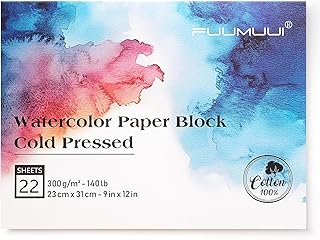
Watercolor Paper Block 9x12 Inch, Fuumuui 100% Cotton Paper Pad, 22 Sheets, Cold Pressed, Acid-Free, 140 lb/300gsm for Painting, Drawing, Art Journaling, Professional Artist Quality
A 9×12 block of 100% cotton cold-press at 140lb — the format where watercolor stops buckling and starts behaving. Fuumuui's cotton sheets hold wet-on-wet washes without warping, take scrubbing without pilling, and are gummed on all four sides so the block peels clean. Twenty-two sheets of paper that won't argue.
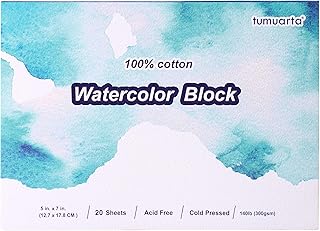
tumuarta Watercolor Block 100% Cotton, 5x7 in, 140LB, 300 GSM, 20 Sheets, Acid Free, Cold Press, Watercolor Paper Mixed Media Sketch Books for Watercolors, Acrylic, Gouache for Dry & Wet Techniques
Same 100% cotton, 140lb spec as a full-size block, but at 5×7 — a format serious enough for finished studies, small enough to paint on a kitchen table or carry in a bag. Twenty sheets. Acid-free. The right size for someone who wants to fill a sketchbook with work worth keeping.
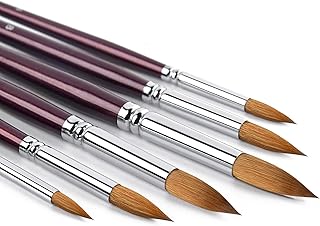
Kolinsky Watercolor Brush Set Pure Kolinsky Sable Hair Pointed Round Art Paintbrushes Premium 6 Pcs Round Tip Paint Brush Artist Acrylic Brush for Watercolor, Art Painting Gouache, Face Painting
Six Kolinsky sable rounds — the hair type that holds a reservoir of water and still snaps to a point. These are not "sable-style" or "sable blend." Pure Kolinsky, which means the brush loads pigment, follows the hand, and doesn't split mid-stroke. The single upgrade that changes what watercolor feels like to paint.

LED Desk Lamp with Clamp,Dimming Task Lamp for Reading Desktop Office Workbench Table Architect Sewing Study Home Craft,Bright 117PCS LEDs,2200 Lumens 20 Inch Metal Swivel Arm Work Lamp(Black)
A 117-LED clamp lamp on a 20-inch swivel arm, throwing 2200 lumens at the paper. Warm household light lies about color — yellows go orange, blues go grey. Consistent daylight-spectrum light means the painting you finish at 10pm looks the same as the one you started at noon. Dimmable, metal arm, clamps to a desk.

MEEDEN Heavy-Duty Tabletop Studio H-Frame Wooden Easel- Solid Beech Wood Adjustable Artists Desktop Wood Easel Table for Artist, Beginners & Teens- Holds Canvas Art up to 23" High
The MEEDEN H-frame tabletop easel in solid beech — the one that holds a block at a slight angle so water pools at the bottom edge instead of running across the wash. Adjustable, stable, and looks like something from a working studio rather than a craft aisle. A small change to posture that changes how the painting develops.

MEEDEN 18-Well Porcelain Artist Paint Palette, Mixing Art Ceramic Watercolor Paint Palette for Watercolor Gouache Acrylic Oil Painting, Rectangle 8 by 5-1/2-Inch
An 18-well porcelain palette, 8 by 5½ inches. Porcelain reads color accurately — plastic tints everything slightly, which means every mix is a small guess. The wells are deep enough to hold a real puddle of wash, the surface stays clean with one wipe, and it costs fourteen dollars. The upgrade that feels like it should cost more.
Fork it. Make it yours. Share before their birthday.
Friends claim items. No duplicates. No awkward conversations.