Gifts for Stand-Up Comedy Writers
They have a notes app full of half-formed observations and they're hitting open mics weekly. This is the comedy writer who can tell you the difference between a premise and a tag, and who records every set for playback.

The Comic Toolbox by John Vorhaus
Vorhaus's comic toolbox is the book that comedy writers keep on their desk rather than their shelf — it's a working manual for understanding why things are funny at a structural level. The premise-to-punchline architecture he describes is the framework that new comedians absorb intuitively at open mics and finally understand explicitly when they read this. Less famous than Judy Carter's The Comedian's Bible but more analytically useful.
“The one reliable rule of gift-giving: anything that makes them look more serious at what they love will be received with disproportionate gratitude.”

Sony ICD-UX570 Digital Voice Recorder
Every working comedian records their sets, and a dedicated voice recorder captures ambient stage audio far better than a phone mic placed on a stool — it picks up the laughs that the phone can't always distinguish from crowd noise. The Sony ICD-UX570 has a USB plug built into the body for direct computer transfer and 4GB internal storage. Recording your own set is how you hear the pause that worked and the tag that died.

The Comedian's Bible by Judy Carter
Judy Carter's system for building jokes from personal trauma and experience is the methodology that comedy courses teach and that open mic regulars argue over for years. The PTTMTM format (Personal, Trouble with, The More, The More) is a formula that forces writers to dig into specific experience rather than floating on generalities — which is where most beginner comedy fails. A foundational text for anyone serious about the craft.
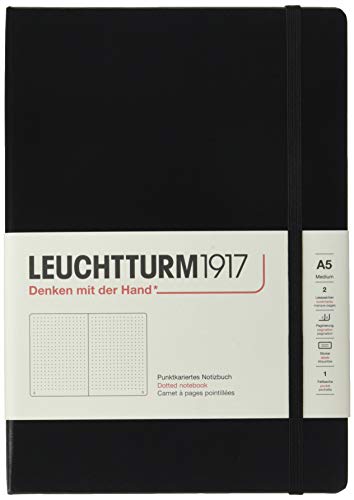
Leuchtturm 1917 A5 Dotted Notebook Hardcover
Comedy writers live and die by their bit notebooks, and the quality of the notebook affects how readily you reach for it. The Leuchtturm A5 is the size that fits in a jacket pocket, the dotted grid is neutral enough for both text and diagrams, and the numbered pages with table of contents make joke hunting through a full notebook actually feasible. The format that professional writers carry without being precious about it.

Born Standing Up: A Comic's Life by Steve Martin
Steve Martin's memoir of developing his stand-up act from magic shows to arena comedy is a masterclass in understanding the long arc of comedy development — the years of low-paying gigs, the systematic working-out of ideas, the specific moment when absurdist anti-comedy clicked for him. The comedy community treats it as required reading because it demystifies the craft in a way that no how-to book can match.
Fork it. Make it yours. Share before their birthday.
Friends claim items. No duplicates. No awkward conversations.


