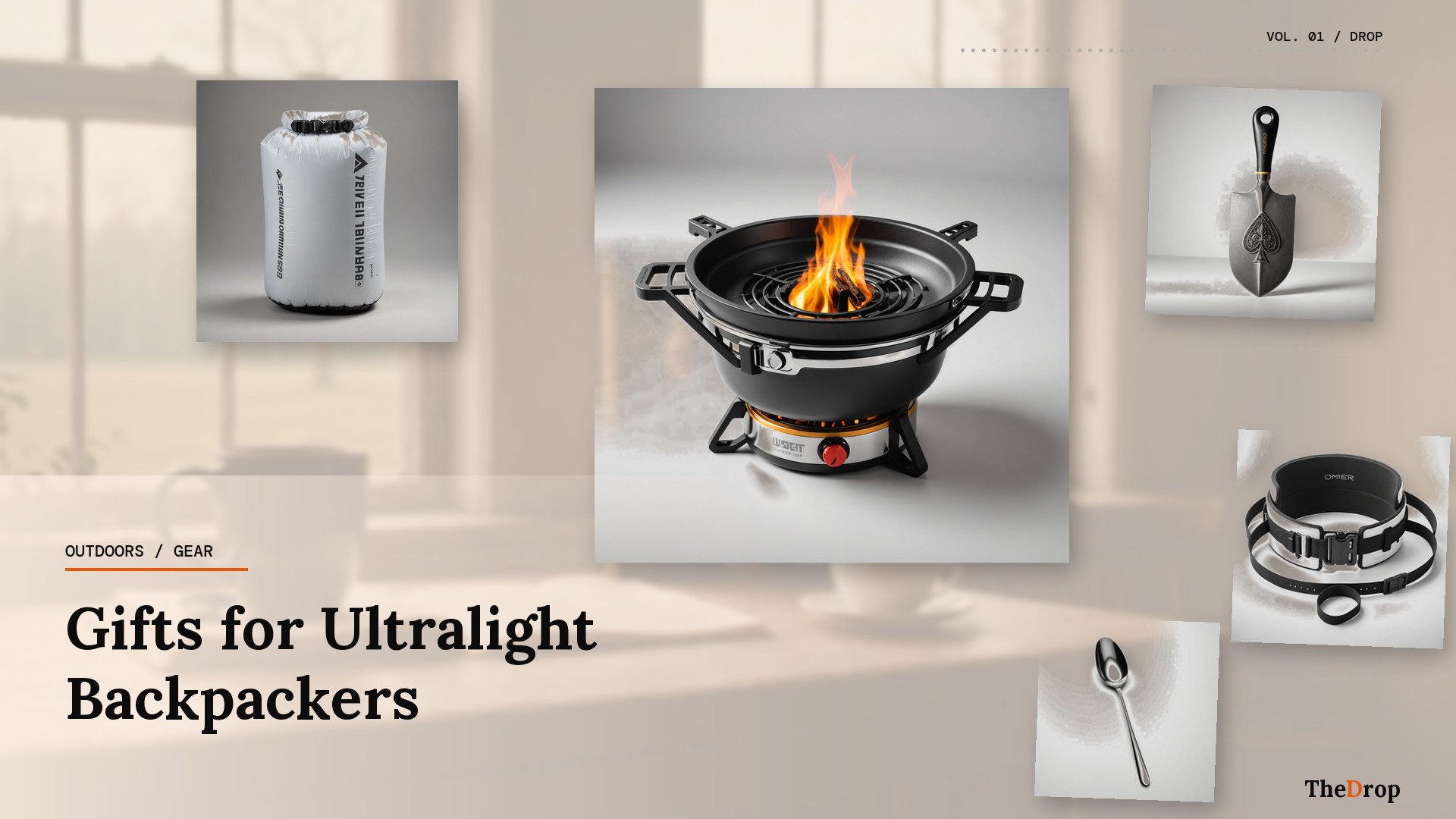
Gifts for Ultralight Backpackers
Ultralight backpackers are a specific kind of gear obsessive — they own a postal scale, know their base weight to the gram, and have opinions on why a titanium spork is 11g lighter than aluminum. Shopping for them means thinking in grams first, dollars second. Any gift that shaves real weight from a loaded pack will be remembered long after the trip.
Snow Peak Titanium Trek 900 Solo Cook Set
157g for pot, lid, and handles. Titanium conducts heat unevenly but weighs nothing — the standard trade-off that ultralight backpackers accept without complaint.
“The one reliable rule of gift-giving: anything that makes them look more serious at what they love will be received with disproportionate gratitude.”
Sea to Summit Ultra-Sil Dry Sack - 4L
Silicone-coated nylon at 25g is a genuine ultralight sack. Sea to Summit's seam taping holds up to submersion, and the roll-top closure doesn't add a gram of unnecessary hardware.
Deuce of Spades UL Trowel
At 19g, this carbon/aluminum trowel is the Leave No Trace standard for ultralight walkers. Six inches is the minimum dig depth for proper cat holes — this reaches it in any soil type.
Zpacks Dry Bags - Dyneema Composite Fabric
Dyneema (cuben fiber) is the lightest waterproof dry-bag material available. A Zpacks bag weighs 18g and will outlast three nylon equivalents in abrasion-heavy pack conditions.
Toaks Titanium Long Handle Spoon
18g titanium. Long handle reaches the bottom of any freeze-dried bag without removing it from the pot. No plastic, no flex, no weight — the platonic ultralight spoon.
Smartwater 1L Bottle (2-Pack)
The Smartwater bottle is the most-recommended ultralight water vessel in the thru-hiker community — compatible with Sawyer Squeeze filters, 34g per 1L, and available everywhere for replacement.
GRIM WORKSHOP Collapsible Cups - Titanium
A collapsible titanium cup cuts bulk without cutting the weight benefit of titanium over silicone alternatives. Fits neatly inside a Trek 900 pot for a tight kitchen setup.
UST WildFire Base Canister Stove
76g canister stove with a wide base to prevent tip-overs on uneven ground. The trade is that it needs fuel canisters, but for under 80g it covers 90% of UL cooking scenarios with no learning curve.
Fork it. Make it yours. Share before their birthday.
Friends claim items. No duplicates. No awkward conversations.