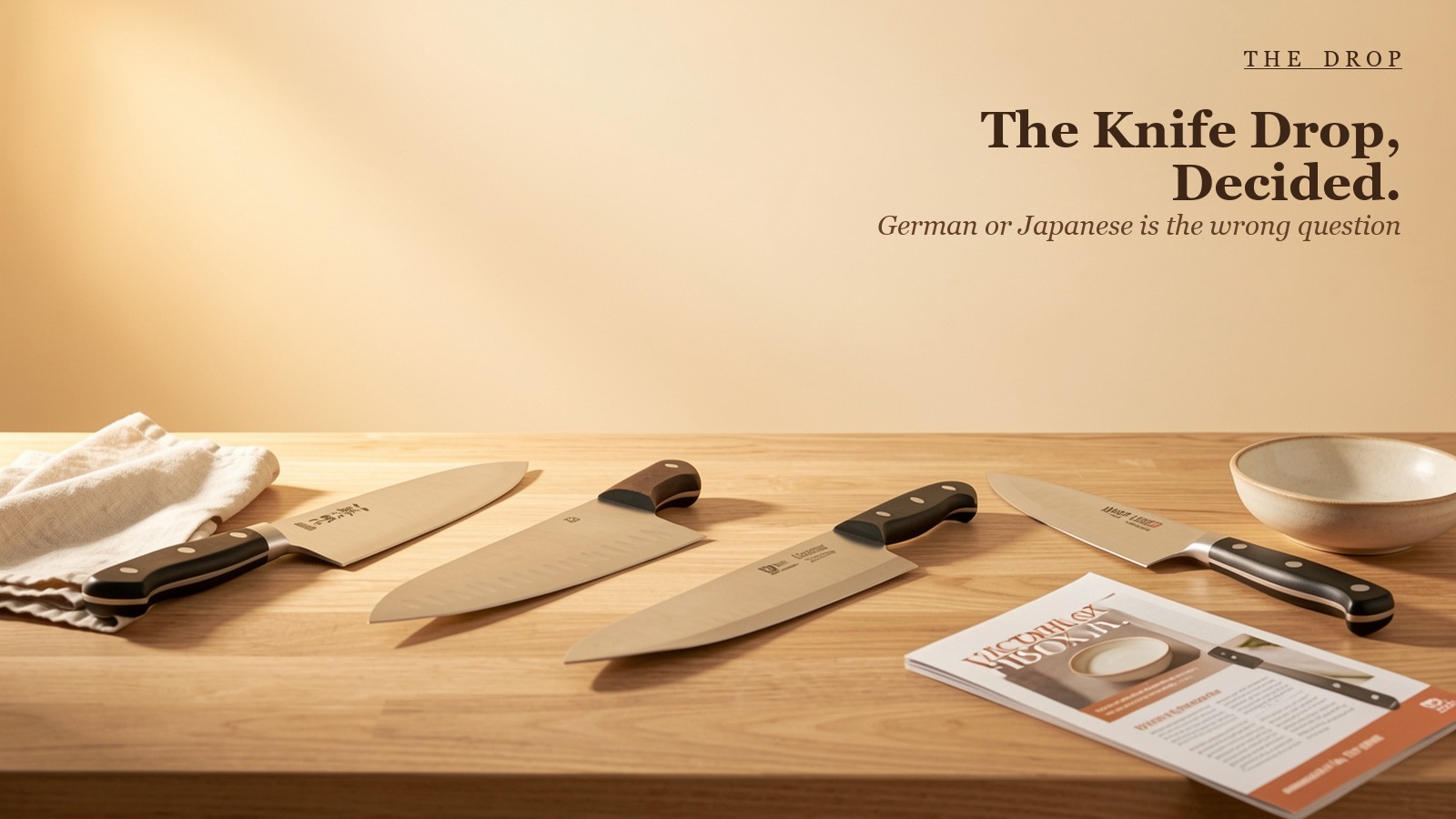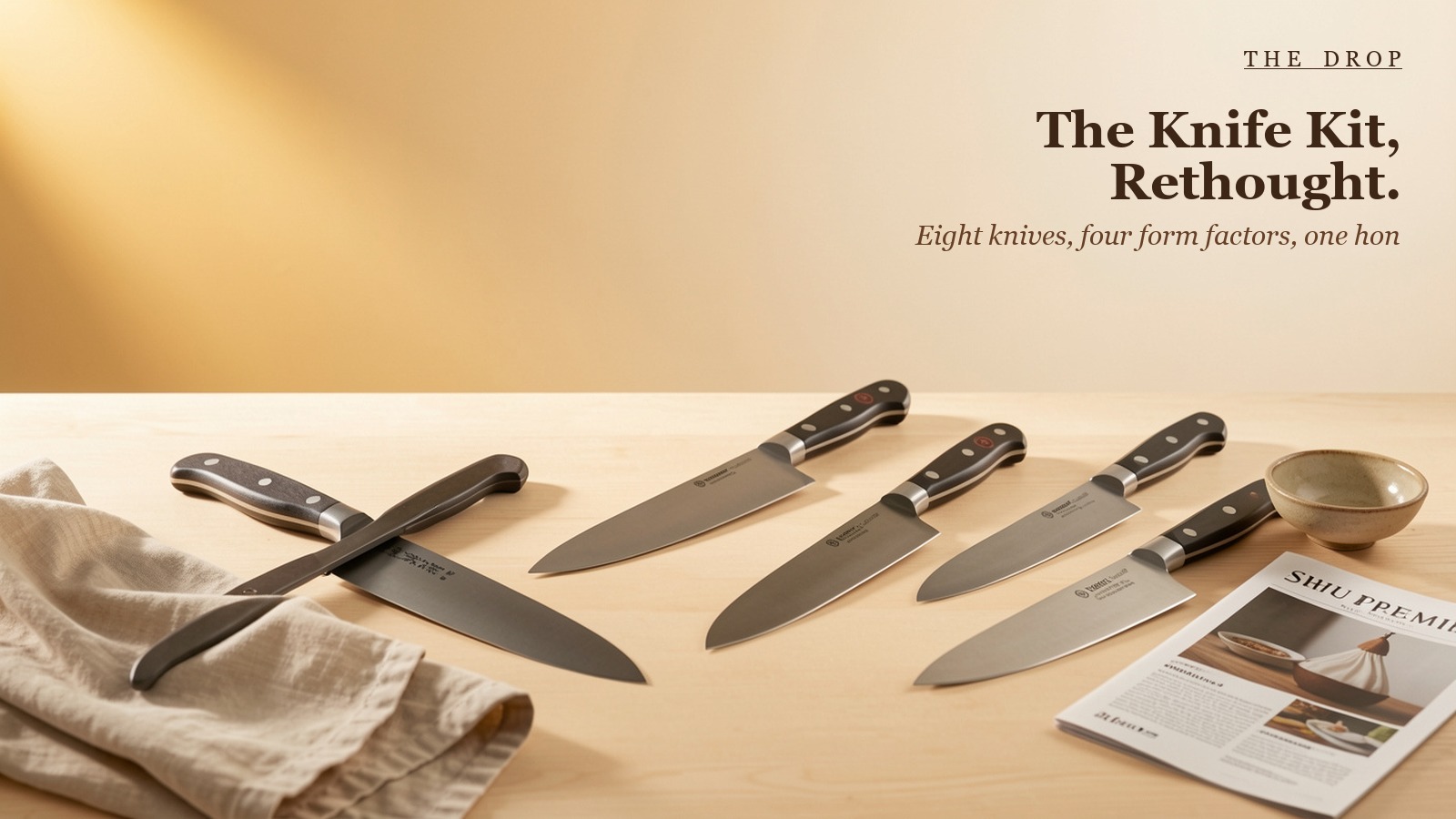
The Knife Kit, Rethought.
Most home cooks don't need another knife. They need to stop defaulting to the wrong one. If you've got a Henckels International block or a Wüsthof Classic doing all the work, the question isn't which single blade fixes everything — it's which decision point you're actually at. The Victorinox Fibrox Pro is the unsentimental place to start that conversation: sharper out of the box than most knives twice its price, and honest about what the rest of this kit is asking you to consider.
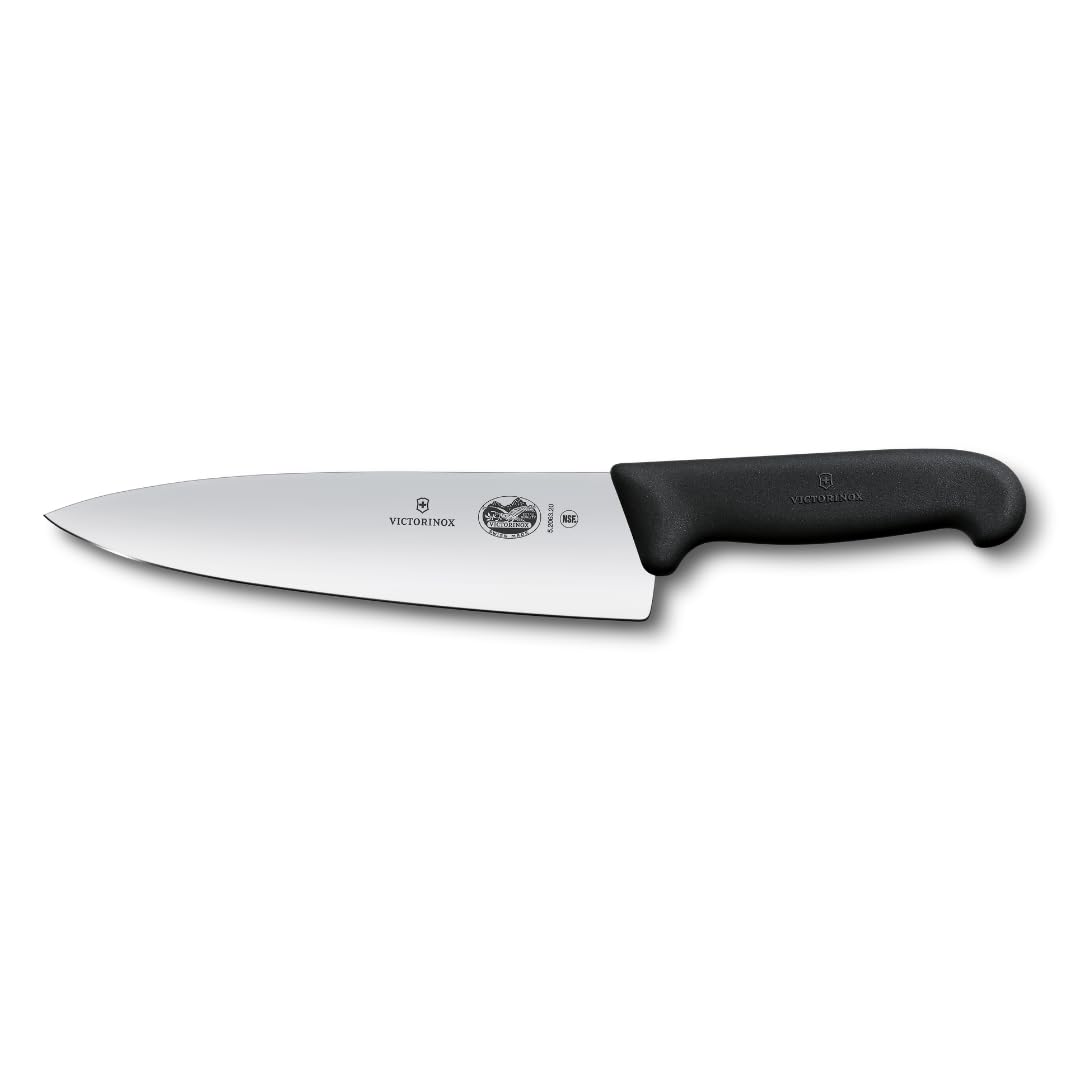
Victorinox Fibrox Pro 8"
The entry point that earns its place on a serious list: over 14,000 reviews for a reason. The thin grind behind the edge is closer to J-steel geometry than most German knives, the Fibrox handle is genuinely non-slip, and at $42 it functions as a forcing function — once you know what sharp actually feels like, every other decision in this drop gets easier.
“The one reliable rule of gift-giving: anything that makes them look more serious at what they love will be received with disproportionate gratitude.”

Tojiro DP Gyuto F-808 10.5"
The knife that shows up in nearly every r/chefknives thread on the German-to-Japanese transition, and for good reason. VG-10 core at HRC 60–61, stainless-clad so it won't punish a beginner who forgets to dry it, and a distal taper that makes the 10.5-inch length feel less aggressive than it reads. $139.95 for a gyuto that performs at twice the price.

Wüsthof Classic 8" Chef's Knife
Not every upgrade is a directional one. The Wüsthof Classic at $170 is the legitimate answer for the cook who wants a workhorse that tolerates abuse, sharpens forgivingly, and holds a 58 HRC edge through everything from butternut squash to a full Sunday roast. Nearly 3,000 reviews. Full bolster, forged X50CrMoV15, and a silhouette that looks exactly like what it is.
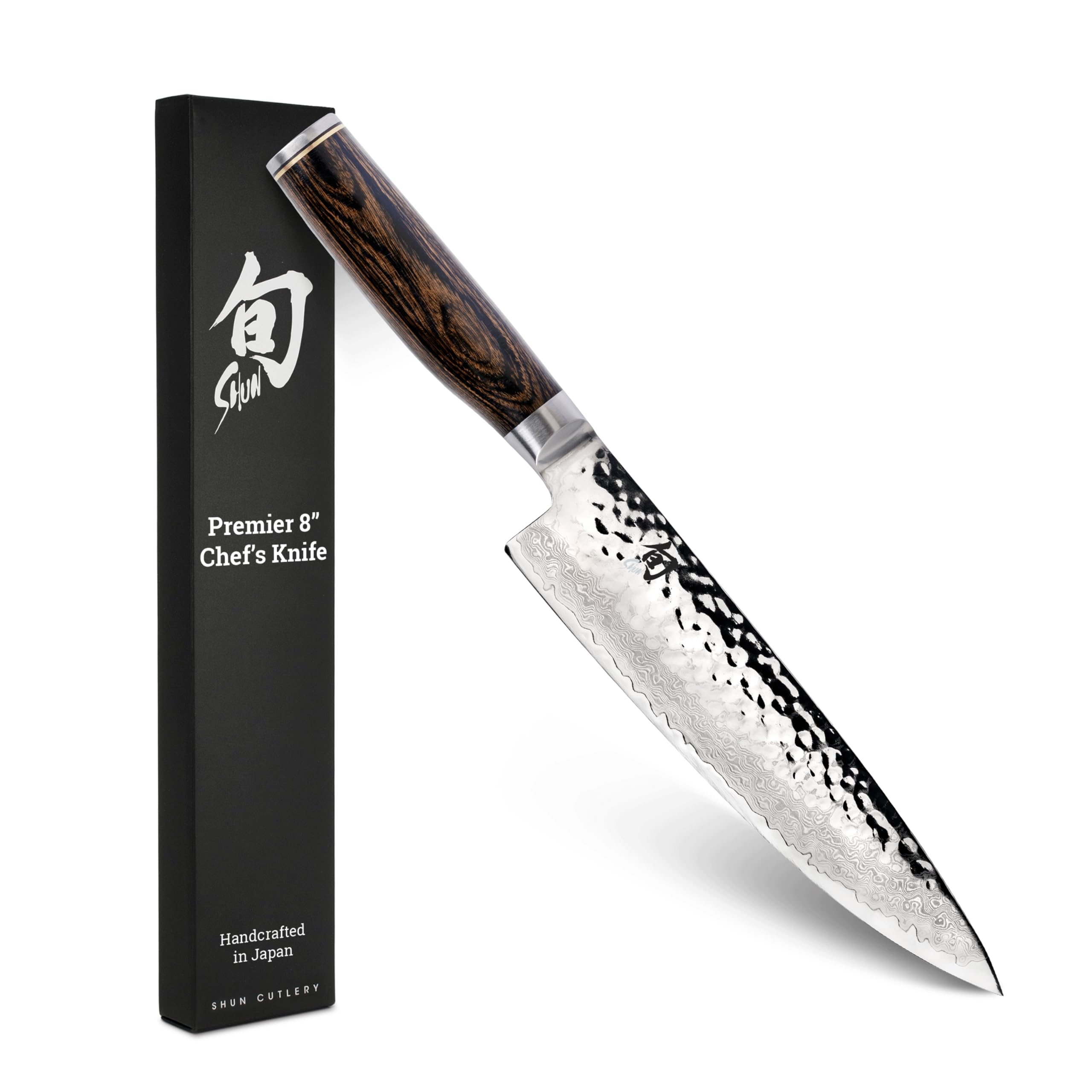
Shun Premier 8" Chef's Knife
If the Tojiro is the utility decision, the Shun Premier is the one you notice on the counter. VG-MAX core clad in 68 layers of Damascus, hammered tsuchime finish that reduces food release drag, and a walnut PakkaWood handle that photographs well and feels better. At $219.95, it's the top of the entry-Japanese tier — and 2,100-plus reviews confirm it holds up past the honeymoon.

Shun Classic 8" Chef's Knife
Where the Premier has presence, the Classic has restraint — ebony PakkaWood handle, VG-MAX steel clad in 34 layers of Damascus, 16-degree edge angle that splits the difference between Western habit and Japanese geometry. It's the more disciplined-looking knife of the two Shuns here, and at $189.95 it's become, with nearly 3,800 reviews, the most validated entry point in this entire drop.

Global G-2 8" Chef's Knife
No bolster, no handle, no concession to German convention. The Global G-2 is a single piece of CROMOVA 18 stainless at HRC 56–58, hollow-ground dimples for grip, and a balance point that feels wrong for about three minutes and then very right. It's a deliberate departure, not a direct upgrade — buy it if the idea of a knife that looks like nothing else in your kitchen sounds like a feature.

Messermeister Avanta Steak Set
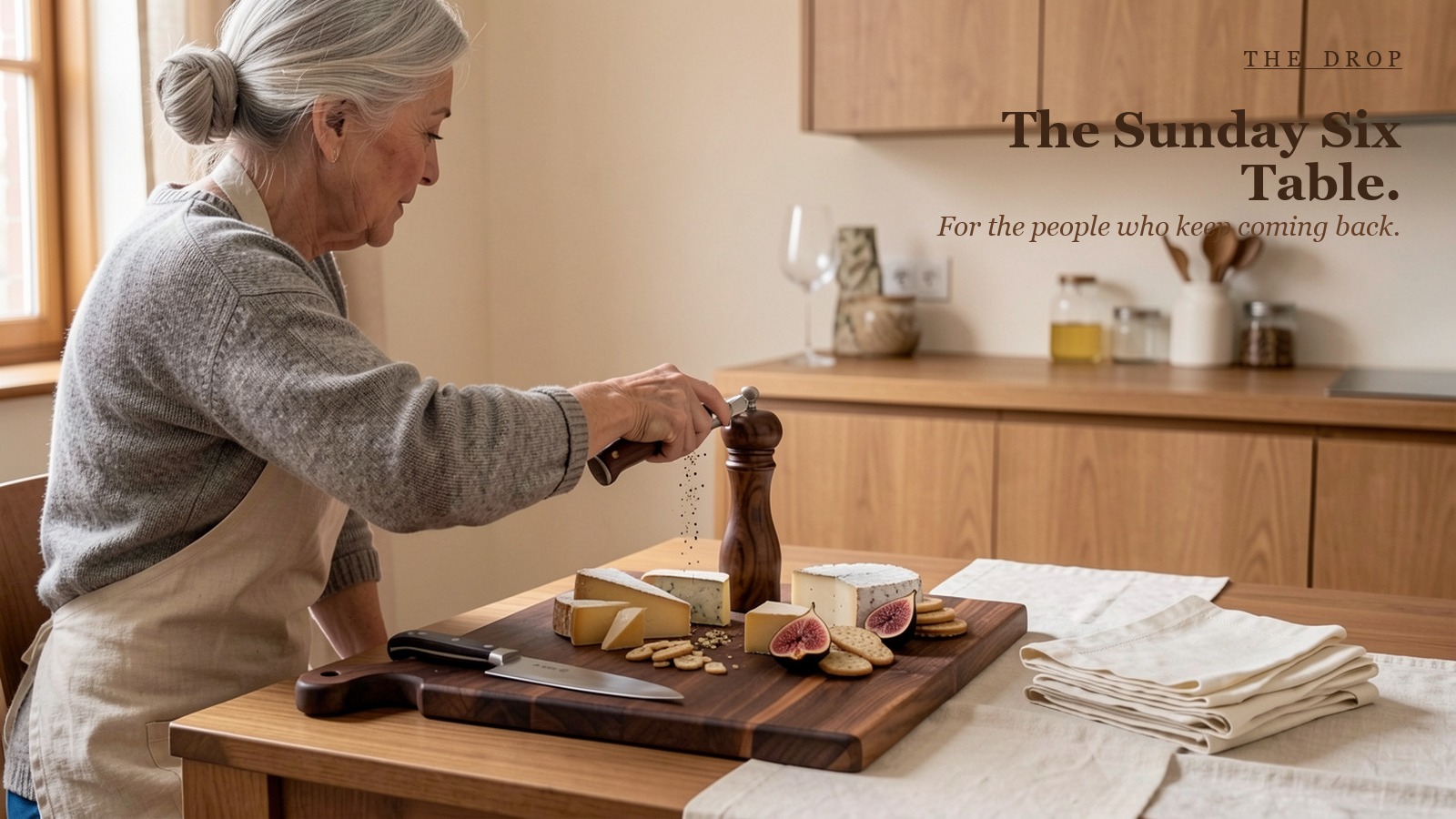
The aesthetic coherence problem that r/chefknives actually raises most often: steak knives. Messermeister's Avanta forged set uses German X50 stainless steel and Pakkawood handles that read comfortably next to a Classic Ikon — four knives at $79.95, fine edge (no serration teeth to explain), and around 120 reviews that are notably consistent on edge retention. Under $20 per knife for a forged set is the right trade-off here.
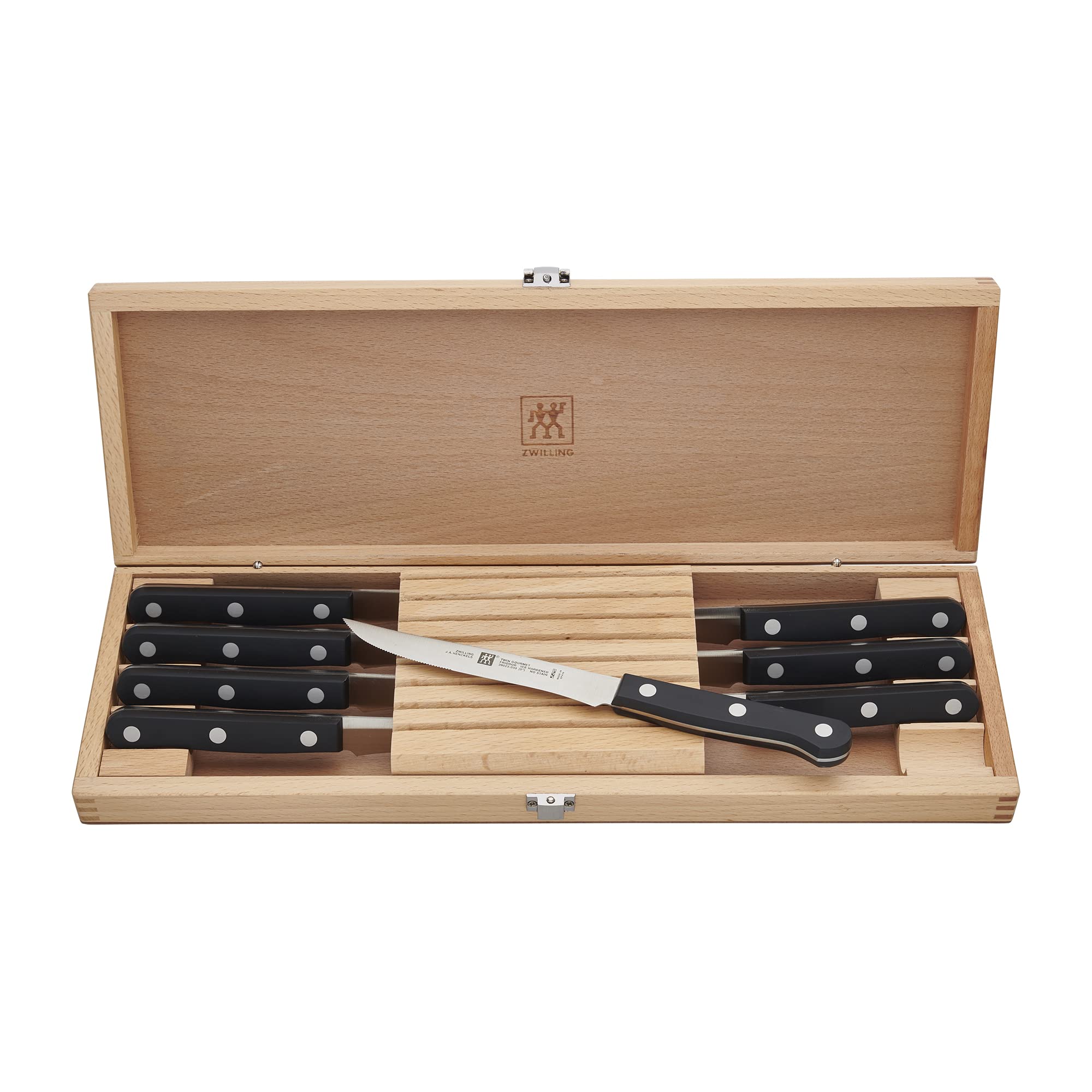
Zwilling Twin Gourmet 8-pc Steak Set
If you're already in the Zwilling J.A. Henckels ecosystem — and there's a meaningful difference between that and Henckels International — the Twin Gourmet set closes the loop. Eight knives in a wood presentation case at $98.19 total, serrated blades that stay sharp without maintenance, and a brand line that sits visually right next to your Wüsthof without the explanation. 1,350 reviews, sensible for a dinner-party household.
Fork it. Make it yours. Share before their birthday.
Friends claim items. No duplicates. No awkward conversations.