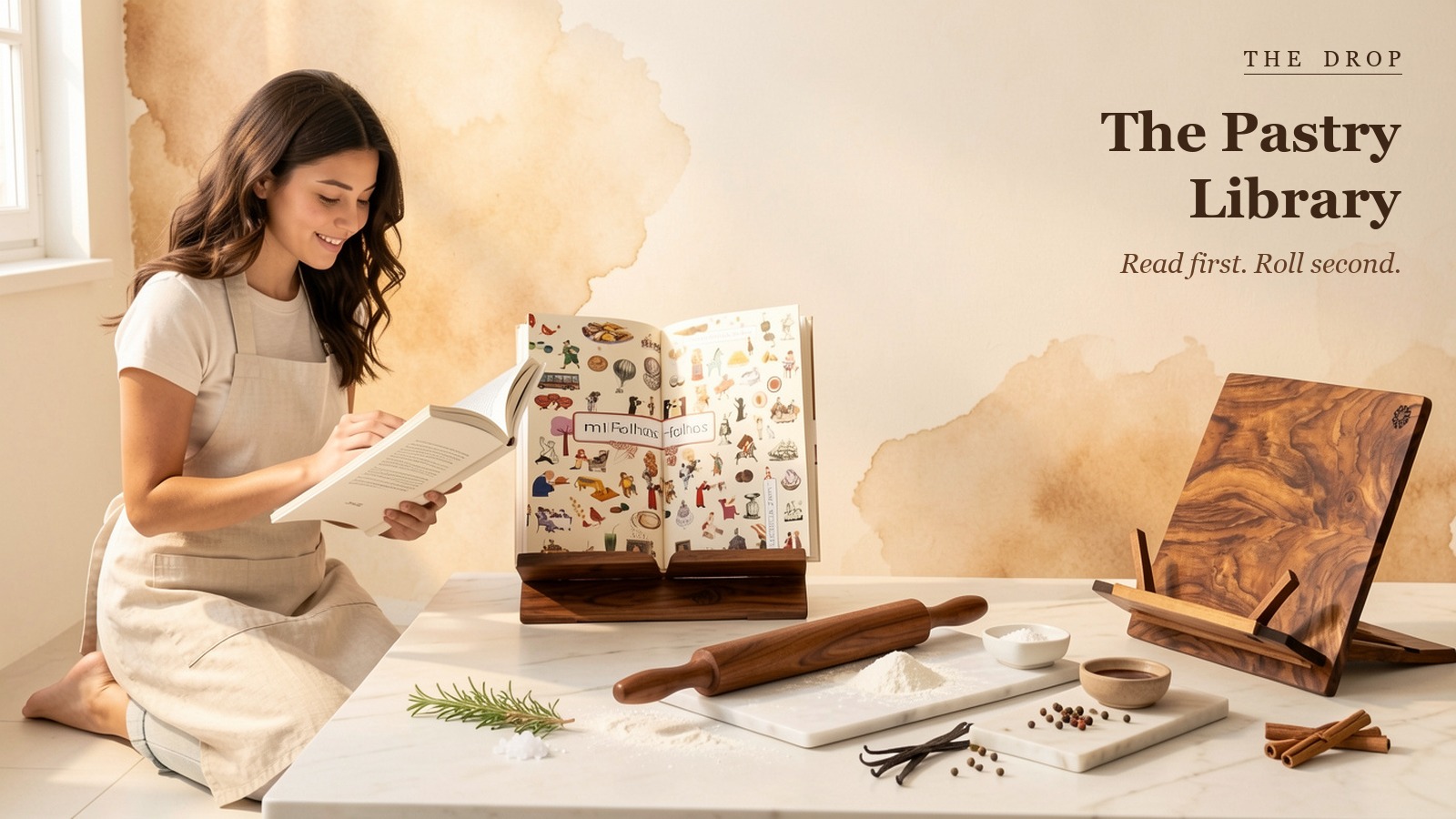
The Pastry Library. Read first. Roll second.
First, the book — Lucrecia Zappi's Mil Folhas, an out-of-print Cosac & Naify illustrated history of pastry, in Brazilian Portuguese. It belongs on the kitchen counter, not the shelf. Around it: a Sapele rolling pin, a marble board cool enough to laminate dough, a scale, an oven dial, a bench scraper, a boar-bristle brush, a Maldon flake. And a walnut stand to keep the book open while you read. Read for a week. Then start the dough.
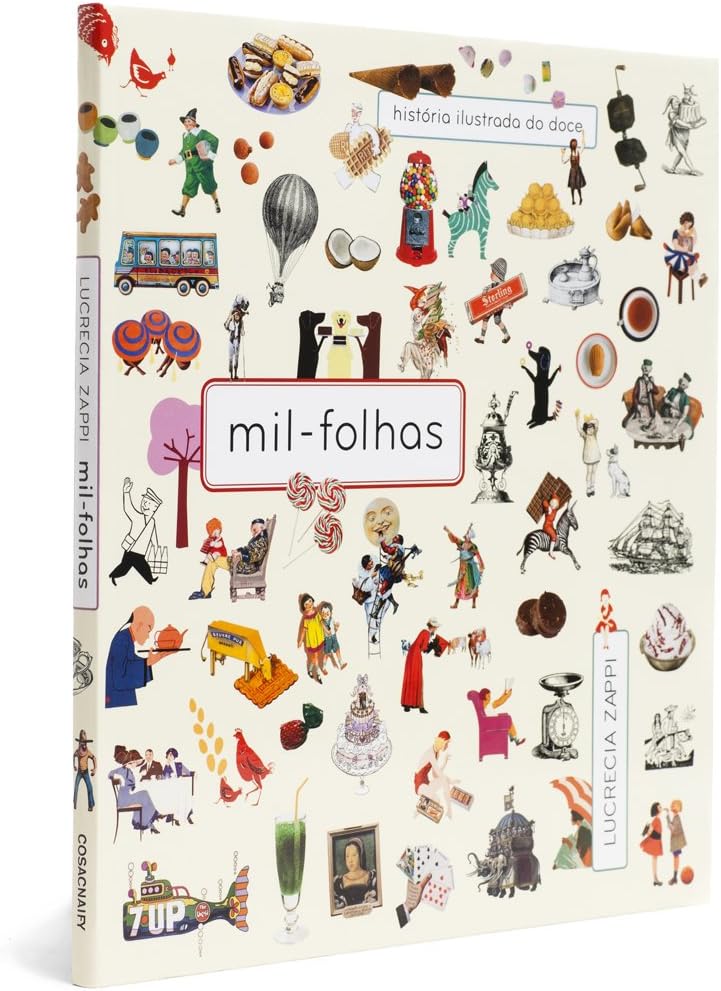
Mil Folhas — Lucrecia Zappi
An illustrated history of pastry in Brazilian Portuguese, from the prestigious São Paulo art-publisher Cosac & Naify. The imprint folded in 2015, which makes this book a quiet collectible. Mil Folhas is also the Portuguese name for millefeuille — the layered pastry whose history this book illustrates. You don't need to read Portuguese for it to live on your counter.
“The one reliable rule of gift-giving: anything that makes them look more serious at what they love will be received with disproportionate gratitude.”

TILISMA Walnut Cookbook Stand
The reason the book stays on the counter and not the shelf. Handmade in solid walnut with a brass-pinned hinge — not the laminated-pine kind that warps when steam hits it. Holds the book open at the right angle for reading while you weigh flour, and folds flat between sessions. Buy it second, after the book.

Muso Sapele French Rolling Pin
The French tapered pin, the one Serious Eats and King Arthur both pick over the heavy ball-bearing kind. Sapele is the warmer-grained cousin of mahogany — it photographs like furniture and rolls cold butter into puff dough without bruising. $13. The first tool you actually need to make the book's cover recipe.

Fox Run Marble Pastry Board
Marble stays cool. Cold dough is the difference between flaky lamination and a sad warm slab. 16 by 20 inches is the room to roll a full sheet of puff, and the weight is the point — it stays where you put it. Lives on the counter as a work surface and a serving platter.

Escali Primo Digital Scale
Pastry is weight, not volume — 365 grams of butter is 365 grams, regardless of how it packs. The Escali Primo is the scale every King Arthur and Serious Eats recipe assumes you own. Lives in the drawer when not in use, runs years on two AAAs, weighs anything from a pinch of yeast to a roast.

Taylor Oven Dial Thermometer
Most home ovens lie. They tell you 375°F and hold 350°F. The Taylor analog dial sits on the rack and tells you the truth, which is what your puff pastry needs to actually puff. Nine dollars, no batteries, no app. Lasts forever. The unsexy gadget the recipe assumes you have but you almost certainly don't.

OXO Stainless Bench Scraper
The thin stainless rectangle that lives between the rolling pin and the marble. Cuts cold butter into cubes for the lamination, divides dough into equal portions by weight, scrapes flour off the marble in one pass when you're done. OXO’s grip is the one bench scraper that doesn't slip when your hands are wet.

SPARTA Pastry Brush
The egg wash on a millefeuille is what makes the top sheet shine like glass. Silicone brushes don't carry enough liquid; cheap natural-bristle ones shed into the pastry. SPARTA’s stainless ferrule and tightly-set boar bristles are restaurant-supply grade — the brush you'll use for everything brushable for the next decade.

Maldon Sea Salt Flakes
The pyramid flakes, scattered on the warm caramel of the millefeuille two minutes before serving. The salt David Lebovitz uses, the salt every pastry chef in New York keeps in a ceramic pinch bowl. The recipe doesn't call for it; it's the reason you spent three days laminating dough. The 8.5 oz tin lasts a year.
Fork it. Make it yours. Share before their birthday.
Friends claim items. No duplicates. No awkward conversations.