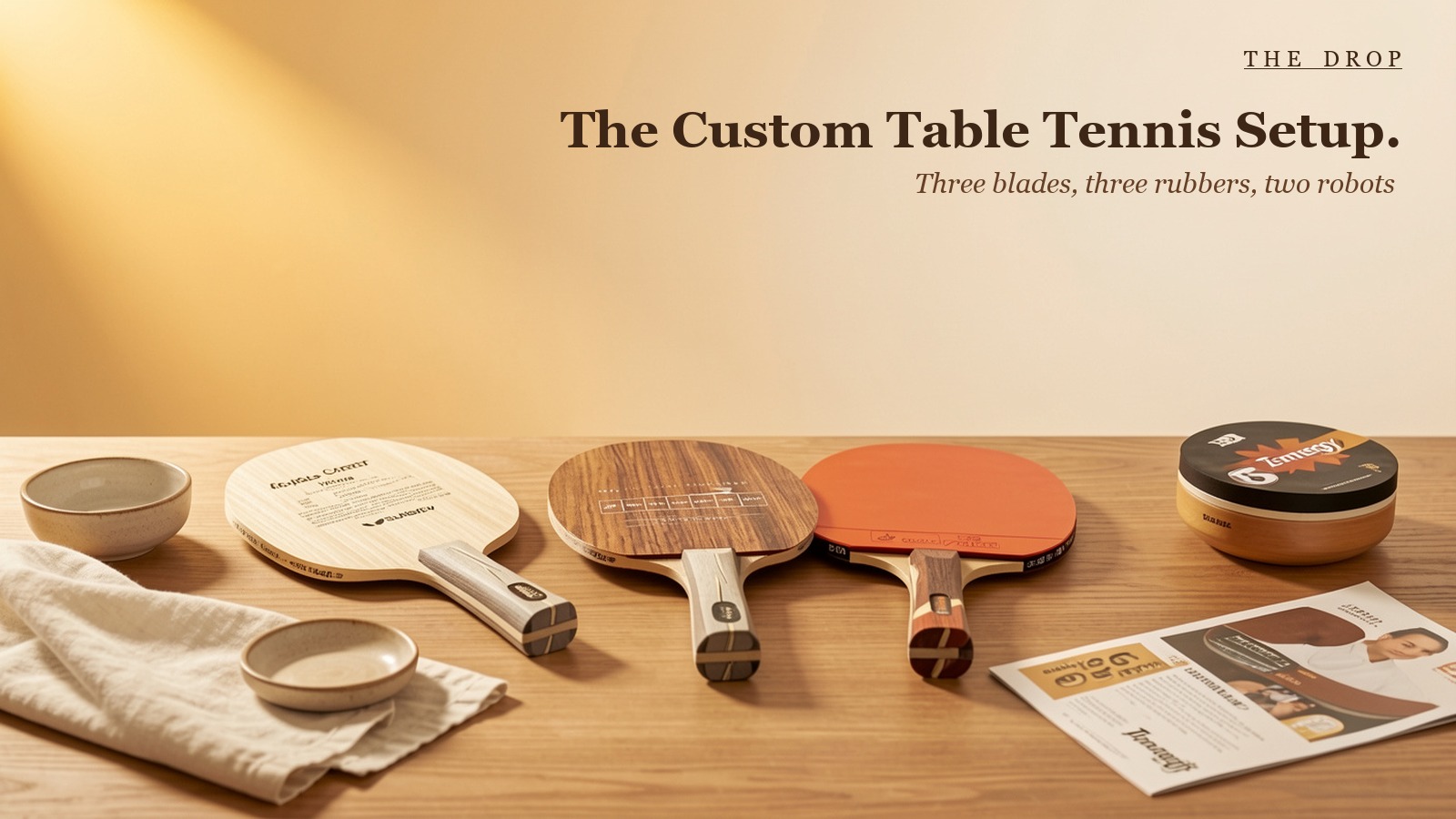
The Custom Table Tennis Setup.
The upgrade moment in table tennis is specific: your loops are landing, your footwork has a pattern, and the pre-made racket you bought on Amazon two years ago is now the thing holding you back — or at least that's what you suspect. The Butterfly Viscaria is where r/tabletennis sends that suspicion to get confirmed. Build around it honestly, or start cheaper and work up. Either way, stop practicing on equipment that's lying to you.
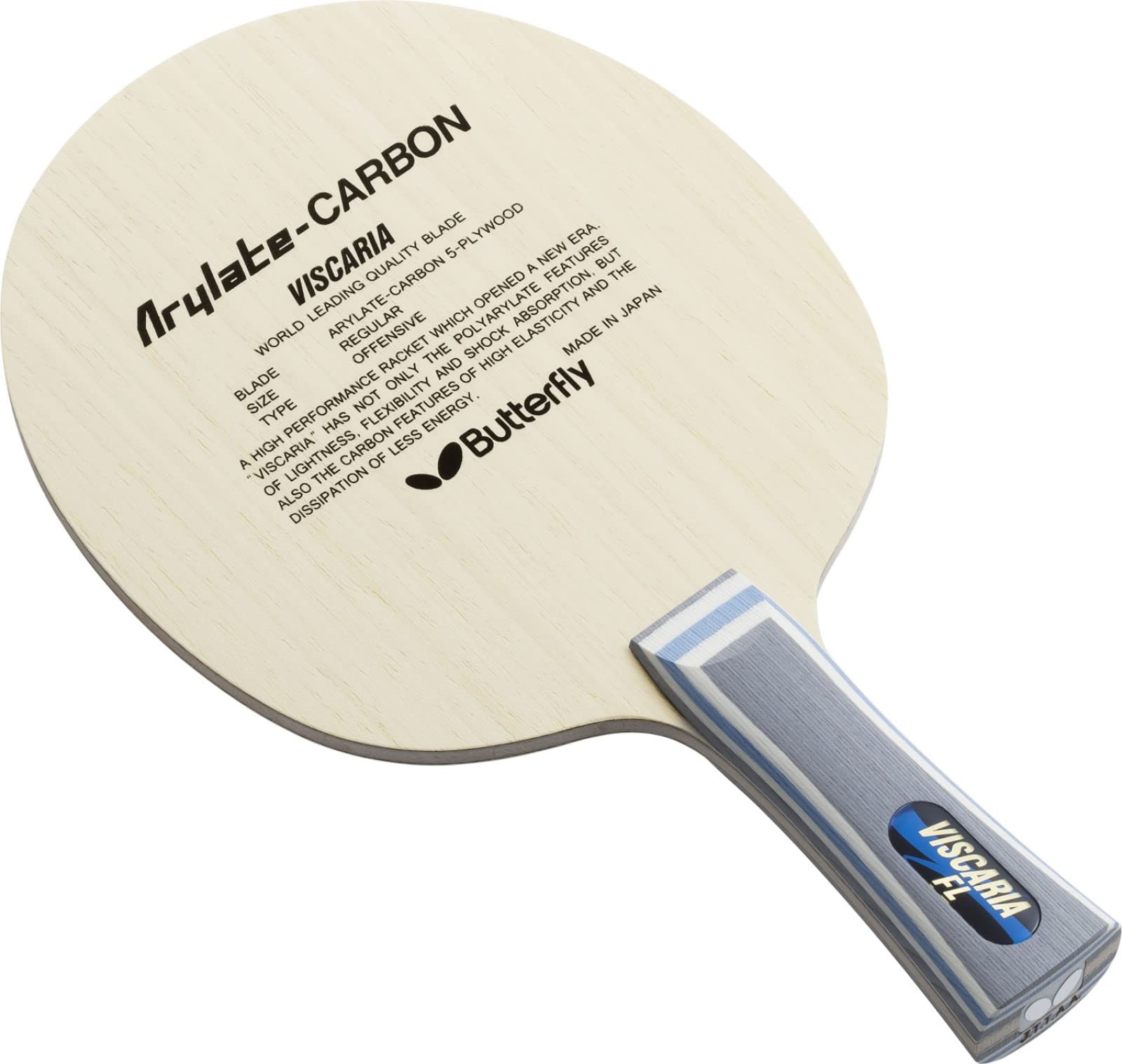
Butterfly Viscaria ALC Blade
Four out of six expert model runs named it first, and r/tabletennis threads cite it by name more than any other blade. The reason is the ALC construction: those two arylate-carbon layers are sandwiched between outer wood plies, which softens the catapult compared to outer-carbon designs. Fast, but learnable. At $184.99, it is the honest ceiling of the intermediate upgrade tier.
“The one reliable rule of gift-giving: anything that makes them look more serious at what they love will be received with disproportionate gratitude.”

Yasaka Ma Lin Extra Offensive
The intended pick here was Yasaka Sweden Extra, the sub-$35 all-wood benchmark — this listing is its close cousin, a five-ply offensive blade in the same Yasaka all-wood tradition. Under $55, it gives honest contact feedback that carbon blades blur: if your loop was brushed correctly, you'll know; if it was muscled, you'll know that too. The all-wood case made on pure merit.

STIGA Pro Carbon Racket
The brief called for Stiga Clipper Wood, but this seven-ply carbon from Stiga with over 5,300 reviews is what Amazon carries at this tier. It brings the brand-diversity argument the drop needs — Stiga's carbon construction against Butterfly's ALC — and its 7-ply build favors close-to-mid-table play. At $99.99, it bridges the all-wood and premium carbon price points cleanly.
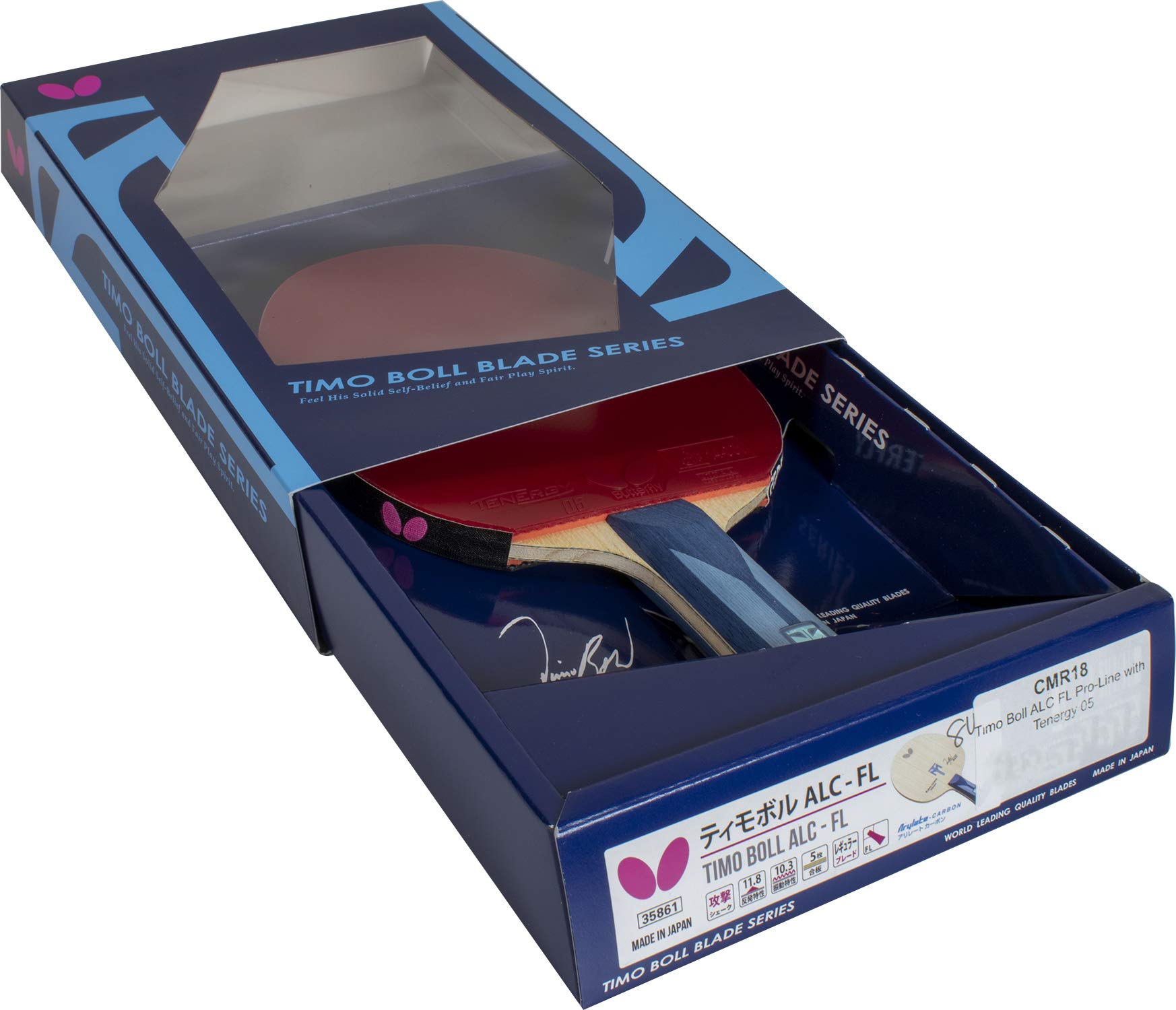
Butterfly Timo Boll ALC + Tenergy 05
Tenergy 05 appeared in every rubber-related research run — five out of five. Buying it tells you exactly where your technique stands: forehand loops with consistent form get rewarded; arm-swinging gets punished immediately. This bundle pairs it with the Timo Boll ALC blade, so you are getting the rubber's honest diagnostic on a well-matched carbon platform. The reference point the whole rubber axis is measured against.

Nittaku Fastarc G-1 Rubber
SpinTesters ran Fastarc G-1 head-to-head against Tenergy 05 in controlled conditions and found spin numbers that sit remarkably close, with a slightly softer catapult that absorbs the off-center hits still happening at the intermediate stage. At $47.17, it is the honest intermediate rubber — buy this first, develop your loop, then decide if Tenergy's extra snap is actually worth the premium.

Yasaka Rakza 7 Rubber
Reddit mentioned Rakza 7 across two separate rubber query threads — more community consensus than most rubbers twice its price. Its medium-hard tensor construction generates real spin feedback without demanding the precise contact angle that Tenergy requires. At $49.95 in 2.0mm, it pairs particularly well with all-wood blades and gives developing forehand loopers a rubber that rewards progress incrementally.

iPong Original TT Robot
The brief anchored the robot tier on Newgy Robo-Pong 2055, which didn't surface in verified inventory at this price point. What did: iPong's original trainer, the sub-$120 entry that has 298 reviews and a straightforward oscillating feed. It won't run 170 balls per minute or accept PC drill programming, but for players who want to groove a forehand loop before committing to a four-figure robot, it starts the conversation.

PONGBOT Table Tennis Robot
264 built-in drills, app control for custom spin and speed sequences, 150-ball capacity, and a $299.99 price that sits well below the Newgy tier. Racket Insight's review of the Nova S Pro category flagged app-programmable budget robots as the most compelling under-$400 development in training infrastructure — this is the version Amazon has in stock. The solo practice argument closes here: the best blade is only as good as the hours you put on it.
Fork it. Make it yours. Share before their birthday.
Friends claim items. No duplicates. No awkward conversations.