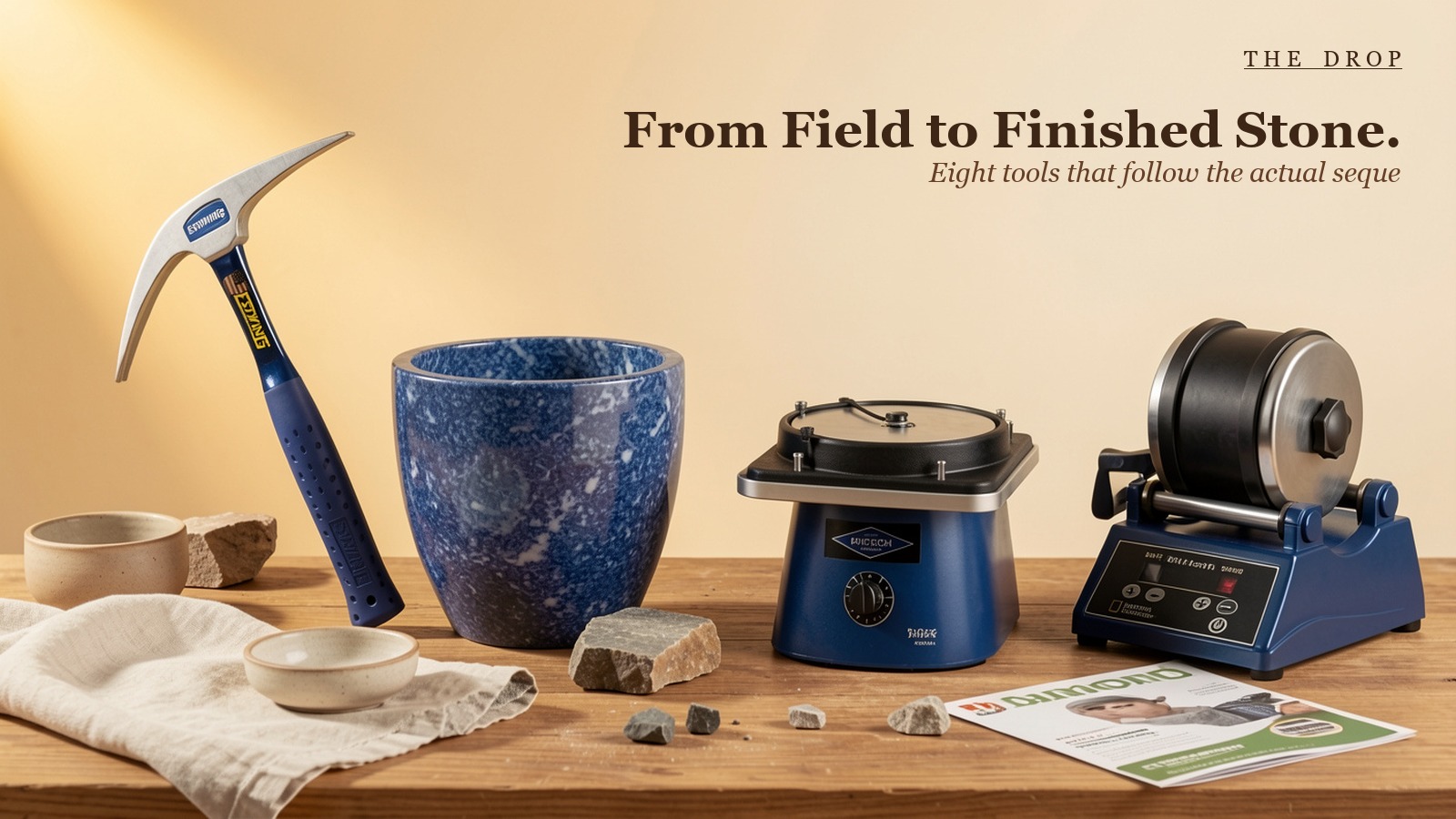
From Field to Finished Stone.
The first mistake most beginners make is buying in the wrong order — a polishing machine before they've touched a hammer, a saw before they've cut a single slab. Lapidary has a sequence, and the gear looks completely different at each stage. Start with the Estwing E3-22P in your hand and a hole in the ground, and work forward from there. This drop is built to follow that arc.

Estwing E3-22P Rock Pick
Ask r/lapidary which hammer to buy and Estwing comes up in nearly every thread — specifically this one. The reason is structural: single-piece forged steel means no handle joint, no failure point. The 22 oz weight is the size the community means when they just say 'Estwing.' Shock Reduction Grip handles the frequency of rock-on-rock impact. $39 and made in the USA. Over 5,000 reviews back it up.
“The one reliable rule of gift-giving: anything that makes them look more serious at what they love will be received with disproportionate gratitude.”
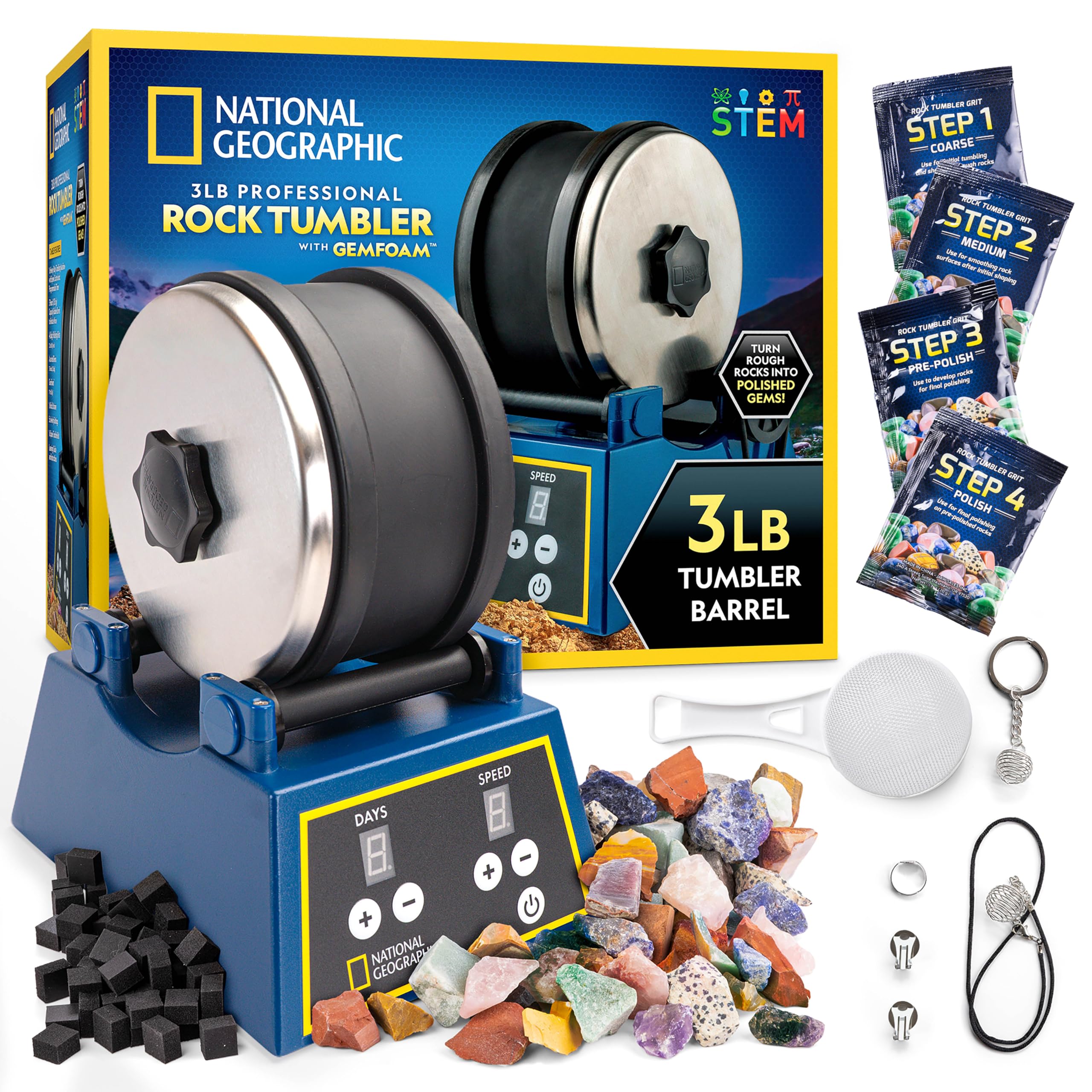
Nat Geo 3-Lb Tumbler, 3-Speed
Three pounds of barrel capacity and a 9-day programmable timer separate this from the single-speed toy tier. Three motor speeds let you slow-polish soft stones without abrading through a stage. The extra-large barrel means a real batch of rough — not a handful of pebbles. At $90, it's the tumbler that bridges field collecting to finished stones before you commit to a grinding machine.

Nat Geo Hobby Tumbler Kit
The only item in this drop that requires zero additional purchases: rough gemstones, all four grit stages, polishing compound, and a noise-reduced barrel are included. Plug in and run. At $75 with 2,300-plus reviews, it's built for the gift buyer who isn't sure yet how deep the recipient will go — a complete on-ramp, not a commitment.

Hi-Tech Diamond 8" All-U-Need
The product r/lapidary cites first when someone asks where to begin with flat lapping — and both models agree. Made in Simi Valley, CA; variable-speed DC motor from 800 to 3,400 RPM; interchangeable diamond discs from coarse through polish. The 8-inch platen handles real rough without crowding. Portable enough for an apartment bench, complete enough to take a pendant face from start to finish. $699 is the honest entry price for a machine that will outlast the hobby.

Dremel 4300 Full Kit, 64 Acc.
After the flat lap shapes your stone, the Dremel 4300 handles the work a wheel can't: engraving, undercutting matrix, cleaning inclusions, detailing bezel settings. The flex shaft attachment is the one to use on stone — it keeps the motor weight out of your hand during fine work. Nine attachments and 64 accessories cover every stage of surface finishing. $199 for the full kit; skip the lighter version if this is your first rotary tool.
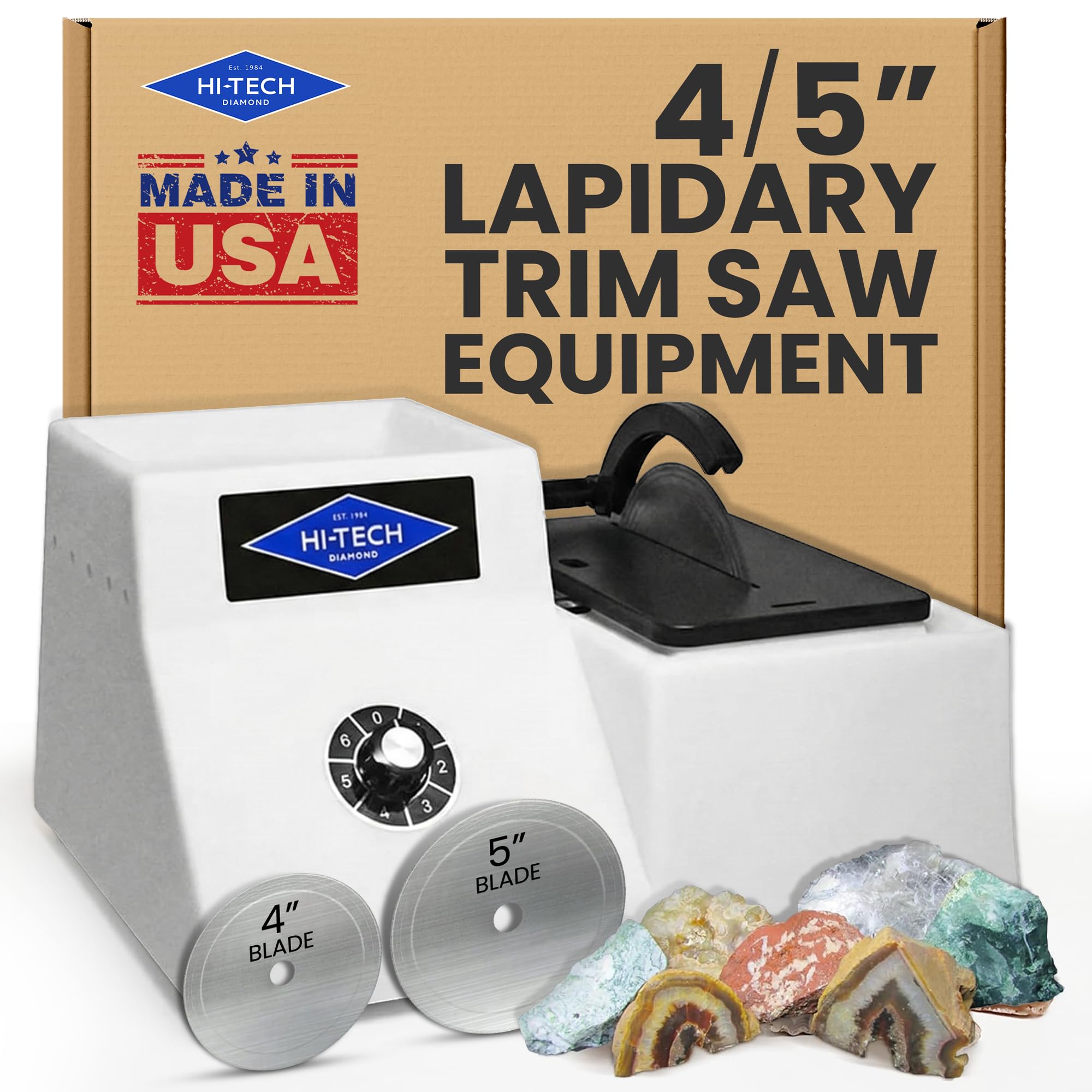
Hi-Tech Diamond 4"/5" Trim Saw
The trim saw is the silhouette missing from every beginner setup, and this Hi-Tech unit is the one the community points to first. Water-cooled, includes diamond blades, compact enough for a workbench corner. The argument for buying this before a slab saw: start with pre-cut slabs from a supplier, use this to trim to shape, and earn the bigger saw later. $359 for a cutting tool that changes what you can actually do with rough.

Dremel 4300 Compact Kit, 40 Acc.
If you have an existing flex shaft or just need a dependable rotary for occasional detail work and light grinding, this 40-accessory kit covers the basics without the redundancy of the full set. Same 4300 motor — same universal three-jaw chuck that accepts any bit without a collet swap. At $90, it's the version for someone who already knows what they'll use it for.

Estwing PB-18 Pry Bar
No pre-packaged kit ships a pry bar. But matrix rock and slab specimens don't always cooperate with a hammer — sometimes you need 18 inches of forged steel leverage to move something your pick physically cannot. Estwing's I-beam construction means no flex under load. Experienced rockhounds cite it as the thing they wish they'd bought on their second trip rather than their fifth. $25 and no reason not to own one.
Fork it. Make it yours. Share before their birthday.
Friends claim items. No duplicates. No awkward conversations.