The First Quilt Kit.
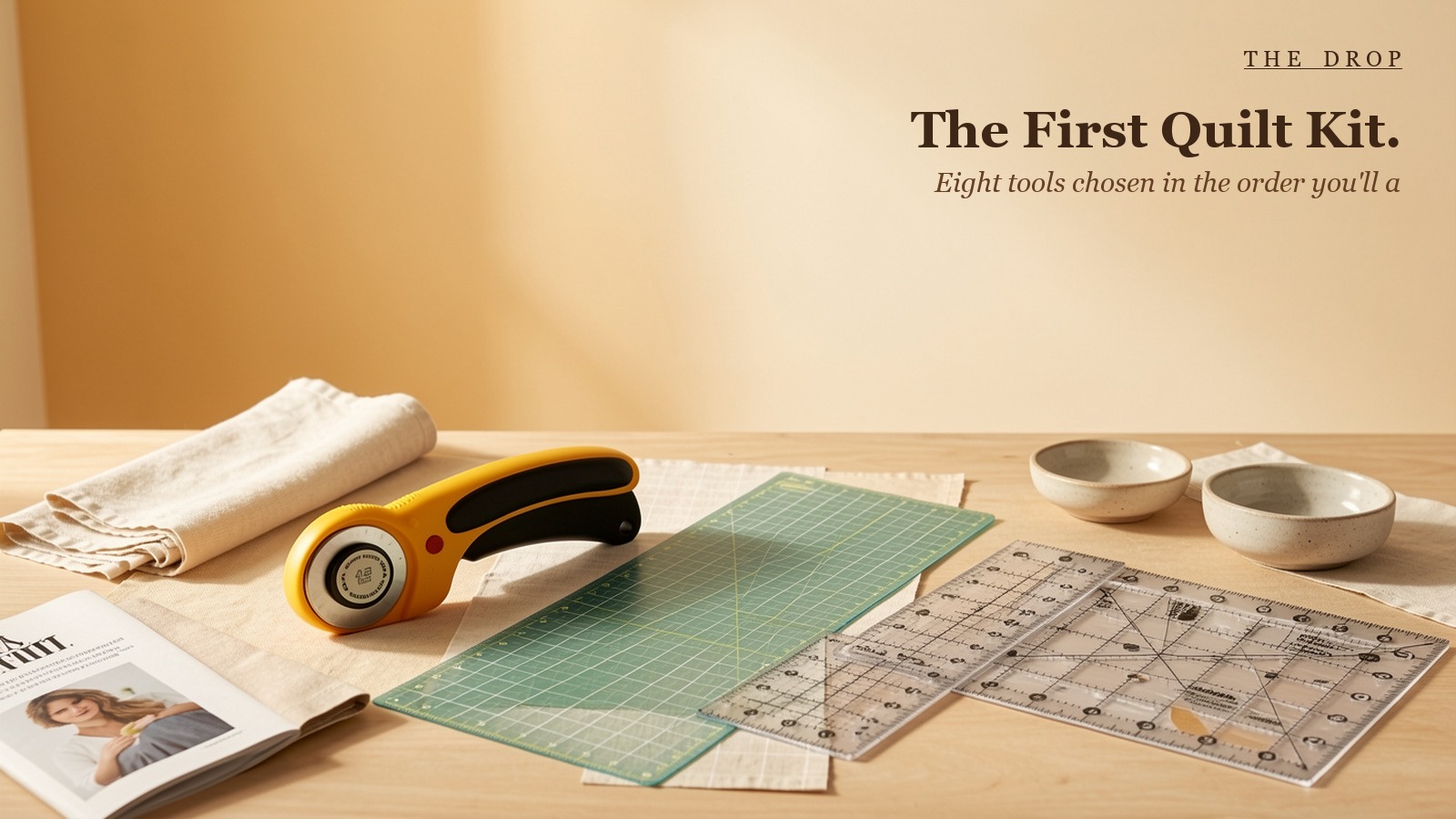
Most first quilts die on the cutting table — not from bad technique, but from a warping mat, borrowed scissors, and no clear starting point. The OLFA 45mm rotary cutter is where beginner accuracy actually begins: one clean pass through four fabric layers, no wobble, no second-guessing. Everything else in this drop was chosen to work alongside it. Start here, in this order.

OLFA 45mm Rotary Cutter
Start here. The 45mm blade is the quilting community's consensus pick for good reason: large enough to cut cleanly through four fabric layers in a single pass, small enough to track a straight edge without the blade running ahead of you. OLFA's squeeze trigger and blade cover make it safer to use than it looks. Over 9,000 reviews, and they all say the same thing: this is the one.
“The one reliable rule of gift-giving: anything that makes them look more serious at what they love will be received with disproportionate gratitude.”

OLFA 24x36 Self-Healing Mat
A cheap mat warps within months and starts deflecting your blade. This one won't. The 24x36 OLFA is larger than the brief's 18x24 recommendation — more room, especially useful if you're working at a kitchen table. The double-sided surface is the practical argument: when one side gets scored, flip it. At $66, you're essentially buying two mats.

Creative Grids 6.5x24.5 Ruler
This is the ruler that does most of the work: strip cutting, border trimming, binding. Creative Grids' non-slip grip dots — small rubber circles embedded in the acrylic — are the specific detail that separates it from every other ruler at this price. The ruler doesn't shift mid-cut. At $40, it's the premium option, but it's the one experienced quilters consistently refuse to replace.

Creative Grids 6.5x6.5 Square Ruler
The long ruler squares your strips; this one squares your blocks. The 6.5-inch square is how you trim half-square triangles and true up finished blocks — two tasks you'll do on every single project. Same non-slip grip as position 3, compact enough to handle precisely on small pieces. These two rulers work as a system. Don't buy one without the other.
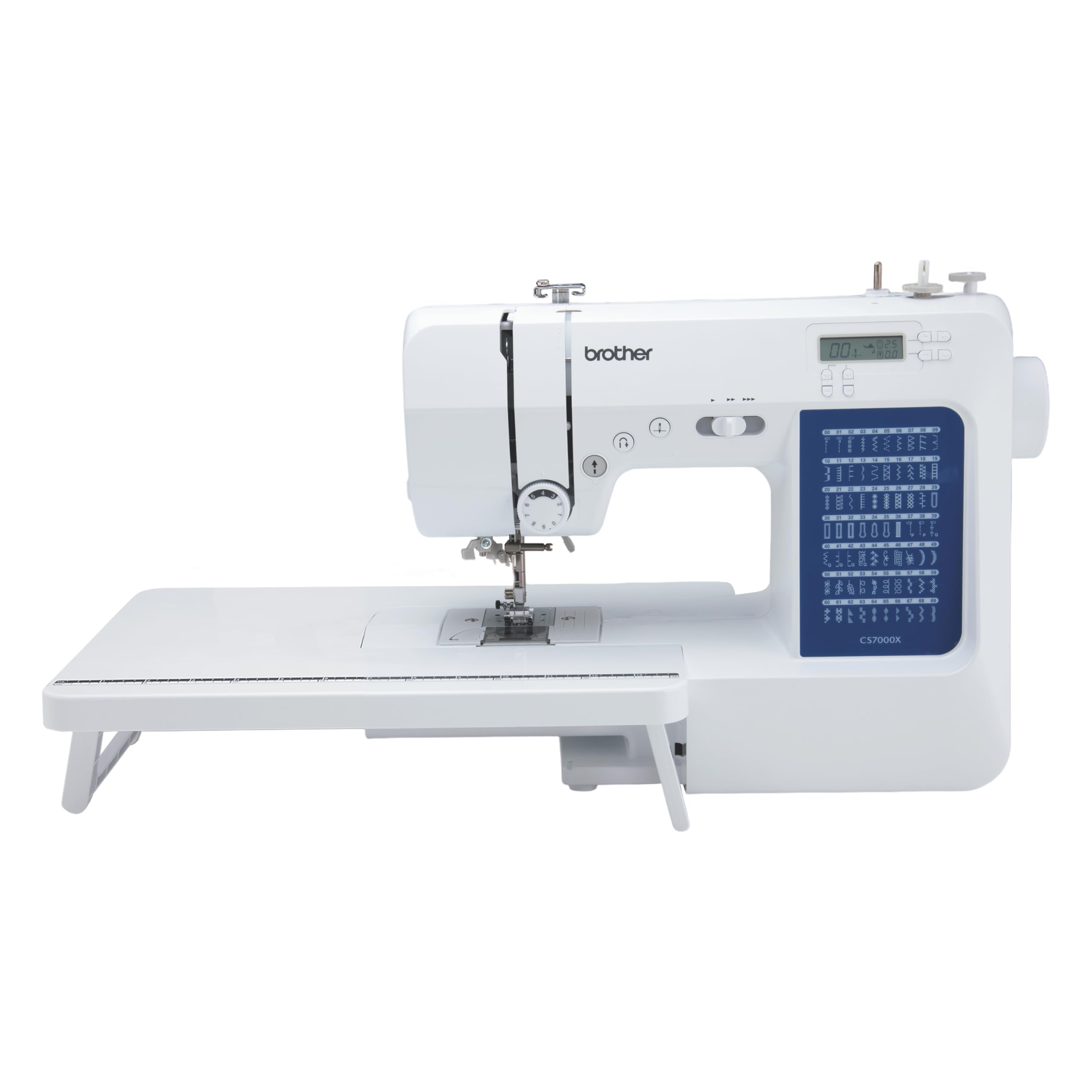
Brother CS7000X Sewing Machine
Wirecutter's top pick after 80-plus hours of testing, and the community consensus under $400. The reason it earns this drop specifically: the walking foot and wide extension table come in the box. Those two accessories normally run $40-plus extra and are exactly what separate a quilting-capable machine from a general sewing machine. At $250, this is the machine you finish your first quilt on — and your tenth.

Aurifil 50wt Cotton Thread
Experienced quilters are almost universal on this: don't substitute thread. Aurifil 50wt is finer than most bargain spools, which means less bulk where seams intersect — and that's what makes a finished quilt lie flat instead of puffing at every join. The large cone at $43 is the better value over single spools; it'll outlast several projects and the quality difference shows up in your very first seam.

Odif 505 Basting Spray
Most beginner lists skip basting entirely — then beginners discover pin-basting a queen quilt on a hardwood floor and lose enthusiasm fast. 505 removes that ritual: spray the batting, smooth the layers, done. The non-aerosol formula matters for apartment quilters without garage ventilation. Washes out completely, holds reliably, and at $20 it's the best insurance against a puckered backing.

Missouri Star BLOCK Magazine Vol.6 #5
Note: the brief specifies the Jelly Roll Race pattern; this is the closest verified Amazon match — Missouri Star's BLOCK magazine, which publishes beginner-friendly projects in exactly this register. The Jelly Roll Race itself is free on Missouri Star's YouTube channel. Either way, the editorial argument holds: a first project that requires only straight seams, uses pre-cut strips for a low-stakes cutter debut, and finishes in an afternoon is how a beginner becomes a quilter.
Fork it. Make it yours. Share before their birthday.
Friends claim items. No duplicates. No awkward conversations.