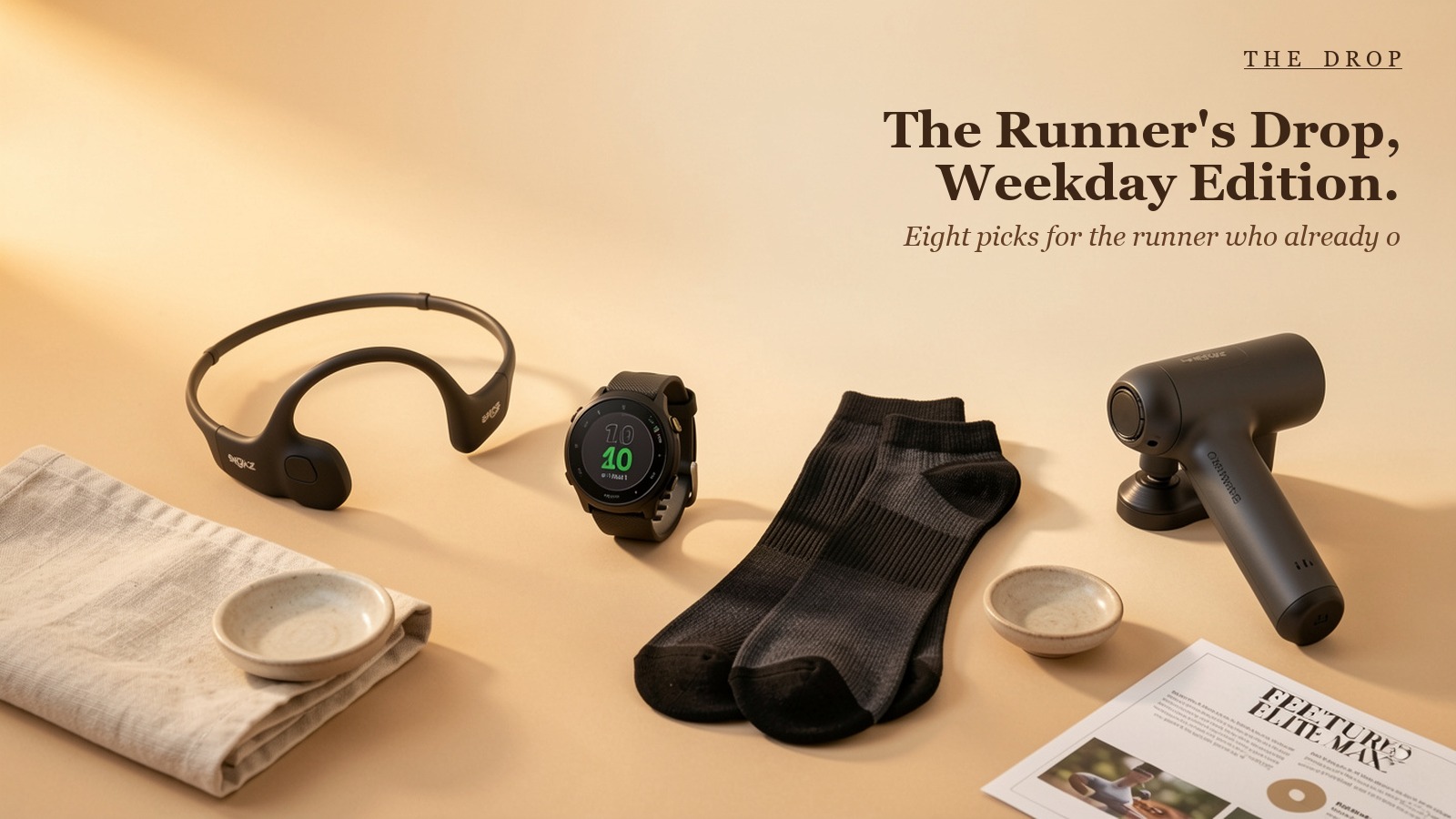
The Runner's Drop, Weekday Edition.
Five-thirty a.m., dark street, earbuds in — and the runner in your life is half-listening for traffic with one ear and half-listening to a podcast with the other. The Shokz OpenRun solves that math entirely. Bone conduction leaves both ears open to the world while still delivering the audio. From there, the rest of this drop fills in the infrastructure: the watch, the socks, the fuel, the recovery. Shop the thing they'll reach for Thursday morning.

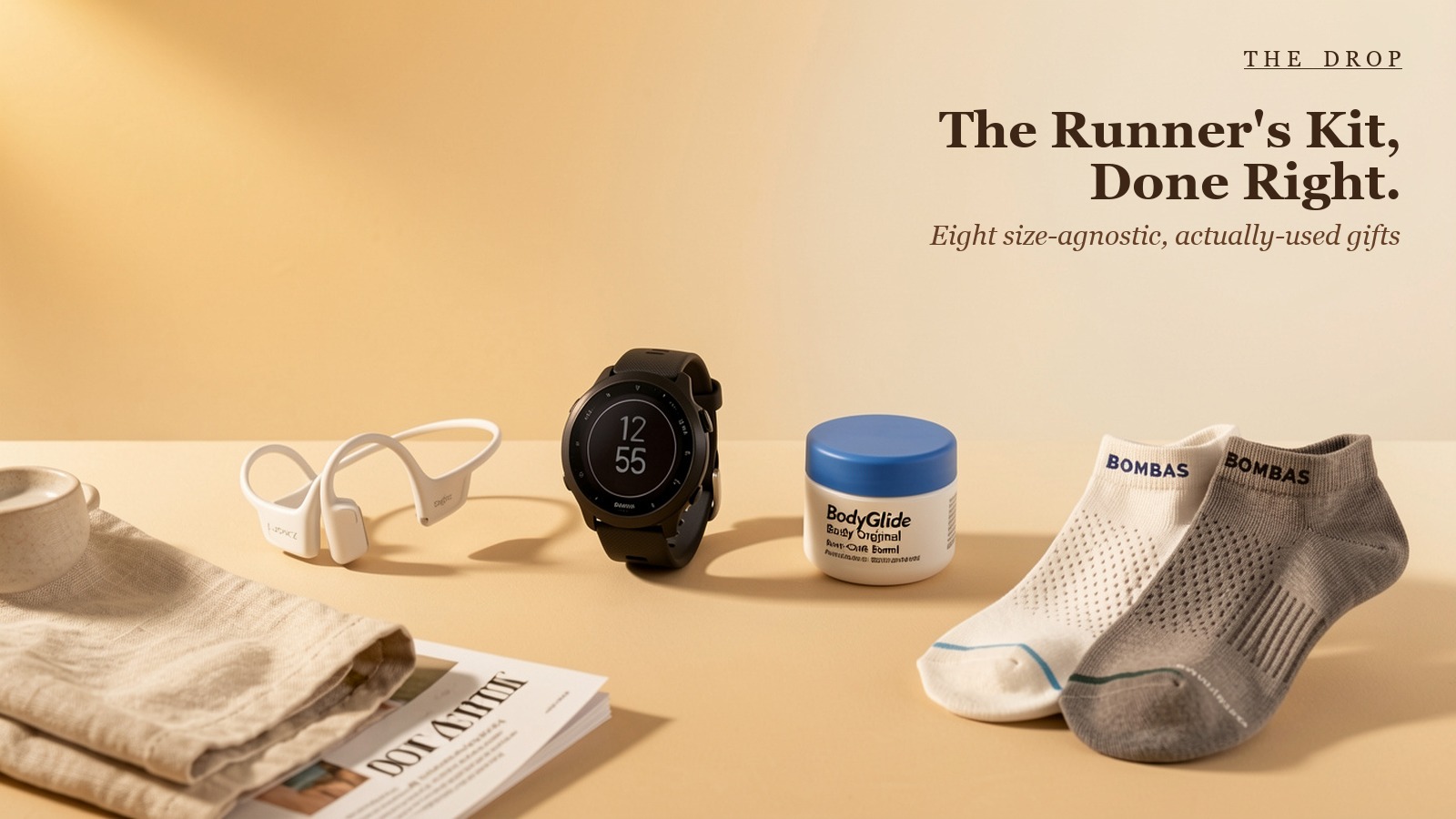
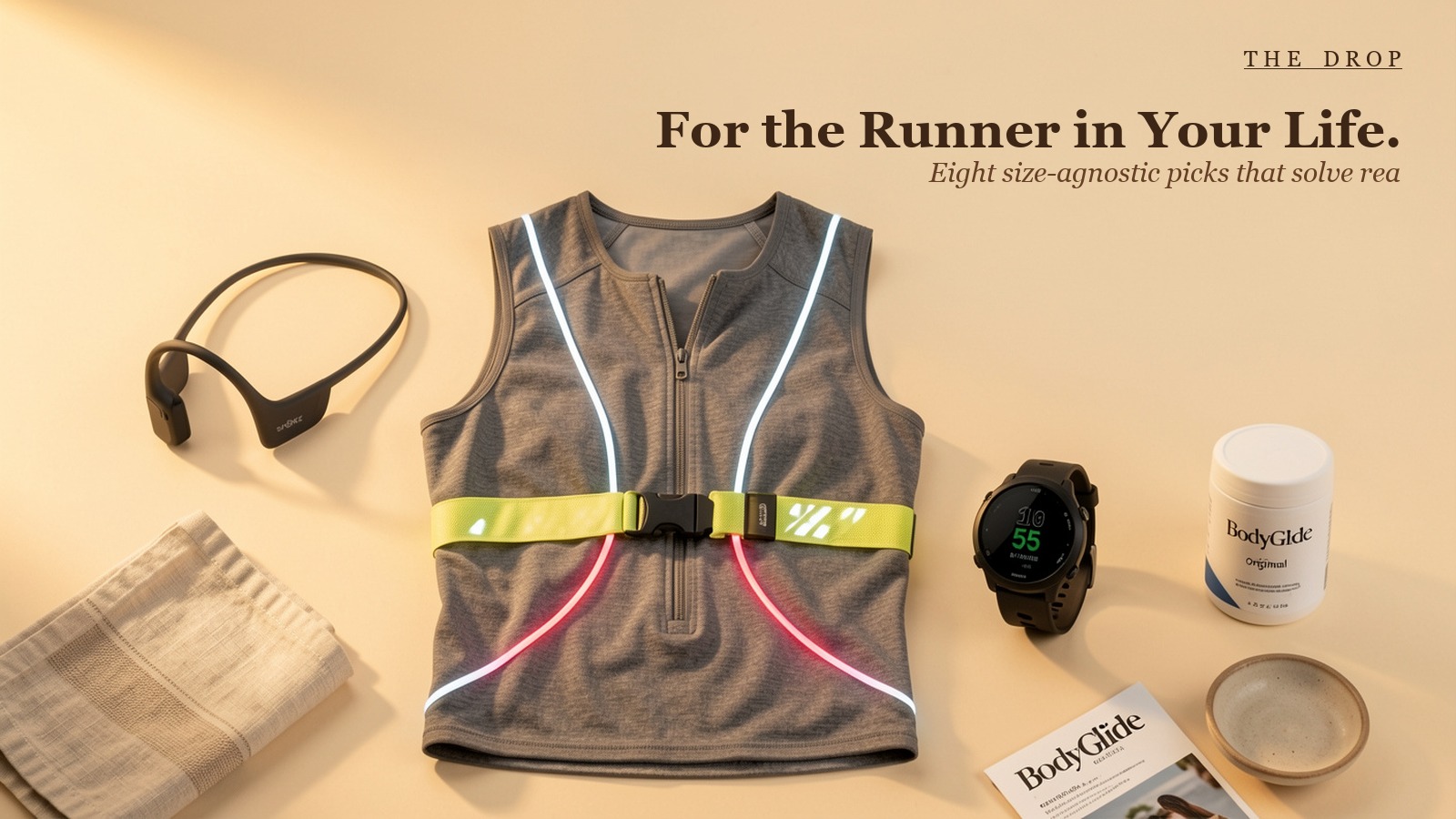
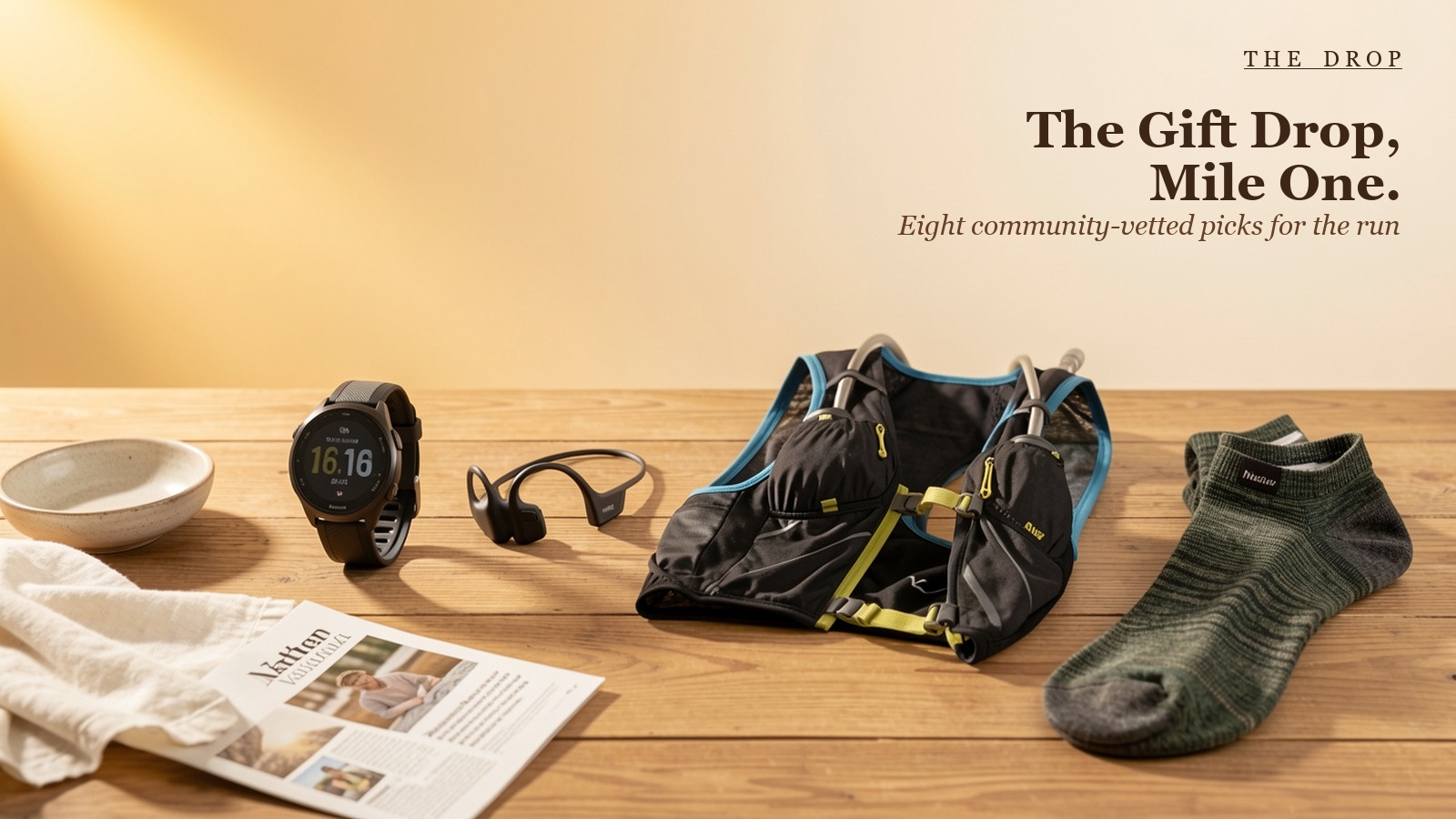
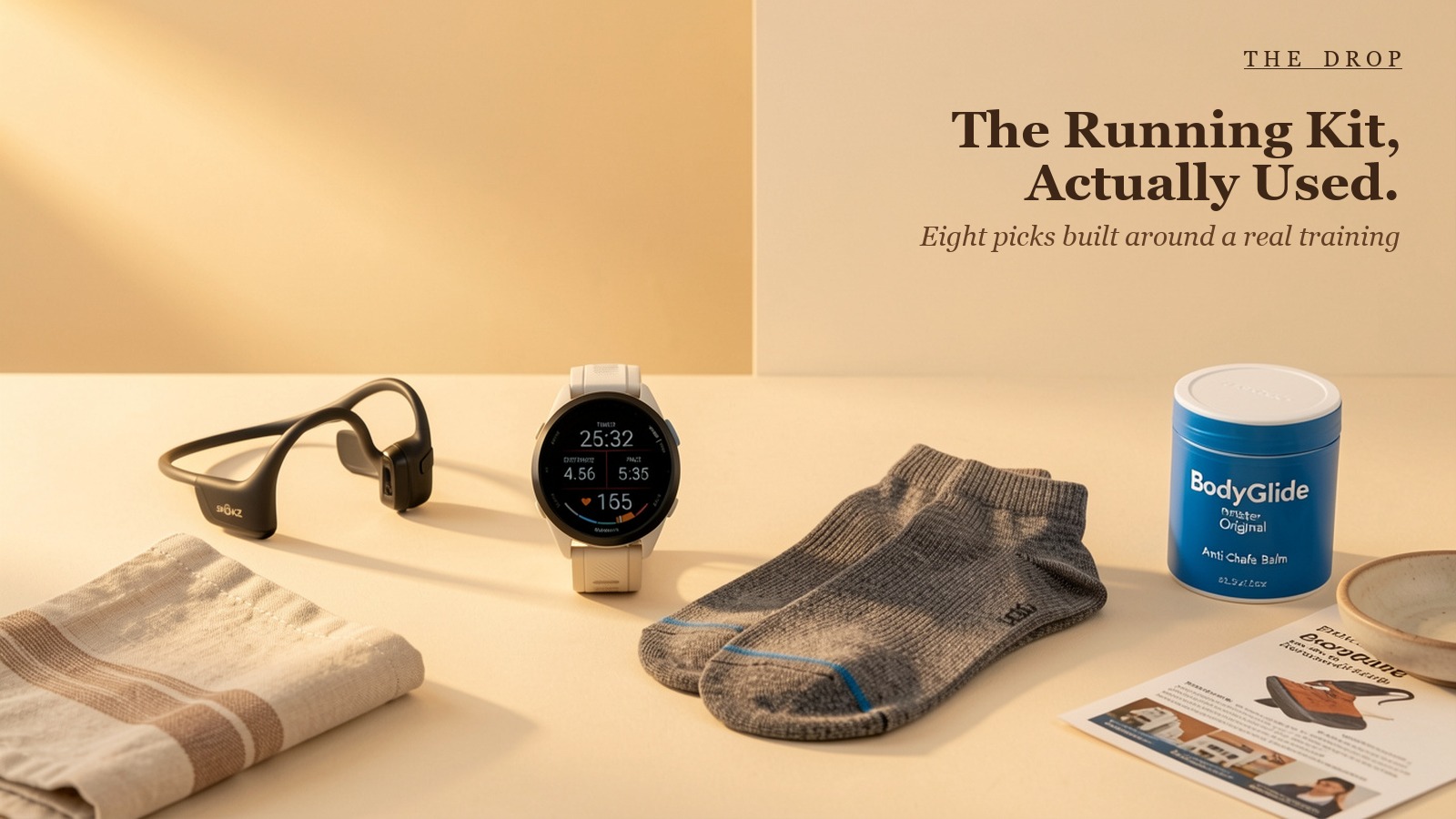
Shokz OpenRun Headphones
Bone conduction means the speakers rest on the cheekbones, not in the ear canal — both ears stay open to ambient sound while the audio comes through clearly. At $129.95 it's the answer to the earbuds-versus-safety argument runners have every single time they head out before sunrise. Sweat-resistant, Bluetooth, and genuinely hard to gift wrong.
“The one reliable rule of gift-giving: anything that makes them look more serious at what they love will be received with disproportionate gratitude.”

Garmin Forerunner 55 GPS Watch
Five Reddit mentions made this the most-discussed pick in the research, and it earns the attention. Daily suggested workouts, up to two weeks of battery life, and real GPS tracking at $164.99 — just over the casual-gift ceiling, which is exactly why it lands. The Forerunner 55 is the watch runners read about and quietly hope someone else will buy them.

Feetures Elite Max Cushion Socks
Anatomically engineered fit, moisture-wicking fabric, and serious heel-to-toe cushioning — Feetures are what happens when a sock company takes running problems seriously. At $54.15 for a three-pack, the per-sock math is better than it sounds. Runners burn through these constantly and rarely restock themselves, which makes this the rare practical gift that lands every time.

Therabody Relief Percussion Massager
Not the mini, but the handheld Relief — light, easy to grip, designed for daily use rather than deep-tissue punishment. At $159.99 it sits at the top of the drop's price range, and it earns the spot: percussive massage on tight calves or a stubborn IT band is the difference between a runner going out Tuesday and a runner skipping Tuesday. Lives on the nightstand.

Nathan VaporAiress 4 Hydration Vest
Once someone's running half-marathons or long training blocks, a handheld water bottle becomes a real inconvenience. The Nathan VaporAiress 4 carries 8 liters, sits close to the body, and is built by a brand that has been in the running-hydration category long enough to get the fit right. At $160 it's the pick for someone who's quietly graduated to longer distances.

Body Glide Original Anti-Chafe Balm
Every runner's medicine cabinet has an empty Body Glide stick they forgot to replace. At $11, this is the lowest-ego item in the drop and possibly the most-used. Apply before long runs to prevent chafing on arms, thighs, and anywhere else friction shows up uninvited. A consumable they run through constantly and almost never buy for themselves — which is exactly the brief.

Maurten Gel 100 Energy Gel 12-Pack
Maurten is the hydrogel nutrition brand that serious runners follow and rarely splurge on. The science is straightforward: the hydrogel matrix makes carbohydrate absorption easier on the stomach at effort. At $47.90 for twelve gels, a variety box is the right introduction — lets them try the format without buying a flavor in bulk. Specific enough to feel considered.

TriggerPoint GRID X Foam Roller
Extra-firm density, a 13-inch working surface, and a multi-density grid pattern that mimics hands better than a smooth-barrel roller. At $54.99, the GRID X is the workhorse version — not the one you buy for the aesthetic, the one that actually gets used on a Sunday night before a Monday morning run. No drama, no assembly. Just put it on the floor.
Fork it. Make it yours. Share before their birthday.
Friends claim items. No duplicates. No awkward conversations.