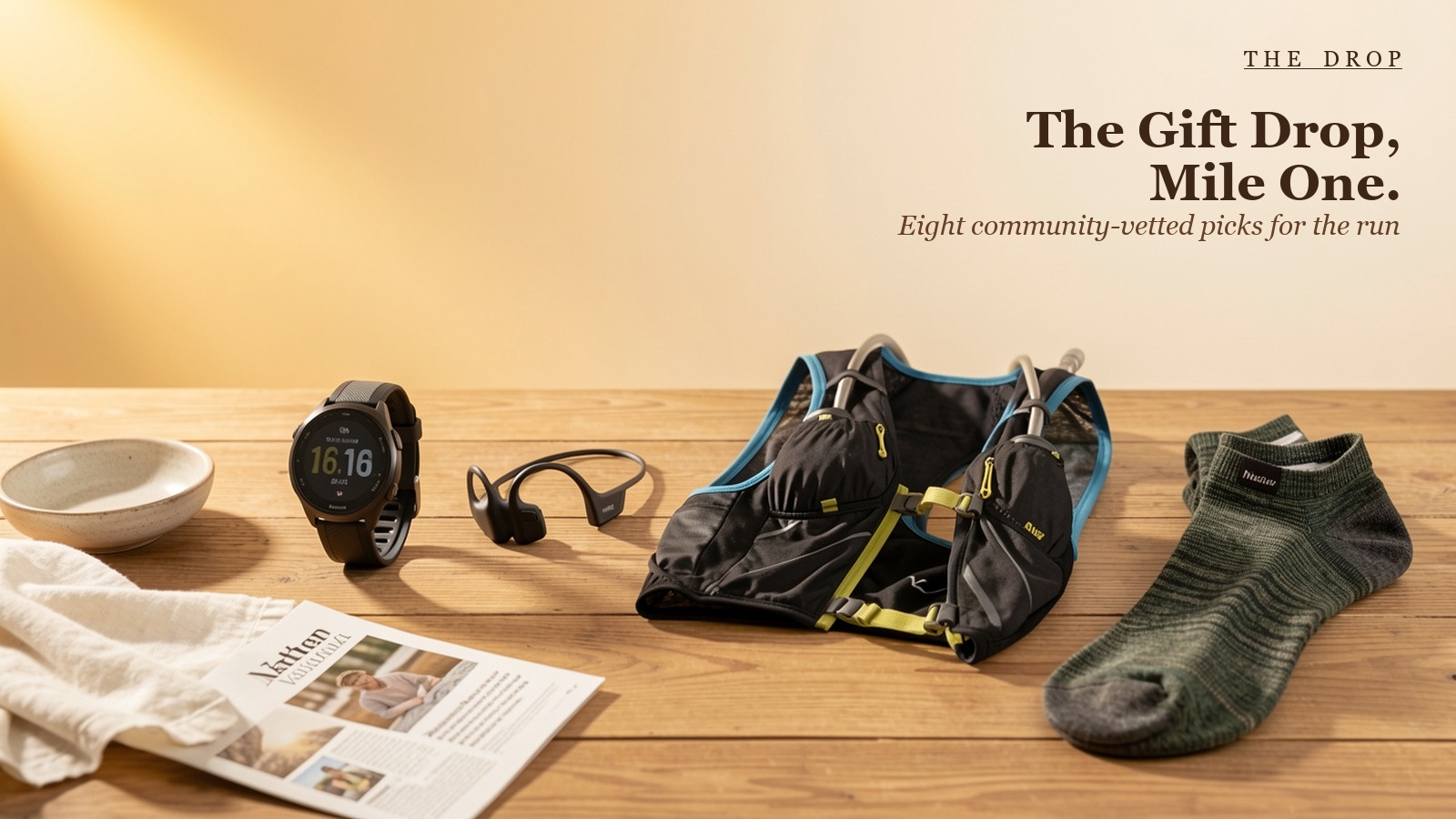
The Runner's Drop. Sorted.
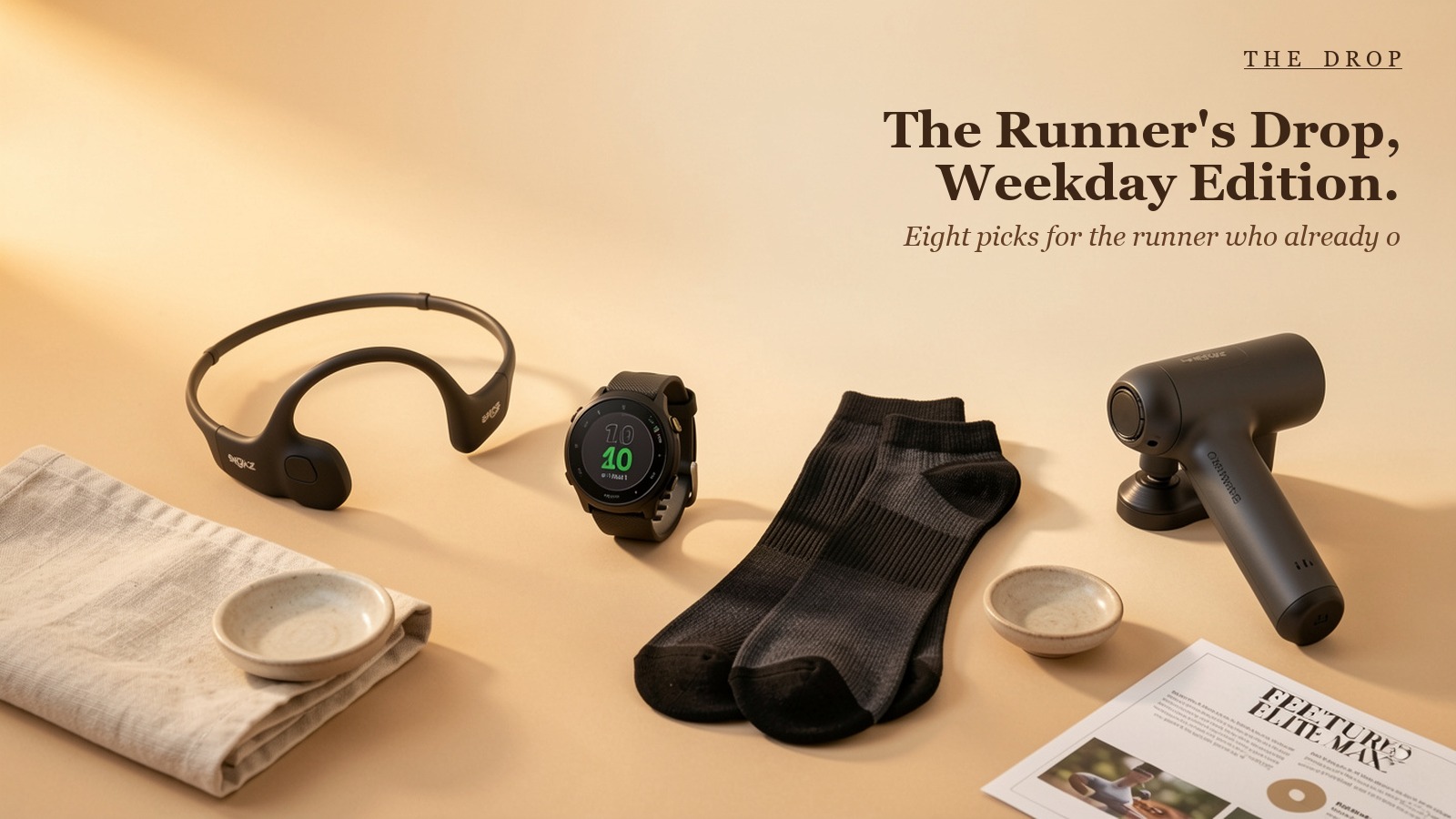
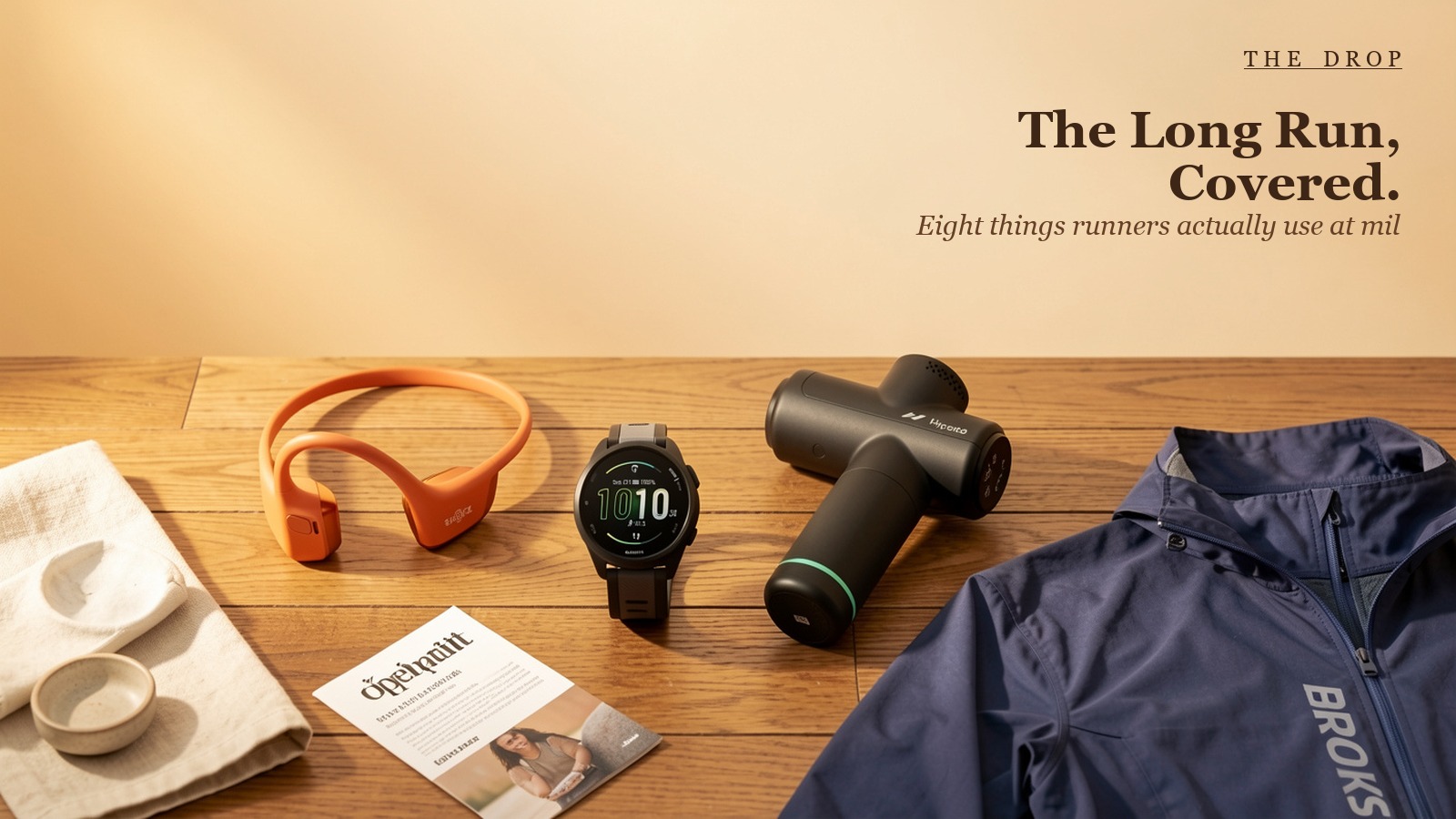
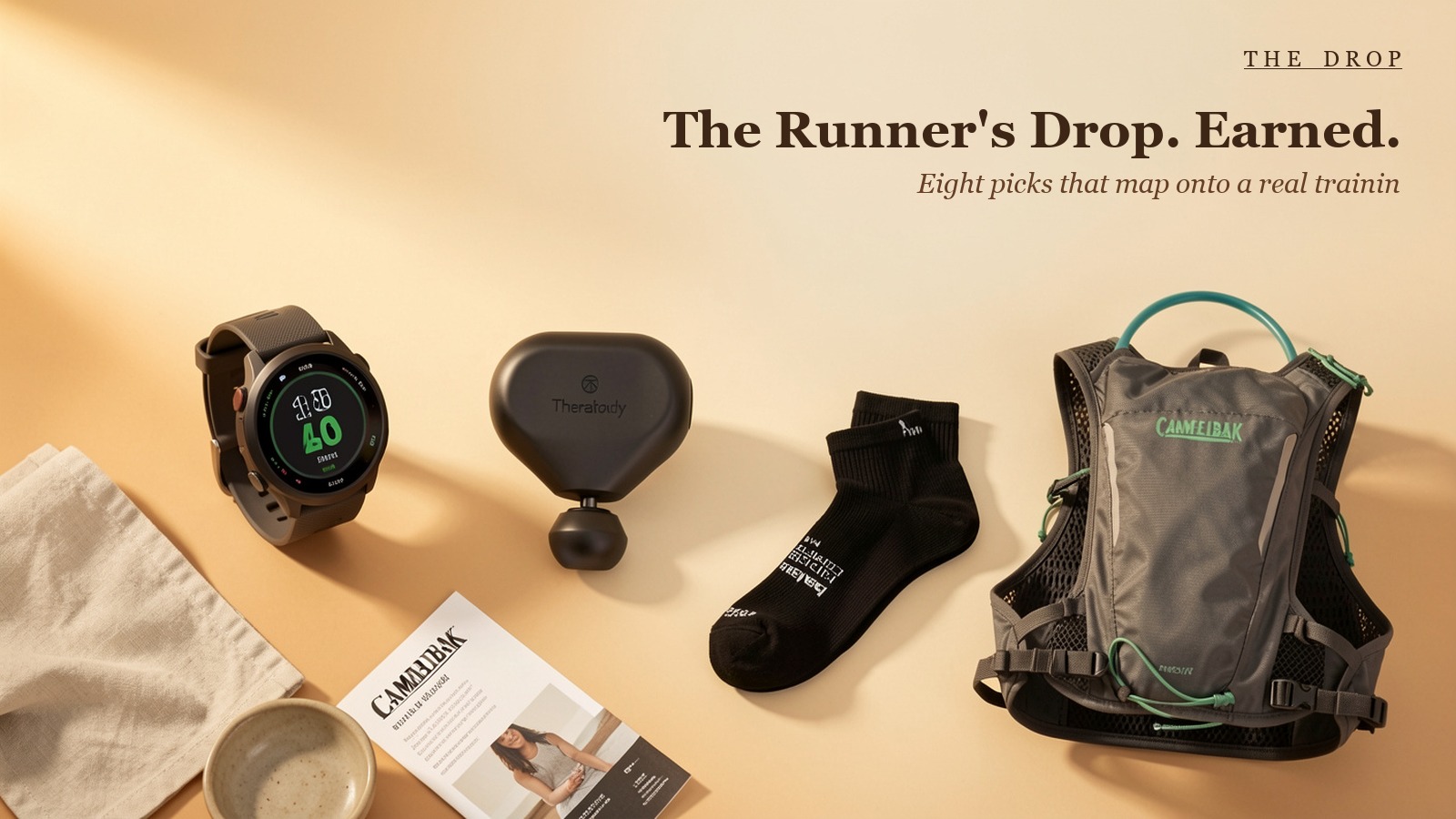
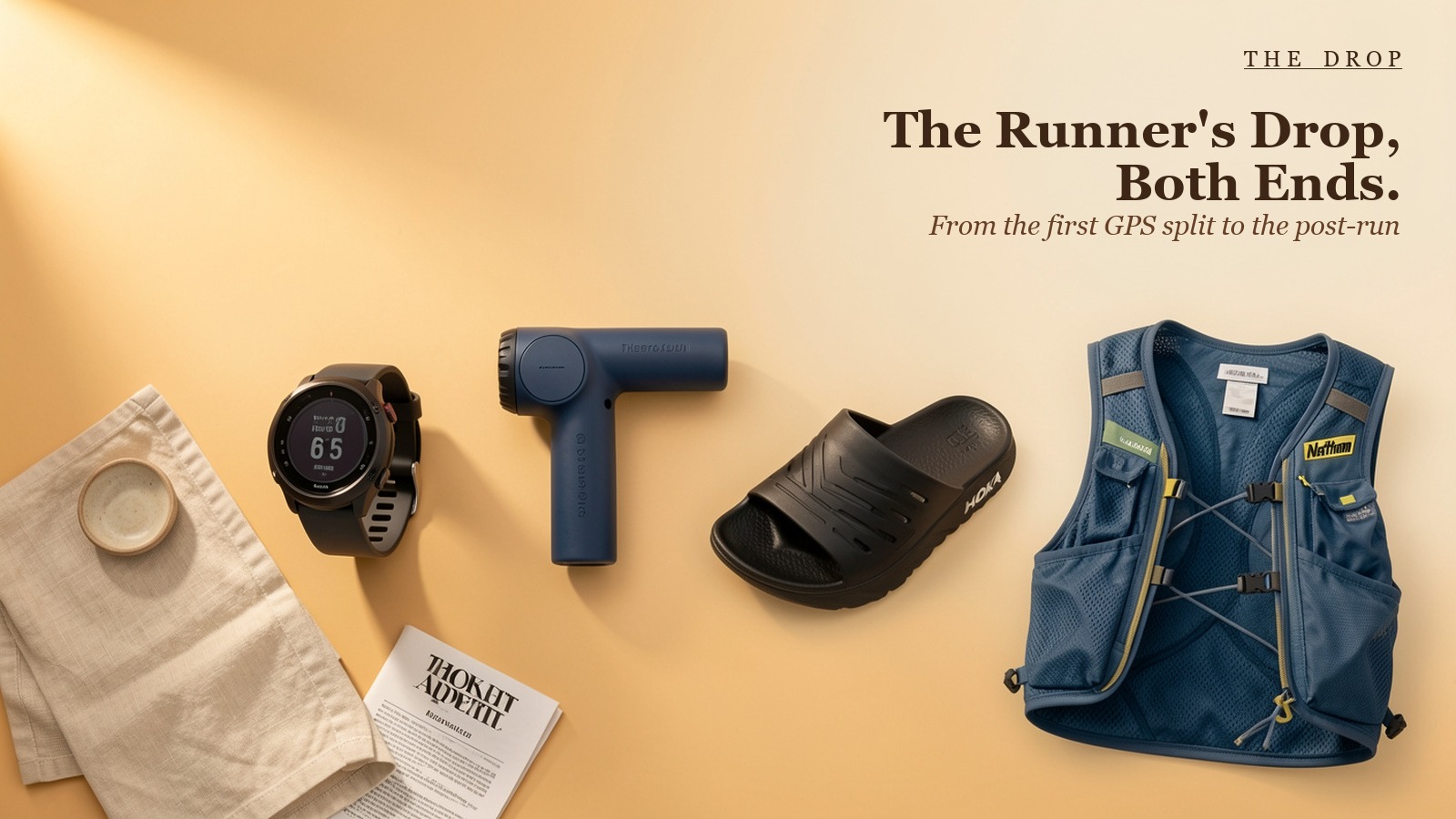
The Garmin Forerunner 165 is the watch a runner actually circles in a browser tab and then closes because it feels indulgent. AMOLED display, solid training metrics, no PhD required to set it up. That's your anchor. Build the rest of the drop around it — recovery, audio, visibility, consumables — and what arrives is a system that quietly says: I know you run, and I want you to do it well. Start here.

Garmin Forerunner 165
The Forerunner 165 sits at Garmin's sensible middle ground: AMOLED display that's actually readable in afternoon sun, training load and recovery metrics that surface useful patterns, and a setup that doesn't demand a manual. At $199.99, it's the watch a runner wants without the features they'll never use. Wear it out of the box.
“The one reliable rule of gift-giving: anything that makes them look more serious at what they love will be received with disproportionate gratitude.”

Therabody Relief Massage Gun
Therabody's Relief gun is quieter than earlier generations — meaningfully so — with Bluetooth that connects to the app for guided routines. At $139.99 it addresses the calf tightness and hip flexor standoffs that accumulate across a training block. Small enough for a gym bag, convincing enough to actually get used post-long-run.

Shokz OpenRun Pro 2
Bone conduction means the ears stay open — cars, cyclists, the occasional dog remain audible. The OpenRun Pro 2 improves on its predecessor with better bass and a longer battery. At $179.95 it's the upgrade most runners keep deferring. Sweat-resistant, secure fit, no earbuds to lose at the turnaround point.
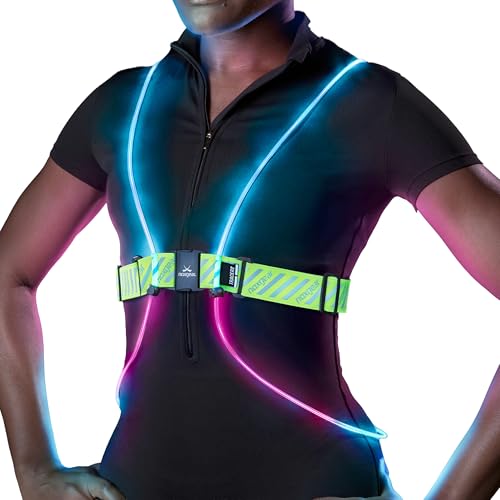
Noxgear Tracer2 Running Vest
Noxgear's Tracer2 wraps multicolor LED fiber across the torso in a way that registers as genuinely clever rather than anxious-parent energy. Rechargeable, waterproof, adjustable for most torso sizes. $67.95 for visibility that actually works in predawn miles or rainy November evenings — the gift that quietly solves a problem they'd accepted.

Balega Blister Resist Socks 3-Pack
Balega's Blister Resist no-show is the sock that shows up in runner gift threads by name, not category. The mohair-blend construction actually reduces friction where it counts. A three-pack at $63 is size-range friendly — S/M/L covers most adults — and disappears into a rotation fast enough that another pack is always welcome.

Maurten Gel 100 Box (12-Pack)
Maurten's hydrogel technology is designed to reduce GI distress at effort — the reason serious road runners gravitate to them around mile 16 when cheaper gels become a negotiation. A 12-pack at $47.90 is the consumable gift that signals you know what your person reaches for, not just that they run.

Salomon ACT Skin 8 Vest
Salomon's ACT Skin 8 is a trail-credible hydration vest at $119.65 — adjustable, low-profile, and designed to move with the body rather than against it. No flasks included keeps the weight down and cost accessible. For the runner who's quietly started logging longer weekend miles and hasn't solved the water problem yet.

Body Glide Anti-Chafe Balm
Every runner owns a depleted tube of Body Glide somewhere near their race bag. At $11 it's the consumable nobody buys for themselves mid-training-block, which is exactly when they need it. Tuck it into a card with the Garmin or slip it in solo — either way it signals you've been paying attention to the right details.
Fork it. Make it yours. Share before their birthday.
Friends claim items. No duplicates. No awkward conversations.