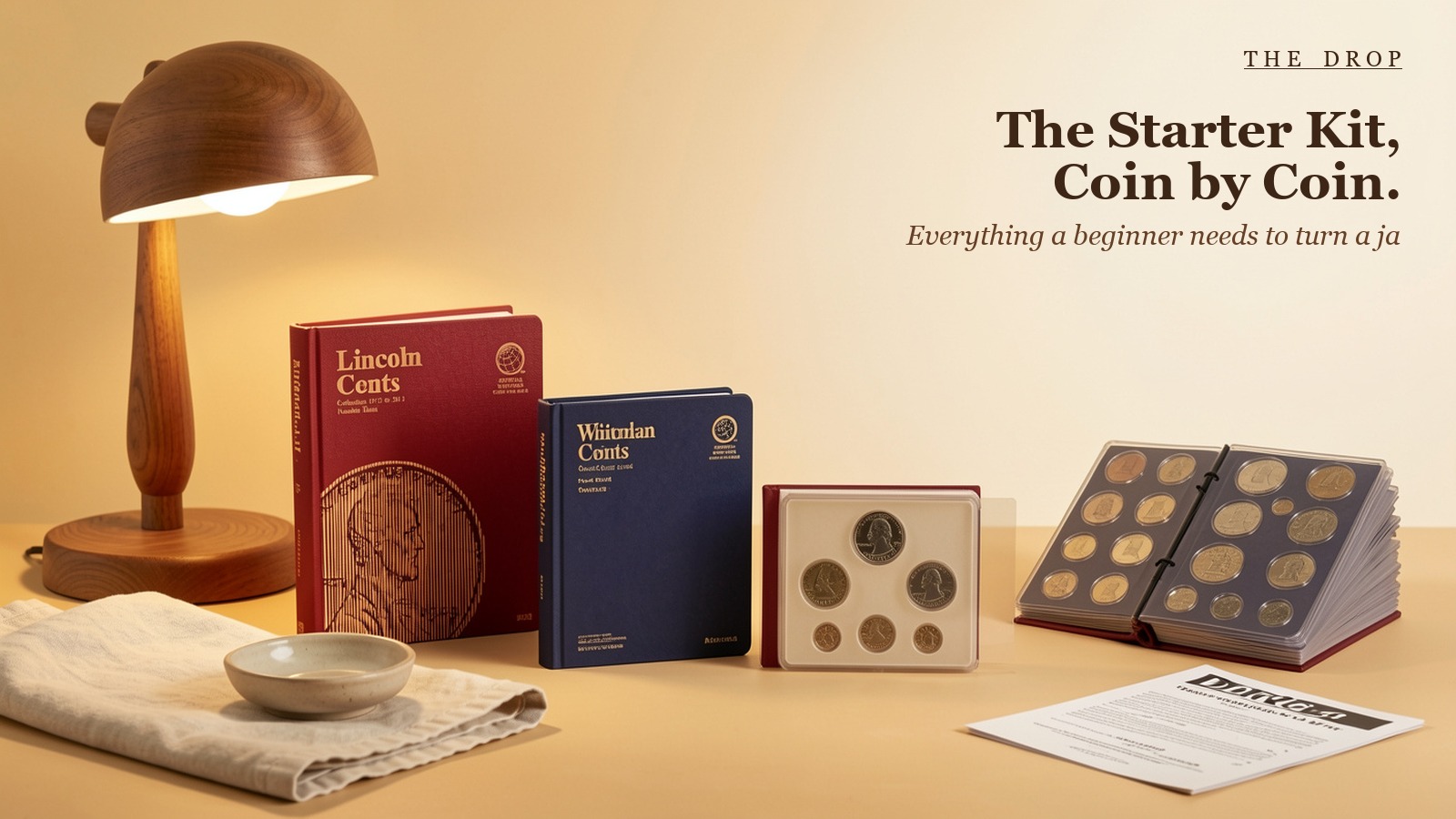
The Starter Kit, Coin by Coin.
Someone hands you a coffee can of coins from your grandmother's dresser drawer, or you pull a childhood folder out of a closet and realize you have no idea what any of it is worth. The Red Book is where you start: 80 years of collector consensus, grade-based values for thousands of coins, the one reference every dealer assumes you've read. The rest of this drop builds the system around it. Pick it up first.
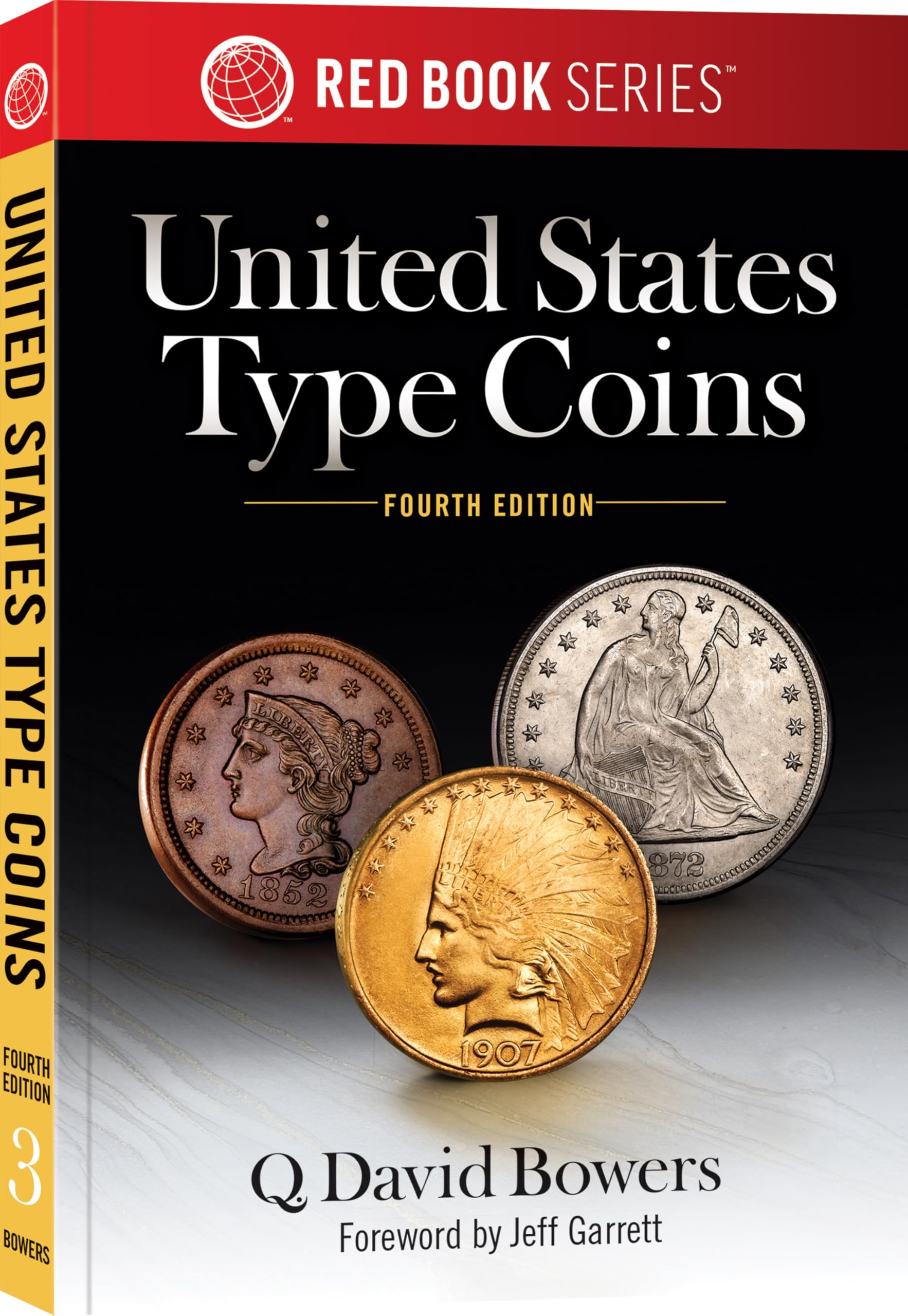
Whitman Red Book, Type Coins Ed.
Before you store, sort, or sell a single coin, you need to know what you're looking at. This edition covers U.S. type coins with grade-based values and historical context — the same Whitman Red Book lineage that's been the hobby's baseline for eight decades. Read it before you walk into any coin shop.
“The one reliable rule of gift-giving: anything that makes them look more serious at what they love will be received with disproportionate gratitude.”
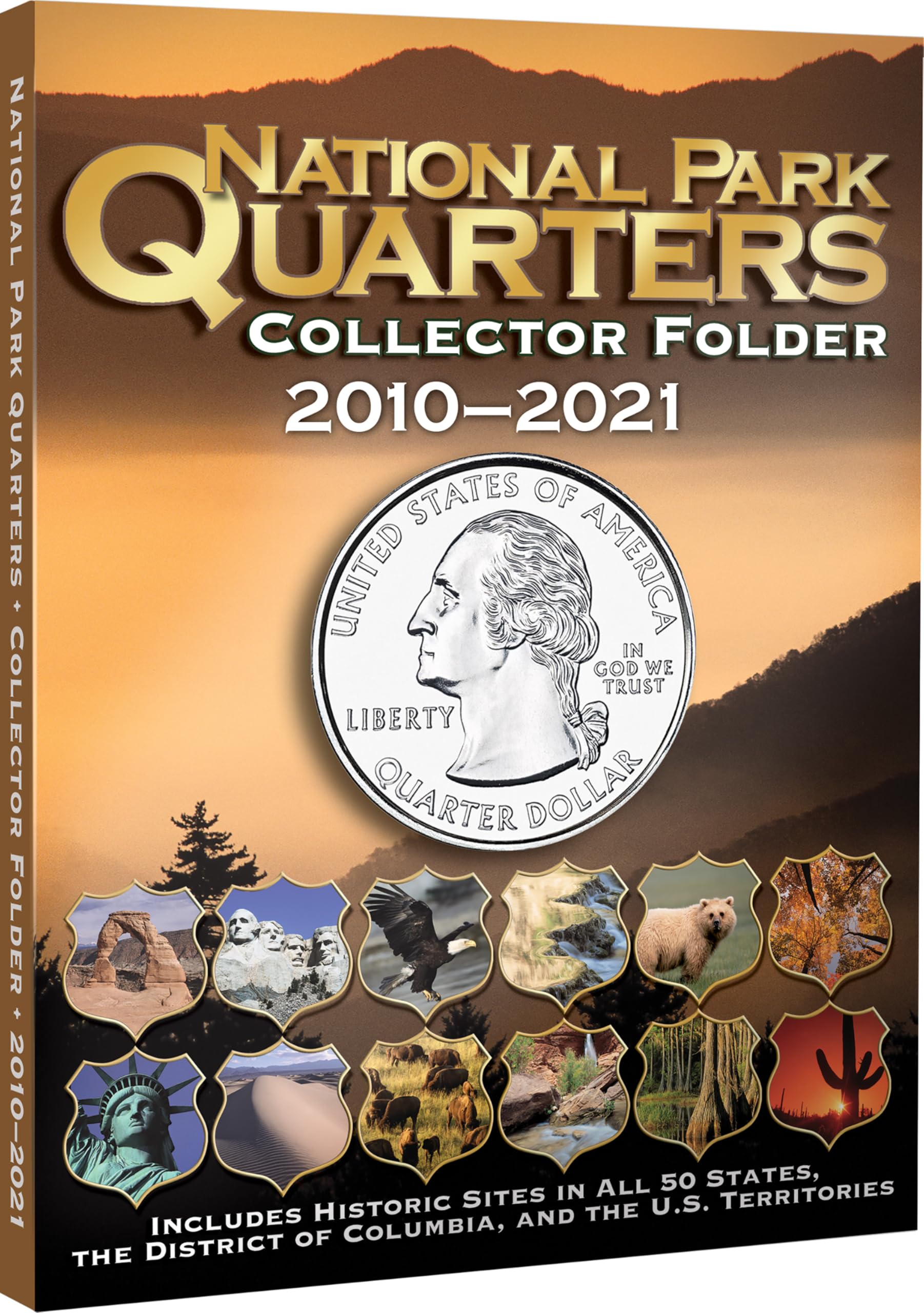
Whitman National Park Quarters Folder
The iconic trifold cardboard format with labeled date-and-mintmark slots is what makes the hobby feel like the hobby. This one covers the National Park quarter series (2010–2021), nearly 4,000 reviews deep and under $10. Hand someone this folder and a roll of quarters and the collecting instinct tends to take care of itself.

Whitman Lincoln Cents Folder #3
Lincoln cents are the natural companion series: they're in every jar of old coins and still trickling through everyday change. This volume covers 1975–2013 with the same date-slot format, nearly 4,000 reviews, and an $8 price that makes it an easy add-on. Pair it with the quarters folder and you have two active hunts running at once.

Dansco Indian Head Cent Album #7101
When a collection outgrows trifold cardboard, this is where serious collectors land. The Dansco leatherette-cover album with sliding clear plastic slides shows both faces without your fingers ever touching the coin — the format that signals you've crossed from casual to intentional. The Indian Head cent series (1857–1909) is a natural step up from Lincoln cents.

SE 10x Illuminated Loupe
Mint marks, surface wear, and potential errors are invisible to the naked eye — this is the tool that changes that. The SE 10x loupe adds an LED to the standard jeweler's format, runs under $10, and folds flat for a pocket or desk drawer. Every collector owns one eventually; buying it at the start saves a lot of squinting.

Guardhouse 2x2 Coin Flips, 100-Pack
Albums and folders are for coins you've identified and placed. Everything else — the loose finds, the inherited singles, the maybe-interesting pieces — needs a safe place to wait. These Guardhouse cardboard-and-Mylar 2x2 flips (half-dollar size, 100-count, under $10) are the industry-standard holding format. Label them, date them, stack them. Sort later.
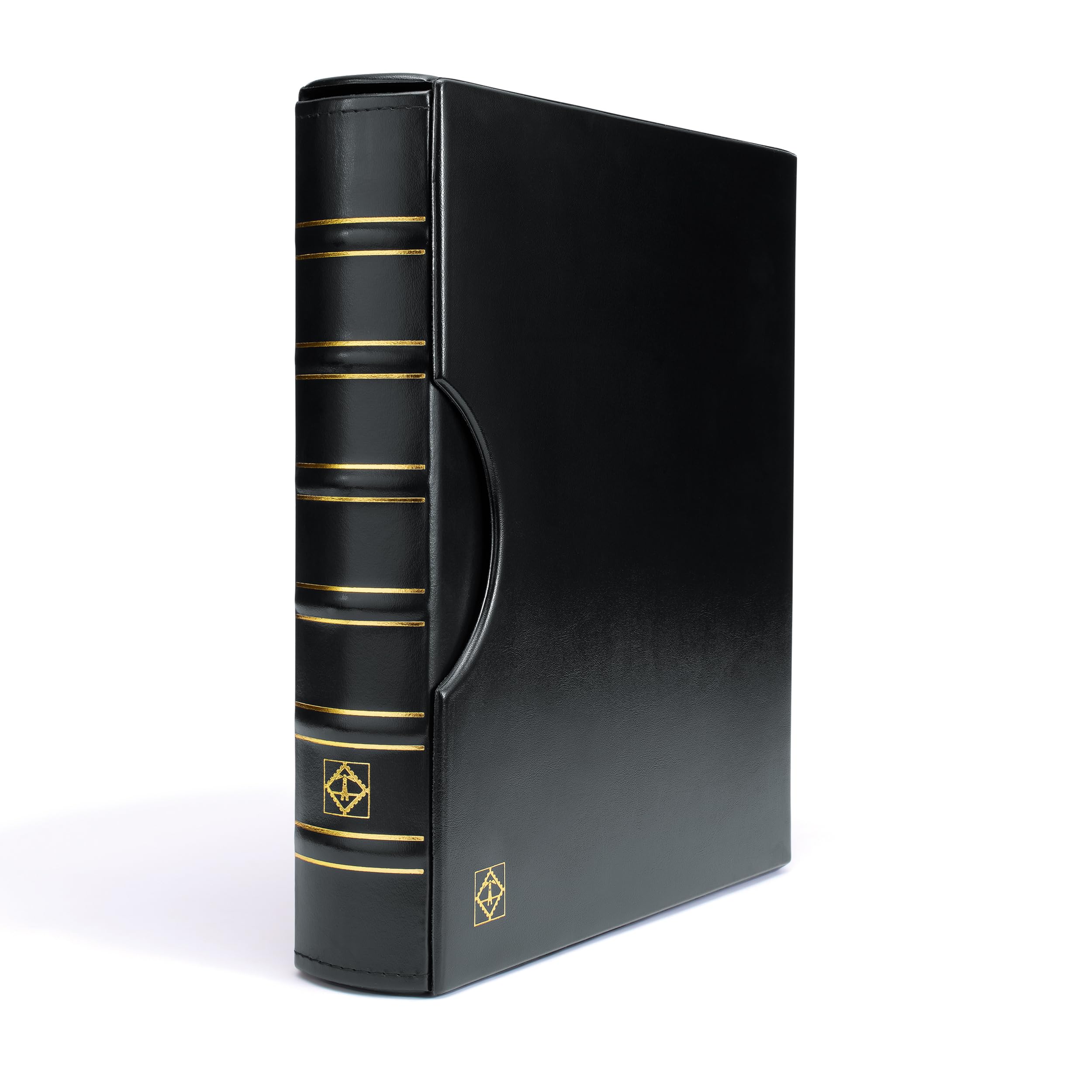
Lighthouse Slab Coin Album Set
If the person you're shopping for has moved beyond folders into graded slabs — PCGS, NGC, ANACS — this Lighthouse album holds up to 36 of them across four ENCAP pages in a clean black binder. At $60, it's the right tier for a collector who's already serious. If you're not sure where they are, start with the loupe and the Red Book instead.
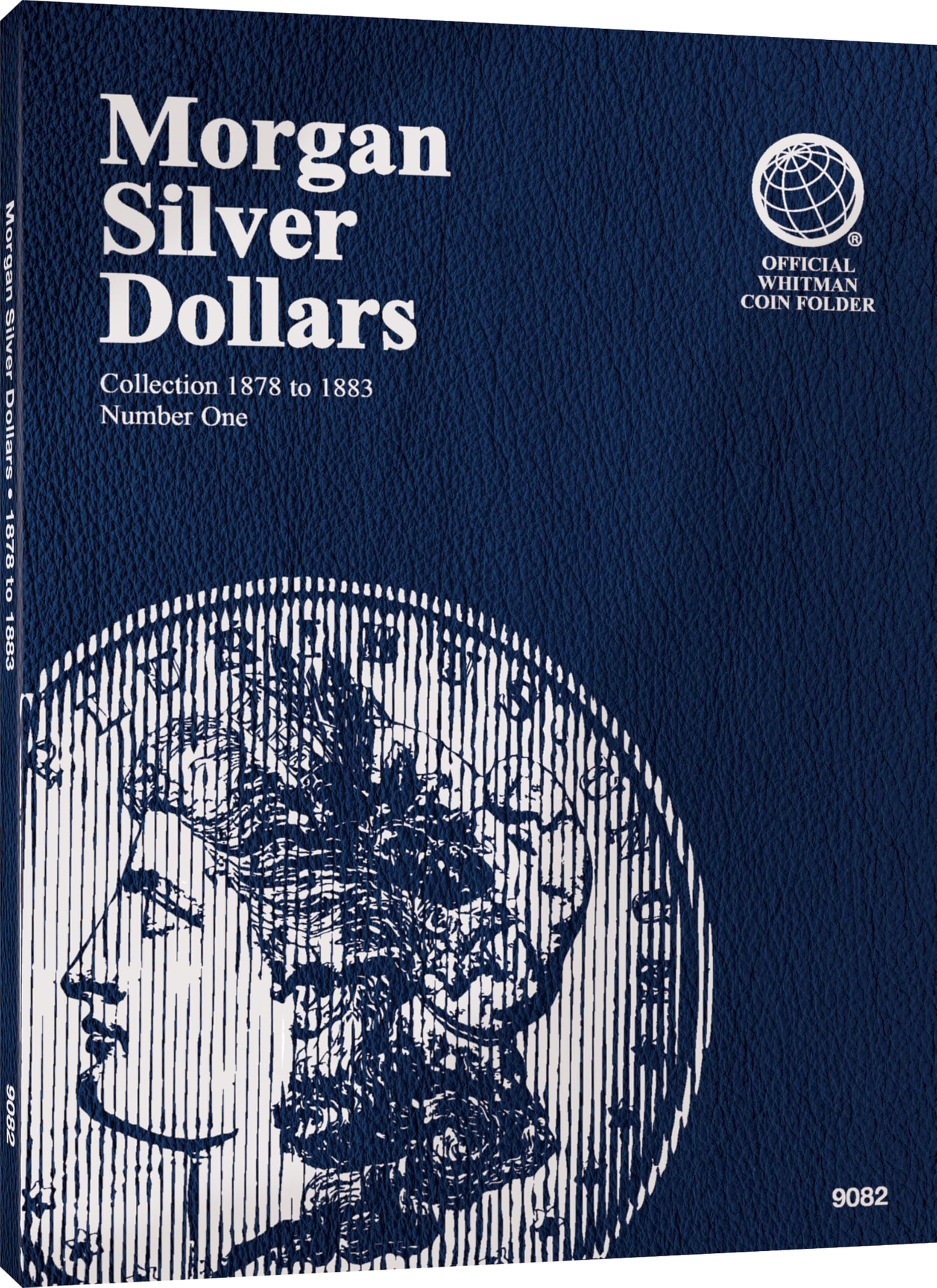
Whitman Morgan Silver Dollars Folder
If the jar of grandmother's coins turns out to contain Morgan dollars — and it might — you'll want somewhere to put them that isn't a sandwich bag. This Whitman folder covers 1878–1883, the opening run of one of the hobby's most collected series. Under $8, and the moment you find your first Morgan, you'll be glad it was already on the shelf.
Fork it. Make it yours. Share before their birthday.
Friends claim items. No duplicates. No awkward conversations.