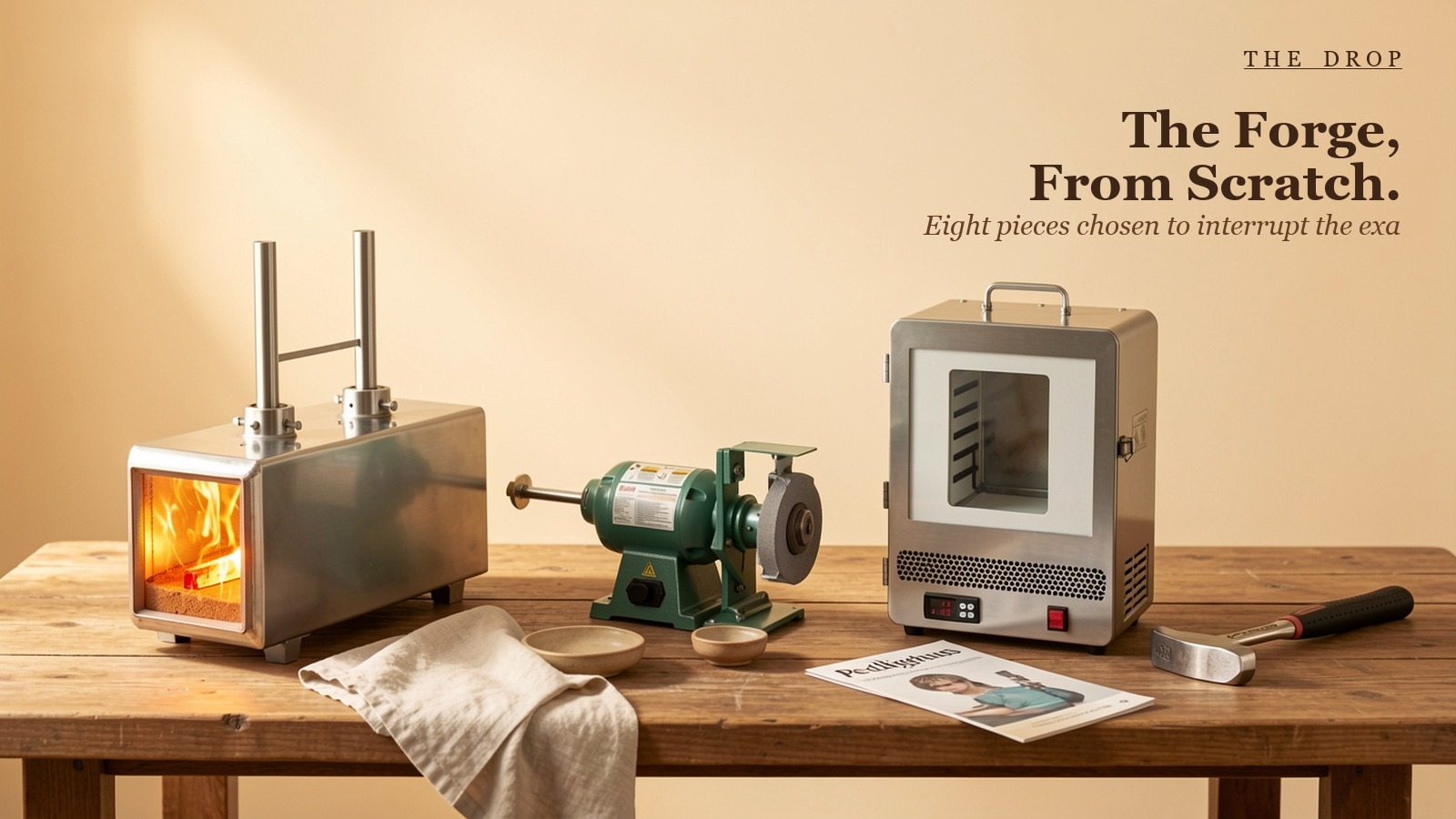
The Forge, From Scratch.
Most beginners don't fail at the grinder. They fail at heat treatment, and they fail there because the forge ran too hot or too cool, the steel arrived with mill scale still on it, or the quench oil was too slow for the spine thickness. This drop is built around that specific failure sequence. The SIMOND STORE double-burner forge is where it starts — ceramic-lined, 2600°F rated, full pass-through. Light it and begin.

SIMOND STORE Double-Burner Forge
The anchor of the whole system. Ceramic-fiber-lined firebox, dual burners rated to 2600°F, and a full pass-through slot mean long bar stock doesn't need to be cut before it goes in. At $319.99 with 709 reviews, this is the community-validated entry point — not a kit forge that needs rigidizing before first use.
“The one reliable rule of gift-giving: anything that makes them look more serious at what they love will be received with disproportionate gratitude.”

Grizzly G1015 2×72 Belt Grinder
The 1×30 question gets asked constantly on r/knifemaking and the answer is always the same: it sharpens, it doesn't shape. The G1015 is the entry to the 2×72 format that matters — working platen, slack area, buffer wheel, 1HP motor, all included. This is the grinder you keep for three or four years without outgrowing the machine.
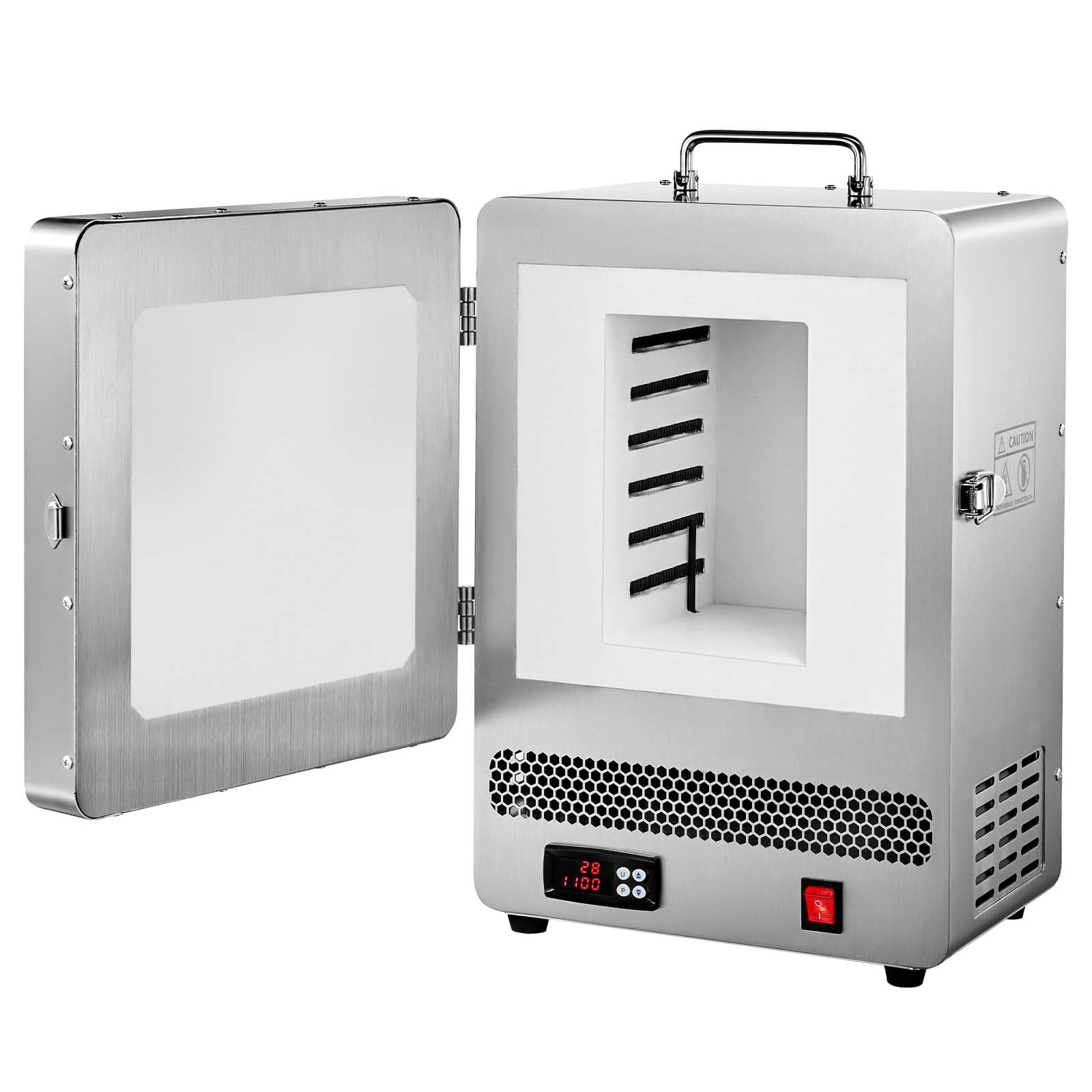
VEVOR 1650W Programmable Kiln
A programmable electric kiln at $439.90 gives you repeatable soak temperatures that a propane forge simply cannot hold to spec. Max temp 2192°F, digital controls, 83 reviews at this price tier. Not a replacement for the forge in the forging stage — a complement to it when heat treatment precision is the variable that matters most.

Peddinghaus Xstriker Hammer
A hammer is how a forge setup gets a personality. The Peddinghaus Xstriker at $66.84 is German-made, consistently cited by name on BladeForums rather than by weight class alone — which is exactly how you know the balance matters. Cross-peen geometry draws bar stock efficiently; 422 reviews confirm this isn't a display piece.
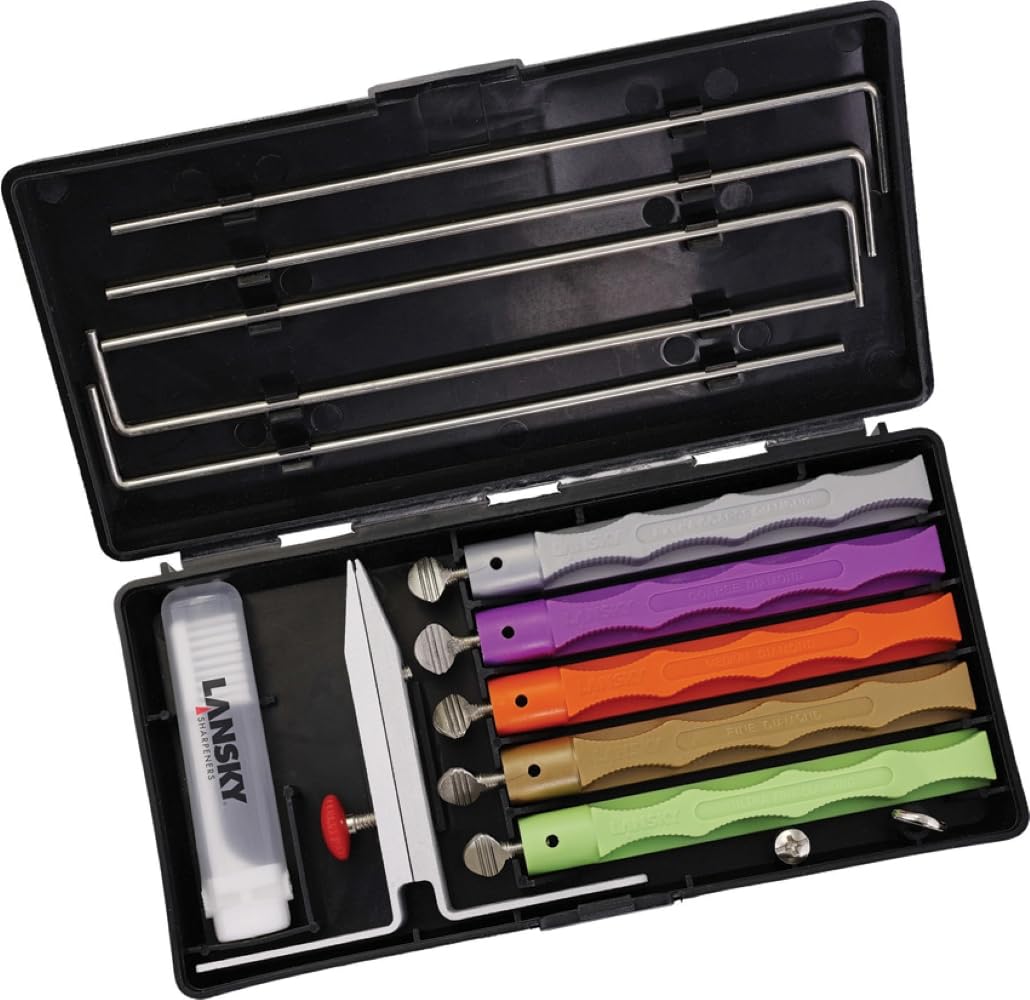
Lansky Deluxe 5-Stone Diamond Kit
After forging, grinding, and heat treating, the edge still has to be worked. The Lansky LKDMD5 gives you five diamond-hone stages from coarse to ultra-fine, with a guided-angle system that keeps early bevels consistent while you're still developing freehand feel. $109.96, and the ultra-fine hone is the detail that earns the price over a single-stone setup.

Starrett 2–32" Inside Micrometer Set
Not every beginner needs a $1,154 micrometer set on day one — but anyone with a fabrication background who intends to fit handles, guards, or bolsters to spec will recognize what hardened and ground Starrett anvils mean at the measurement stage. Insulated rods, quick-reading figures, 2–32" range. The tool that tells you whether your grind is actually even.
Fork it. Make it yours. Share before their birthday.
Friends claim items. No duplicates. No awkward conversations.